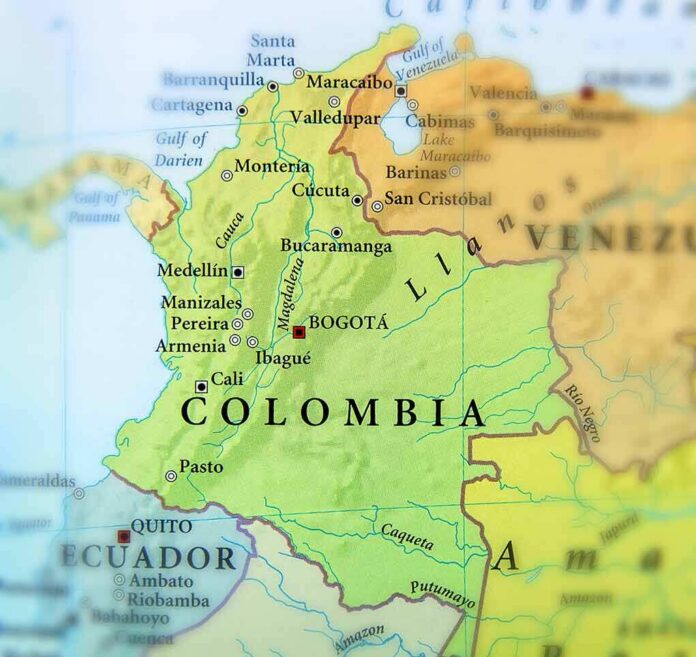
Colombia’s government has cut diplomatic ties with Iran and labeled the move a security step against alleged terror and narco-terror links, a rare rupture in the Americas that signals real stakes far beyond talk.
Story Snapshot
- Bogotá says ties were severed effective September 19 over national and hemispheric security concerns.
- The government cited “presumed” links between Iran and terrorist and narco-terrorist groups.
- Reports say Colombia also designated Iran’s Islamic Revolutionary Guard Corps a terrorist group.
- Iran rejected the accusations as “baseless” and blamed United States and Israeli influence.
What Bogotá Announced and When It Took Effect
Colombia’s Foreign Ministry said the country has formally severed diplomatic relations with the Islamic Republic of Iran. The ministry tied the decision to “national and hemispheric security concerns” and to alleged links between Iran and international terrorist and narco-terrorist groups. Officials said the rupture took effect on September 19, days before the public notice. Several outlets reported that consular services would continue under standard treaty rules, which is common in partial breaks.
Government-linked reports also pointed to broader behavior by Iran. Coverage cited Iran’s conduct in the Middle East, tensions around the Strait of Hormuz, and disputes with nuclear watchdog inspections as additional factors. Those arguments frame the step as part of a larger security picture, not only a local crime issue. The formal statement, as relayed by outlets, used careful language like “presumed ties,” which signals a claim but not released proof for public review.
The Reported Terrorist Designation and Its Meaning
Press reports said Colombia went further by designating Iran’s Islamic Revolutionary Guard Corps as a terrorist organization. That label, if formalized as reported, would have legal effects on financing, travel, and cooperation. It could also guide police and financial watchdogs to flag linked networks. Such a move would align Colombia with countries that limit contact with the Guard Corps after attacks or plots abroad. The specific legal text in Colombia was not provided in the public reports cited.
Keeping consular channels open suggests a calibrated break rather than a total freeze. That approach protects citizens and trade needs while sending a firm signal on security. It also raises questions many readers share. If the threat is urgent and proven, why keep any channel open? If it is a warning, what evidence will the government share? The record available in the reports does not list named cases, seizures, or court files to back the narco-terror claim.
Tehran’s Rebuttal and Claims of Outside Pressure
Iran’s Foreign Ministry denied Colombia’s accusations and called them “baseless.” Tehran argued the decision violates mutual respect and harms both nations’ interests. Iranian statements also flipped the charge, saying Colombia is in no position to lecture others on drugs due to its own cartel problem. Iranian media framed the rupture as driven by influence from the United States and Israel rather than by evidence released by Bogotá.
Competing claims like these are common in hard security disputes. One side cites classified risk and network links. The other side denies and points to politics. Without public records, most people cannot test either side’s case. This is why trust in institutions is low. Many Americans on the right and the left feel elites make big calls behind closed doors, and the rest of us must live with the fallout in prices, safety, and freedom.
Why This Matters for Regional Security and Everyday People
Latin America has faced cross-border crime, weak enforcement, and cash-rich cartels for decades. Claims that foreign states tap those channels raise the stakes. If Colombian officials have evidence of Iranian links into the drug trade or terror finance, exposing at least part of it would help build public trust and guide regional partners. If not, the move looks like signaling in a larger geopolitical fight, which can carry costs without clear security gains.
🇨🇴🇮🇷 COLOMBIA BREAKS DIPLOMATIC TIES WITH IRAN
President Abelardo de la Espriella’s government has formally severed diplomatic relations with the Islamic Republic of Iran.
Colombia cited alleged Iranian links to terrorist groups, human-rights violations, the blockade of the… pic.twitter.com/Ge0q10Xig3
— Mossad Commentary (@MOSSADil) September 24, 2026
For readers in the United States, this ties back to a core worry: We get tough talk and sudden policy shocks, but little proof and even less accountability. Energy markets, shipping lanes, and migration routes all react to these breaks. That can mean higher costs and more risk for families and small businesses. Clear facts beat slogans. Colombia’s leaders say they acted for security. The next step is evidence the public can see and lawmakers can audit.
What to Watch Next
Watch for the official text of Colombia’s designation of the Islamic Revolutionary Guard Corps and any court or legislative filings that describe the alleged links. Look for seizure data, financial tracing, or named groups tied to Iranian actors. Also track whether allies mirror Colombia’s step or press for proof. If Bogotá releases records, it bolsters the case. If not, expect louder claims of outside pressure and a wider fight over credibility.
Sources:
tass.com, aa.com.tr, iranintl.com, i24news.tv, azernews.az, colombiaone.com, presstv.co.uk, chinadaily.com.cn