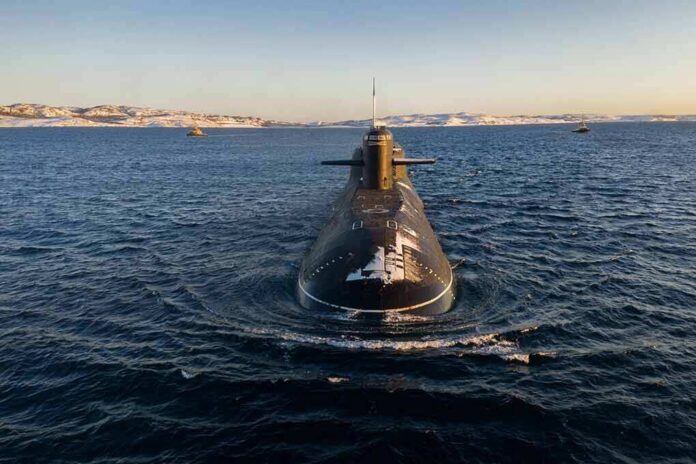
Germany says its side of an $8 billion submarine deal with India is done, and now the world’s largest democracy just needs to finish its own paperwork.
Quick Take
- Germany’s ambassador says the submarine deal is “finalised on German side” and only awaits Indian government processes.
- The pact centers on six advanced conventional submarines built in India through a partnership between Germany’s TKMS and India’s Mazagon Dock Shipbuilders.
- Estimates of the deal’s value range from about $8 billion to $9 billion, or between Rs 70,000 crore and Rs 90,000 crore.
- German officials called it their country’s most reliable defense partnership outside NATO and the European Union.
Officials Signal The Deal Is Nearly Done
German Ambassador Jasper Wieck told reporters in September 2026 that the submarine agreement with India was “finalised on German side” and now waits only for India’s internal approvals. That statement came five months after German Defence Minister Boris Pistorius said in Kiel that Germany expected to sign a final deal soon, calling himself “very, very confident” the paperwork would close fast.
The project falls under India’s Project-75(I) program, a long-planned effort to buy six advanced conventional submarines with air-independent propulsion technology, which lets a submarine stay underwater far longer than older designs. Indian defense analysts have described the German-Indian partnership as nearing final approval from India’s Cabinet Committee on Security, the body that must sign off on major defense purchases.
A Deal Built On More Than One Handshake
In April 2026, Indian Defence Minister Rajnath Singh and Pistorius visited the TKMS submarine facility in Kiel together. Indian government records describe that trip as producing a signed roadmap on joint defense production and further talks on submarine cooperation. The two countries also worked out an inter-governmental agreement covering technology transfer, training, and export approvals, plus 19 separate memoranda of understanding.
That stack of agreements shows the two governments are building something bigger than a single purchase order. Germany gets a chance to keep its shipbuilder TKMS busy and prove its defense industry can partner with non-European allies. India gets new submarines built partly at home, plus technology transfer that supports its long-running push for self-reliant defense manufacturing.
Price Tag Still Moving Around
No two sources agree on the exact dollar figure. Reports have cited numbers from about $8 billion to $9 billion, and in Indian rupees the range runs from roughly Rs 70,000 crore to Rs 90,000 crore. That spread reflects an estimate still being finalized rather than a locked-in contract price, which is normal for a defense deal of this size before final signatures are on paper.
The submarines themselves are expected to be roughly 3,000-tonne diesel-electric attack vessels, built at Mazagon Dock Shipbuilders in Mumbai with German technology. Analysts say the air-independent propulsion systems would let the vessels stay submerged for weeks instead of just a day or two, a major upgrade for India’s navy as it watches submarine fleets grow in Pakistan and China.
German Ambassador Jasper Wieck says the submarine deal is a real partnership, focused on building submarines in India and technology transfer. He says Germany is ready to sign, pending final approvals from the Indian side. pic.twitter.com/s2jpV0Vz5q
— Devansh Kumar (@BharatKaDevansh) September 23, 2026
What Still Has To Happen
India’s side of the process is not finished. Officials and analysts have pointed to Cabinet Committee on Security approval as the remaining domestic step before India can move forward with a signed contract. Pistorius said in April he expected the deal within three months of his Kiel visit, a timeline that has already passed without a public announcement of a signed contract, showing how defense procurement timelines often stretch longer than officials first predict.
The pattern is familiar to anyone who has followed Project-75(I), which traces back to 1997 and has seen repeated rounds of “nearly there” announcements over nearly three decades. This time, both governments describe the partnership as more than a simple sale. It includes technology sharing, local manufacturing jobs, and a broader strategic alignment between Berlin and New Delhi that neither side wants to see fall apart over paperwork delays.
Sources:
insiderpaper.com, newindianexpress.com, indiatoday.in, legal500.com