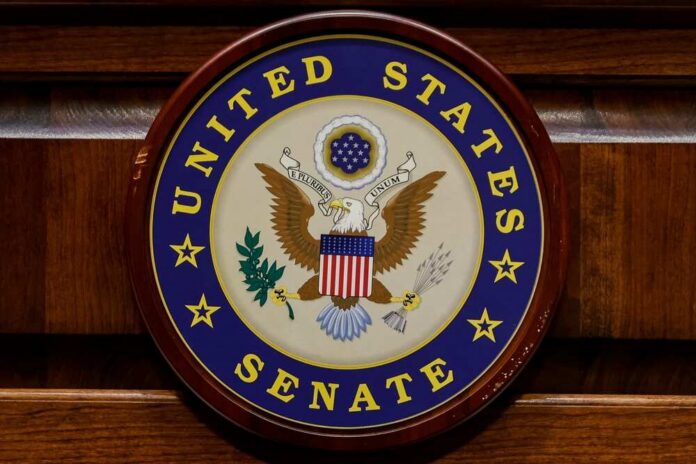
President Trump warned Senate Republicans that if they do not end the filibuster now, America’s agenda will stall and power will swing back to those who will use the rule against them.
Story Snapshot
- Trump demanded Senate Republicans terminate the filibuster to pass core priorities now.
- Key GOP senators and leaders say their support for the 60-vote rule is unchanged.
- Trump links filibuster repeal to passing the SAVE America Act and budget fights.
- Historians say the filibuster is not in the Constitution and has changed many times.
Trump’s Ultimatum and What He Wants Passed
President Trump pressed Senate Republicans to “terminate the filibuster” and warned that failure would make him the last Republican president. He argued time is short to pass priorities such as the SAVE America Act, a budget, and the debt limit plan, all of which face the Senate’s 60-vote hurdle. His message was blunt and public, posted on his social platform and echoed by friendly outlets that highlighted the risk of leaving the rule in place.
Trump tied the rule fight to concrete bills and deadlines. He urged quick action so Republicans could pass voting rules, security, and fiscal items with simple majorities. He framed the choice as use it now or lose it later, warning Democrats would scrap the rule once they return to power. That framing aims to unite Republicans by fear of future losses and by frustration with gridlock that blocks their agenda.
Republican Resistance in the Senate
Senate Republicans, including top leaders, pushed back fast. The Associated Press reported that Republican leaders “swiftly rejected” ending the filibuster, keeping their long-held stance that it protects the chamber and minority rights. Senators Lisa Murkowski, Thom Tillis, and John Curtis said they would not support ending it, calling it the Senate’s most important safeguard and a tool that forces common ground across parties, even when tempers run high over spending and elections.
Senate Republican Leader John Thune’s office said his position was unchanged. He has described the 60-vote threshold as something that “makes the Senate the Senate” and as a guardrail that has protected the country during swings in power. Other Republicans, including John Barrasso, held firm as well. The votes to “go nuclear” do not appear to be there today. That means Trump can apply pressure, but he cannot command a rules change from the White House.
Why the Filibuster Fight Hits a Nerve for Both Sides
Many Americans see Washington as broken. Both right and left worry that insiders use rules to stall change. The filibuster is a clear symbol of that. It lets a minority block bills even when one party holds the White House and both chambers. Supporters say it stops wild swings. Critics say it kills needed reforms on spending, borders, energy, and voting. That shared anger explains why this battle draws intense focus beyond Capitol Hill.
Trump just compared Iran getting a nuclear weapon to Democrats killing the filibuster.
He says if Democrats regain power, they’ll move fast on D.C. and Puerto Rico statehood, add four senators and push for a much larger Supreme Court. pic.twitter.com/ZucT6vTtg4
— World Monitoring Center (@WMC_WORLD) September 18, 2026
History shows the filibuster is not sacred text. It was not in the Constitution and emerged after an 1806 rules change. The Senate has changed it many times, including the 2013 “nuclear” shift on executive and lower-court nominees. Scholars and institutions note the rule is a product of bargaining, not original design. That record supports Trump’s claim that the Senate can change the rule, though it does not settle whether it should change it now.
What This Means for Policy and Power
If Republicans keep the filibuster, Trump’s big bills likely need nine or more Democratic votes. That means slimmer, slower deals or stalemate. If Republicans end it, they can pass more with 51 votes, but they also risk fast reversals if Democrats regain control. That is the core tradeoff for voters who want results and stability. It is also why many senators fear short-term wins could become long-term chaos that weakens trust in government.
For families watching prices, border strain, and crime, the fight matters because it affects what gets done this year. For small businesses and retirees, it guides tax and energy plans that hit monthly budgets. For both sides, it tests whether leaders will face hard problems or keep pointing fingers. The rule is a tool, not a cure. The deeper issue is whether Congress can set clear goals, write focused bills, and vote them up or down without hiding behind process.
Bottom Line: A Test of Will, Not Only of Rules
Trump raised the cost of inaction by warning of defeat if Republicans wait. Senate leaders raised the cost of haste by warning of damage if they rush. Both claims have some basis in history and politics. The next weeks will show which fear moves more votes: fear of gridlock that blocks core promises, or fear of one-party swings that leave millions feeling shut out. Either way, the country needs results that match the stakes.
Sources:
townhall.com, newsbreak.com, thehill.com, newsmax.com, reuters.com, apnews.com