War-game after war-game shows quiet diesel subs slipping past carrier defenses and scoring “kills” that would cost billions in a real fight.
Story Snapshot
- Allied diesel subs have repeatedly “sunk” U.S. carriers in exercises, exposing gaps in close-to-shore defense.
- Air-independent propulsion lets diesel subs run almost silently on batteries, which hinders detection.
- The U.S. Navy fields wide-area sonobuoys and patrol aircraft to counter diesel boats, but proof of full fix is thin.
- China is modernizing its diesel fleet, raising stakes in busy coastal waters and chokepoints.
What Exercises Revealed About Carrier Defense
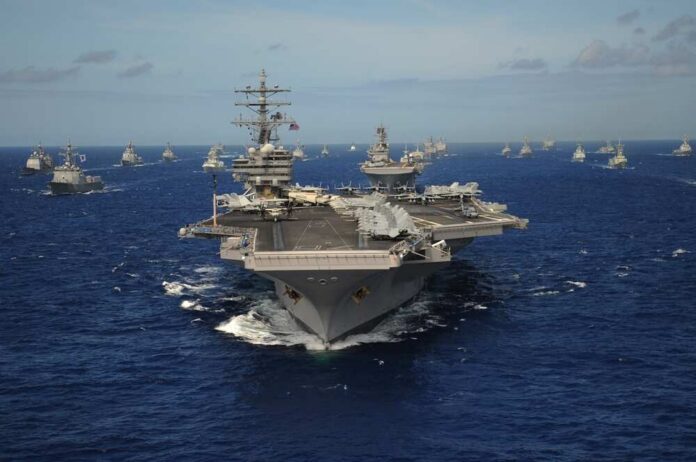
U.S. Navy exercises since the 1990s have shown a hard truth. Diesel-electric submarines run quiet, hide in coastal clutter, and sometimes slip through a carrier group’s screen. Allied boats from South Africa, Chile, and Australia penetrated defenses and got within torpedo range during drills, forcing rethink of tactics and sensors. These were controlled events, not combat. But they measured the same skills needed in war. The message was simple: in littoral waters, the cheap sub can threaten the costly ship.
Analysts tie these results to physics and terrain. Shallow seas, busy shipping lanes, and noisy coasts mask the faint sounds of a slow electric motor. When diesel subs switch to batteries, the only major sounds are bearings, the propeller, and water flowing along the hull. That makes them very hard to find until they attack or move fast. Air-independent propulsion extends this stealth window from hours to days or more at low speed. That time advantage can flip a battle near chokepoints.
What the Navy Built To Close The Gap
After those humbling drills, the Navy moved to spread more ears in the water. Leaders backed a distributed network of sonobuoys and other small sensors to watch wide areas. Ships and aircraft could seed hundreds of listening points, then triangulate a contact and close in. The plan leaned on patrol aircraft like the P-3 Orion and follow-on jets to scan, localize, and track subs. Littoral Combat Ships were slated to add helicopter and small-boat launched buoys for persistent coverage near shore.
That approach reflects a core belief: more sensors plus faster data sharing shrink the sub’s hiding space. It also leans on nuclear attack submarines to stalk and, if needed, kill hostile boats once found. These counters are real and improving. But the public record has limits. No open, detailed assessment shows the gap is fully closed against modern air-independent propulsion boats in complex coastal zones. Without such metrics, both cheerleading and doom talk risk outrunning facts.
China’s Fleet Shift Raises Real-World Stakes
China is replacing older designs with newer diesel-electric classes and expanding its undersea force. Reports cite shifts from aging Romeos and Hans to Kilos and domestic designs like the Song series, plus newer classes, over the last two decades. Air-independent propulsion and modern torpedoes on such boats would stress any force operating near the first island chain. Even if exact fleet counts and readiness are murky, the vector is clear: more quiet hulls, better weapons, tougher littoral problems.
None of this proves a carrier will fall in war. It does show how a low-cost threat can tax a high-cost fleet. Leaders on both the right and the left see a pattern. Washington spends big, then withholds clear scorecards on what actually works at sea. Voters pay, but do not get straight answers. The surest path forward is proof. Publish unclassified metrics from recent drills. Show detection rates, time-to-track, and kill-chain speed against modern diesel subs. Sunlight builds trust—and better defenses.
Sources:
19fortyfive.com, nationaldefensemagazine.org, youtube.com