Russia quietly added 15,500 troops to its authorized force, signaling a longer, larger war machine built for staying power, not a quick fight.
Story Snapshot
- Putin signed a decree lifting Russia’s armed forces staffing cap by 15,500.
- The decree sets total staff at about 2.44 million, with 1.55 million troops.
- Moscow has raised these legal ceilings many times since 2022.
- Analysts say these increases are often targets on paper, not instant manpower.
What Moscow Changed With The New Decree
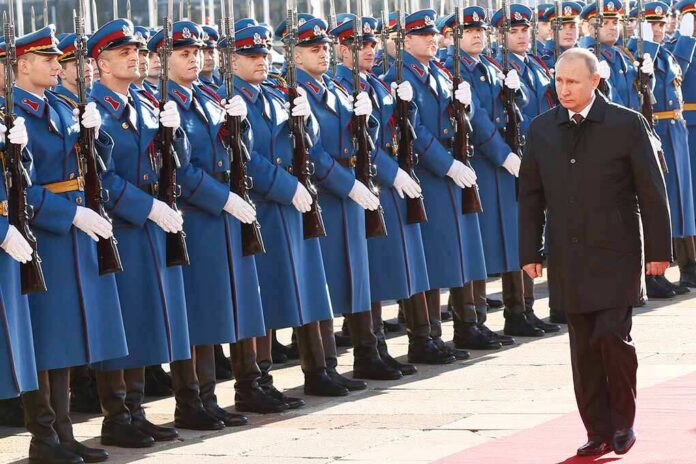
Russian President Vladimir Putin signed a decree that increases the authorized size of Russia’s armed forces by 15,500 people. The document sets total armed forces staff at 2,441,630, including 1,550,500 military personnel, according to publication on Russia’s legal acts portal. The change is a legal ceiling, not a verified headcount in the field. The decree gives the Defense Ministry more room to hire, contract, and reorganize units to meet ongoing war needs.
Russian state and allied outlets reported similar increases earlier this year and in 2024. Past decrees raised the total number of troops allowed, sometimes by over one hundred thousand, as the war in Ukraine continued. The pattern suggests the Kremlin is building a larger standing force over time, while leaving options open for more support staff, logistics, and construction units. This step fits that ongoing approach and signals endurance planning by Moscow.
How This Fits A Wartime Pattern Since 2022
Since 2022, Russia has adjusted its armed forces ceiling several times. These moves raised the authorized number of active troops and total staff as the conflict dragged on. Experts and regional reporting have described these increases as goals that help with planning and recruitment drives, even when they do not create a one-to-one surge of new soldiers overnight. The legal cap lets ministries fund positions, add units, and replace losses across fronts and support commands.
Independent analysts have also said that many of these increases are “aspirational.” That means they set targets that take time, money, and people to meet. Russia has relied on contract recruitment, incentives, and steady call-ups to fill ranks. The new decree adds capacity on paper. It also pressures the system to keep feeding manpower, training, housing, and equipment into the force. That is hard work even for a large state with control over labor markets and industry.
Why This Matters For The United States And Europe
The decree shows Moscow is planning for a longer war and a larger standing military. That affects United States strategy, NATO planning, and energy and trade risks. A bigger Russian force requires more ammunition, armor, and drones. That demand can pull in more imports and black-market parts, raising global security concerns. It also increases pressure on Ukraine and nearby NATO members to maintain stockpiles, training pipelines, and air defense networks over years, not months.
For Americans watching Washington, the lesson is simple: near-peer rivals are scaling up. That requires clear goals, honest budgets, and steady oversight at home. Both the right and the left worry about waste, slow delivery, and blurred lines between industry and government. If Russia keeps expanding the legal size of its forces, the United States must align defense plans with real capacity, not talking points. That means fixing procurement delays and tracking every dollar and part.
What To Watch Next
Watch how fast Russia can turn this legal cap into trained units with gear. Look for signs of contract recruitment drives, increased pay offers, and new construction units. Track reported changes in active-duty totals and any shifts in casualty replacement. Analysts will also watch whether these moves change the tempo along the front. Past increases have not produced sudden battlefield swings on their own, but they have supported sustained pressure over time.
Sources:
insiderpaper.com, united24media.com, euromaidanpress.com