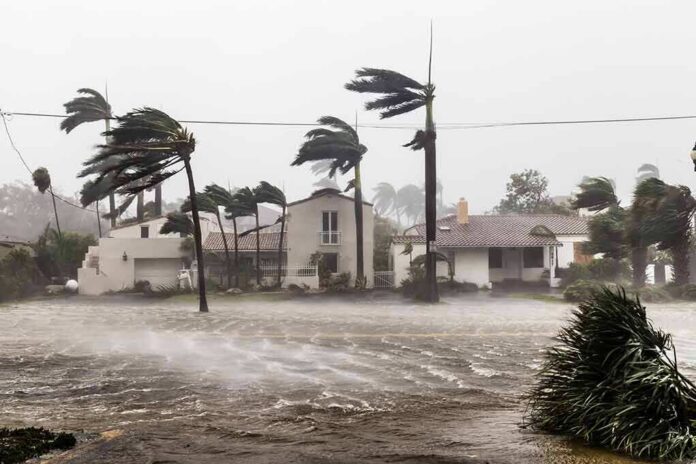
Repeated high tides and pounding surf from a powerful nor’easter flooded Northeast communities and left more than 100,000 customers without power as flights were canceled and roads closed.
Story Highlights
- Storm knocked out power to over 100,000 customers and canceled 400+ flights
- Forecasters warned of moderate to major coastal flooding during multiple high tides
- Utilities raced to restore service as outages persisted across several states
- Officials reported road closures and beach erosion from New Jersey to New England
What Happened Across the Northeast
Reuters reported airlines canceled more than 400 flights and the storm cut power to over 100,000 homes and businesses from Washington, D.C., to Maine on Saturday. Outages remained widespread into the evening in parts of Connecticut, New York, Massachusetts, New Jersey, Rhode Island, and Pennsylvania. The National Weather Service warned that strong northeasterly winds and heavy rain would continue as the storm lingered offshore, pushing water into bays and back bays during high tides. Forecasters expected the system to persist into early next week.
Local officials and traffic agencies reported flooded roads and closures in coastal towns, including shutdowns along parts of Route 36 and Route 35 in New Jersey as water spilled over seawalls and into streets. Beach erosion grew through successive high tides, as waves and onshore winds chewed away protective dunes. The National Weather Service highlighted the risk of repeated coastal flooding over multiple tide cycles, which can trap water in low-lying areas and strain drainage systems. This pattern raised safety concerns for drivers, first responders, and utility crews.
Power, Travel, and Emergency Response
Utilities in New Jersey said field crews restored tens of thousands of customers while more outages popped up as new limbs fell and tides rose. With wet soil and gusty winds, trees and lines came down in several states, slowing repairs and blocking roads. Airline disruptions spread nationwide due to equipment and crew assignments linked to Northeast hubs. Officials urged people to avoid flooded roadways, charge devices, and prepare for more high tides through the weekend as the storm’s peak effects lined up with evening and morning cycles.
National guidance called for caution along bays and back bays, where water can pile up and drain slowly, making each high tide worse than the last. Emergency managers flagged risk zones from the southern Chesapeake Bay to the Jersey Shore, Raritan Bay, Long Island, and coastal New England. Forecast offices in southern New England extended flood watches and highlighted ongoing beach erosion, with minor to locally major flooding possible in exposed areas. Conditions were expected to ease only after winds shifted and the storm inched away.
Why This Storm Hit So Hard
Meteorologists explained that nor’easters, not just hurricanes, drive most Mid-Atlantic coastal flood events. Regional research estimates about 85% to 90% come from these midlatitude systems, which can stall and pound the coast for days. Recent studies also find the strongest nor’easters have grown more intense since 1940, with higher peak winds and heavier downpours, adding to coastal risk during high tide. That mix of wind direction, low pressure, and timing with the tide turned this weekend’s storm into a flooding threat.
2 AM Top-of-the-Hour News
Flooded streets. Downed trees and power lines. 150 thousand in the dark from Pennsylvania to Rhode Island. Hundreds of flights cancelled. Thousands more delayed. A powerful Nor-Easter slamming coastal areas from New Jersey to New England. New York… pic.twitter.com/yQGGcdEImV
— Worldwide News Network (@WorldwideNNX) September 27, 2026
For families and small businesses, the hit felt familiar: flooded basements, ruined stock, lost shifts, and spoiled food. Many readers, left and right, see storms expose the same weak spots—aging power grids, slow hardening of coastal roads, and piecemeal flood planning. Local crews worked nonstop, but long-term fixes lag. People ask why basic resilience—raised roads, modernized substations, working pumps—remains stuck in studies. This storm is another reminder that risk grows while government debates, and coastal life gets harder with each tide.
Sources:
washingtontimes.com, reuters.com, newjersey.news12.com, hngn.com, yahoo.com, forecast.weather.gov, abcnews.com, wpc.ncep.noaa.gov