The Supreme Court cleared the federal government to restart mass voter citizenship checks before the midterms, raising hopes for cleaner rolls and fears of wrongful removals at the same time.
Story Highlights
- The Supreme Court granted a stay, allowing the program to proceed during appeals.
- The government says the system checked 65 million voters and flagged 28,635 possible noncitizens.
- A federal judge previously ruled the revamped system unlawful and risky for eligible voters.
- Key accuracy, privacy, and due-process questions remain unresolved in public records.
What The Court Did And Why It Matters Now
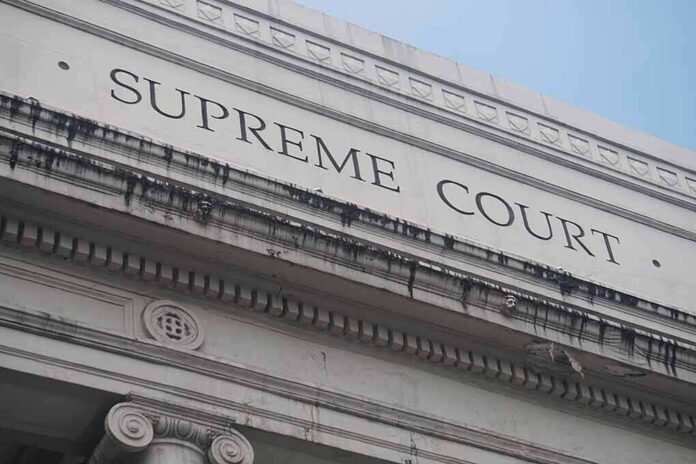
The Supreme Court granted the government’s emergency request to keep a voter verification system running while a lower court ruling is appealed. The order lets states use the federal tool as they prepare for the next elections. The Department of Homeland Security says the tool helps verify citizenship against government records to keep rolls accurate. The order does not decide the final legality. It only pauses the block while the case continues.
The administration says the system, known as Systematic Alien Verification for Entitlements, uses Social Security and citizenship records. Officials argue this can make checks faster and more accurate than older, slower methods. They also say federal law allows sharing citizenship and immigration data for this purpose, which supports their legal case to proceed during the appeal. States choose whether to use the system, and the Court’s order allows them to do so for now.
The Scale Claim: Big Numbers, Open Questions
The Department of Homeland Security told the Court that the system has verified the citizenship of more than 65 million voters in 26 states and flagged 28,635 potential noncitizens on voter lists. These figures show the scale of the effort. They also raise hard questions. The filing reports “flags,” not final findings. The public record here does not show how many flags were errors or how many led to removals after state review.
Reporters covering the filing said the database aims to match state voter records with federal data to confirm eligibility. That approach can help clean records, but broad matching always risks false hits when names or numbers are off. The retrieved record does not include an independent audit of false positives or a test showing the system beats narrower checks. Without those results, the public cannot judge how often the tool is right or wrong across states.
The Privacy Fight And Lower Court Concerns
In June, a federal judge ruled the revamped system unlawful and said it violated privacy rules and could wrongly purge eligible voters from state rolls. News reports said the judge found the tool was put together in a haphazard way and relied on unreliable citizenship data. An appeals court let that ruling stand earlier this month. The Supreme Court’s new order does not erase those findings; it only allows interim use while the appeals go forward.
🚨Just in: The Supreme Court has ruled 6-3 to allow the Trump administration to expand a federal voter citizenship verification program
This will allows states to use the federal SAVE database and Social Security records to help verify the citizenship status of registered voters pic.twitter.com/jpxrAm7ybg
— The Calvin Coolidge Project (@TheCalvinCooli1) September 25, 2026
Opponents, including voting and privacy groups, argue the system was never built for voter checks. They warn it can mislabel citizens as noncitizens when records are old, incomplete, or mismatched. They also argue the combined use of Social Security and immigration files creates a de facto national citizenship database, which raises risks if used for mass screening ahead of elections. These claims will likely shape the appeals and how states implement safeguards.
How States Might Use The Tool Without Harming Voters
State election officials run voter rolls and decide how to act on any federal flags. Good process matters. Clear notices, a fair time to respond, and simple ways to fix errors can prevent wrongful removals. Transparent reporting can also help. Regular public counts of flags, confirmed ineligible cases, and corrections would let voters see if the tool adds value or causes harm. The current record does not show such audited results across states.
For many Americans, trust is already thin. Some see this as a win for election integrity. Others see a risk to lawful voters. Both concerns are real and can be tested. Independent audits of error rates, public release of matching rules, and state-level due-process checklists would answer the key questions. Until then, the Court’s order sets the stage for a live trial in the field, with accuracy and fairness on the line before ballots are cast.
Sources:
facebook.com, reuters.com, npr.org, washingtonexaminer.com, bostonglobe.com, cnn.com, washingtonsun.com