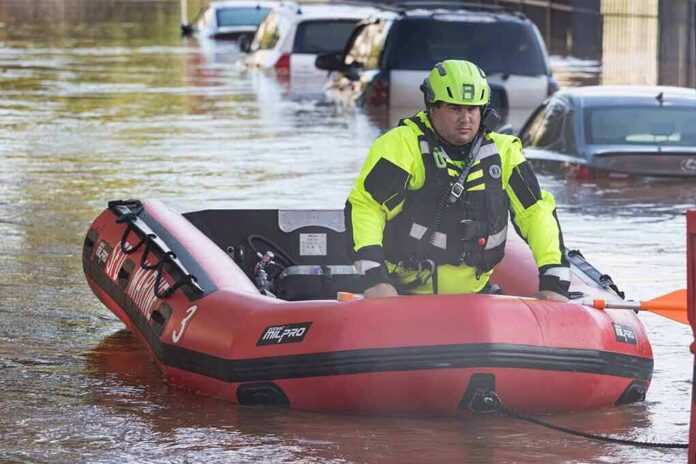
Floodwaters covered roads and pushed into some homes across New Jersey as a powerful nor’easter slammed the East Coast, prompting emergency declarations in two states.
Story Snapshot
- Roads flooded and some homes took on water in New Jersey as the storm intensified.
- New York Governor Kathy Hochul declared a State of Emergency for eight counties, including New York City.
- New Jersey also declared a state of emergency as the storm brought flooding to the region.
- Officials warned of dangerous coastal flooding, strong winds, and possible power outages through the weekend.
- States activated emergency operations centers and deployed utility crews ahead of the worst impacts.
Flooding Hits New Jersey Roads And Homes
Water covered streets in parts of New Jersey as the storm pushed ashore, with some homes taking on floodwater in low-lying areas. Weather officials confirmed a state of emergency covered parts of New Jersey and New York, including New York City, as the storm worsened flooding and coastal erosion along the shoreline.
The flooding fits a pattern seen up and down the coast this week. Emergency crews in shore towns worked to clear storm drains and block off flooded roads as ocean water pushed inland, adding pressure on infrastructure already strained by the fast-moving system.
New York Declares Emergency Across Eight Counties
Governor Hochul declared a State of Emergency for the Bronx, Brooklyn, Nassau, Manhattan, Queens, Staten Island, Suffolk, and Westchester counties as the coastal storm bore down on the region. She said the state expected “dangerous coastal flooding, strong winds and potential power outages through the weekend,” and told residents to “take this storm seriously”. The declaration mirrored similar action taken across the river in New Jersey.
State officials in New York said the storm would begin hitting Friday morning and last through Sunday, with the greatest danger facing shoreline and low-lying communities on Long Island, in New York City, and in the lower Hudson Valley. Emergency management teams pre-positioned equipment ahead of the worst conditions.
Officials Urge Residents To Take Storm Warnings Seriously
Hochul urged New Yorkers to treat the emergency declaration as a real threat, not routine caution, as the nor’easter brought heavy rain, strong winds, and coastal flooding to New York City, Long Island, and Westchester County. The state said it would deploy utility crews and other emergency resources to respond to outages and flooding as the storm moved through.
New Jersey took similar steps as flooding worsened along its coastline. States on both sides of the Hudson River activated emergency operations centers to track the storm and coordinate response teams, a step usually reserved for storms expected to cause real damage rather than routine rain events.
Forecast Uncertainty Common In Early-Season Storms
Meteorologists tracking the system noted that while the storm’s core impacts were clear, its exact path remained a moving target in the days leading up to landfall. Forecasters said the storm’s exact track stayed uncertain even as they urged residents to prepare and monitor updates closely. That kind of shifting forecast is typical for nor’easters, where small changes in a storm’s path can significantly change which communities see the worst flooding and wind damage.
For residents in New Jersey and New York, the practical result was the same regardless of the storm’s precise track: flooded roads, water in homes, and days of disrupted travel. Emergency officials in both states said their focus remained on public safety and rapid response as the storm continued moving through the region over the weekend.
#BREAKING
NEW YORK CITY, NY (NP) — New York City Officials are monitoring the situation with the Nor’ Easter as it approaches the 5 Boroughs #nyc #ny pic.twitter.com/aAzxStJkXI— National Presse (@NPWire) September 26, 2026
Local officials in flood-prone shore towns said crews would keep monitoring drainage systems and coastal barriers as the storm cleared the region, with cleanup expected to continue into the following week as water receded from flooded streets and affected properties.
Sources:
governor.ny.gov, foxweather.com, lohud.com