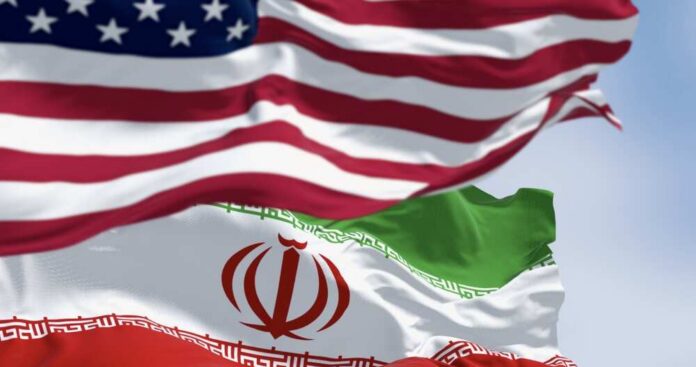
As Washington inches toward a 60‑day ceasefire extension with Iran, conservatives are asking whether this “tentative deal” defuses a crisis or quietly revives the same appeasement playbook that once let Tehran’s aggression and nuclear ambitions grow unchecked.[1][3][6]
Story Snapshot
- Negotiators from the United States and Iran have shaped a 60‑day ceasefire extension and nuclear‑talks framework, but President Trump has not yet signed off.[1][3][6]
- The reported memorandum of understanding would reopen the Strait of Hormuz and gradually ease a United States naval blockade in exchange for Iranian compliance.[3][5][6]
- The arrangement is explicitly tentative, with fresh missile and drone exchanges underscoring how fragile any pause in fighting remains.[1][4][5]
- Key nuclear details, sanctions relief, and verification mechanisms are still unresolved, raising hard questions about leverage, accountability, and long‑term security.[4][6][7]
What Vance Means By ‘Not There Yet’ On An Iran Deal
Reports across television and international outlets describe American and Iranian negotiators converging on a 60‑day extension of the current ceasefire, but emphasize that final approval still rests with President Donald Trump and top United States decision‑makers.[1][3][6] Broadcasters say the emerging framework is cast as a memorandum of understanding, not a formal peace treaty, which means it is a political pause to create space for further talks rather than a legally binding settlement.[5][6] When Senator J.D. Vance says the United States is “not there yet” but close to a deal, he is speaking into this gray zone where diplomats have a draft, but elected leaders are still weighing whether it meets core American security and sovereignty standards.[6][7]
Coverage summarized in the research shows a consistent set of core elements: roughly sixty additional days of ceasefire, direct nuclear negotiations during that window, and some form of sanctions or economic relief tied to Iran’s conduct.[3][5][6] A senior Arab source and multiple United States officials are cited as saying both sides reached understanding on the broad outline earlier in the week, then deliberately held back public announcement until Trump and his team decide whether the terms cross any red lines.[1][6] That is the context in which Vance’s caution resonates with conservative voters who remember how prior administrations rushed framework deals with Iran, only to watch Tehran pocket concessions, stall inspectors, and fund terror through sanctions windfalls.[4][7]
Reopening The Strait Of Hormuz: Relief Valve Or Pressure Point?
Several reports say the draft understanding would reopen the Strait of Hormuz to commercial shipping, restoring tanker traffic that has been disrupted by war and blockade.[3][5][6] Negotiators reportedly envision a phased easing of the United States naval blockade as Iran demonstrates compliance, meaning American warships would pull back step by step while verifying that Iran keeps the waterway open and refrains from new attacks.[3][6] Some accounts add that unrestricted shipping would be paired with limited sanctions waivers on Iranian oil exports, creating a classic sanctions‑for‑behavior trade that conservatives instinctively treat with skepticism given Tehran’s long record of cheating and using cash to underwrite proxy violence.[3][6][7]
At the same time, the research makes clear this reopening remains a proposal, not an accomplished fact on the water.[2][4][6] No cited source shows a formal maritime advisory, insurance circular, or Pentagon order confirming that commercial ships are already moving freely through the Strait under new rules.[2][3] Journalists instead quote unnamed United States sources and regional officials describing what the memorandum would do if signed: restore pre‑war shipping conditions, lift some restrictions on Iranian ports, and gradually normalize traffic while negotiations on tougher issues proceed.[3][5][6] For readers worried about American leverage, that gap between promised reopening and verifiable implementation is exactly why Vance and others emphasize that the country is still evaluating whether this deal protects core interests or hands Tehran a strategic lifeline too early.[4][6]
The Nuclear Question Kicked Down The Road
On the nuclear file, every major account in the supplied research stresses that what is on the table is the beginning of talks, not a final agreement on uranium enrichment, stockpile reduction, or inspection powers.[4][5][6] Broadcasters describe an understanding that direct negotiations on Iran’s nuclear program would launch during the sixty‑day window, while the most sensitive questions—such as what happens to highly enriched uranium already in Iran—would be handled only in later rounds.[4][5] One report quotes analysts saying plainly that the future of Iran’s nuclear program “will not be addressed in the near term” by this memorandum.[4]
For constitutional conservatives who remember the old Iran nuclear deal, this structure sounds familiar: front‑load economic and diplomatic benefits, postpone detailed nuclear restrictions, and trust that future talks will deliver the hard limits.[4][6][7] The research notes that some coverage even recalls an earlier short ceasefire that produced little progress, a warning that short‑term pauses can become pressure campaigns to concede more rather than opportunities to demand real disarmament.[1][6] Yet the same reports acknowledge that, so far, there is no signed text, no International Atomic Energy Agency verification step, and no Treasury notice documenting specific sanctions waivers, which means critics and supporters alike are judging a moving target.[3][6][7]
Ongoing Strikes, Fragile Truce, And The Stakes For Trump’s Second Term
Even as diplomats talk about extending the ceasefire, some of the very broadcasts touting progress concede that missile and drone exchanges have continued between the United States, Iran, and their respective partners.[1][4][5] One segment notes “fresh strikes” and “escalating exchanges of fire” at the same time officials are describing a supposed breakthrough, undercutting any notion that fighting has fully stopped on the ground.[1][4][5] Analysts in the reports repeatedly call this a “fragile” or “hot” ceasefire, acknowledging that a single miscalculation could collapse the truce and expose any memorandum as little more than a diplomatic pause button.[5][6]
European markets rise as investors await US-Iran ceasefire extension https://t.co/cEXBB6lJ0Z https://t.co/cEXBB6lJ0Z
— Reuters Business (@ReutersBiz) May 29, 2026
For President Trump in his second term, and for conservatives who elected him to reverse the weakness of past globalist dealings, that reality creates both leverage and risk.[2][7] The research shows that mediators and market watchers hope a sixty‑day extension will calm oil prices, steady global shipping, and open space for a more durable framework.[3][7] But it also documents fears that heavy reliance on anonymous sources and media spin can harden expectations before the White House has released any official text or detailed readout.[1][2][5] Vance’s argument that America is “not there yet” reflects a core conservative instinct: do not reward Iran’s aggression prematurely, do not trade away sanctions or naval strength for vague promises, and demand verifiable steps that truly make the United States safer before calling any of this a done deal.[3][6][7]
Sources:
[1] Web – 5/28: The Takeout with Major Garrett
[2] YouTube – U.S., Iran officials agree to extend ceasefire by 60 days
[3] YouTube – Iran, U.S. agree to ceasefire extension
[4] Web – US, Iran close to agreeing a 60-day ceasefire extention
[5] YouTube – US and Iranian negotiators reach deal to re-open strait of …
[6] YouTube – U.S. and Iran reach tentative deal to extend ceasefire 60 …
[7] YouTube – Are US and Iran on verge of deal to extend ceasefire for 60 …