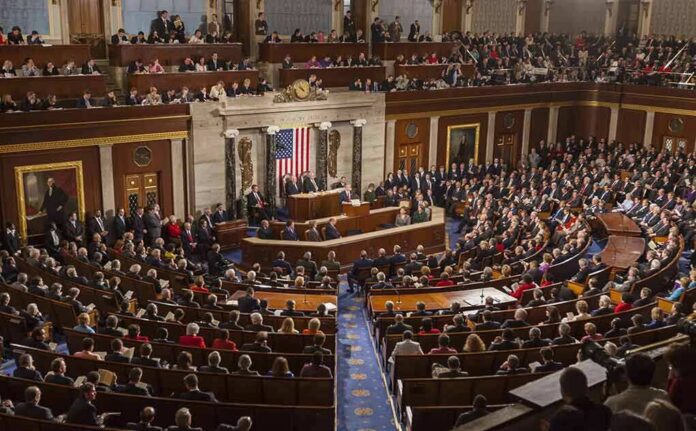
In a 352–72 vote, the House moved to lock in a permanent Justice Department fraud unit aimed at protecting taxpayer dollars.
Story Highlights
- House passed H.R. 9576 to establish a National Fraud Enforcement Division at the Department of Justice.
- Bill text creates a new Assistant Attorney General to lead the division and coordinate cases.
- House materials tie a $30 million funding line to build out the division’s enforcement capacity.
- Senate action and enactment are not yet recorded in the public docket.
What The House Approved And Why It Matters
House members voted 352–72 to pass H.R. 9576, the National Fraud Enforcement Division Act of 2026. The bill would create a permanent National Fraud Enforcement Division inside the Department of Justice. The measure states that the division will investigate and prosecute fraud that targets taxpayer dollars and federally funded programs. The recorded vote shows broad bipartisan support alongside organized opposition. The House action marks a concrete step toward a standing federal anti-fraud office.
The text of H.R. 9576 spells out the structure. It establishes the division by law and creates a Senate-confirmed Assistant Attorney General to run it. That leader would direct cases, set priorities, and coordinate with United States Attorneys around the country. This kind of statutory post requires Congress to add another Assistant Attorney General seat, which the bill addresses through its creation language and organizational design.
How The Division Would Be Funded And Deployed
House appropriators linked the new division to a specific funding line. Committee materials point to thirty million dollars for the build-out. That money would support staffing, data work, and coordination across programs that spend federal funds. Supporters say the dedicated resources will help find and stop complex fraud schemes faster. The funding signal also shows that the House intends to back the new unit with operational muscle, not just a title on paper.
Backers describe the division as a way to centralize fraud cases that span health care, tax, trade, and other federal program areas. The stated goal is to better protect taxpayer money and hold cheaters to account. In recent years, Congress has often converted temporary or executive-branch initiatives into permanent structures after budget fights and turf debates. This bill follows that pattern by moving a specialized fraud effort into law with defined leadership and a mission.
Political Stakes In A Broad Bipartisan Vote
The lopsided vote gave President Trump a clear policy win in the House. Republicans unified behind the bill. Over one hundred Democrats also voted yes, even as dozens voted no. Media coverage framed the result as Democrats handing Trump a major victory on fraud enforcement. That framing highlights the split between signaling and substance during election cycles, but the core House action is straightforward: a large bipartisan majority endorsed a permanent anti-fraud division.
More than 140 House Democrats — including Minority Leader Hakeem Jeffries — just voted to make Trump's National Fraud Enforcement Division permanent in a lopsided 352-72 vote.
The division, created within the DOJ in January 2026, was designed to target fraud against the federal… pic.twitter.com/fiJ088YFcg
— Fox News Politics (@foxnewspolitics) September 17, 2026
One caveat remains: Senate action and a final presidential signature are not shown yet in the public record. Until then, the division’s permanence is a House-backed plan, not settled law. Still, the vote sets a marker that both parties, despite deep fights over spending and priorities, can rally around protecting taxpayer money. For many Americans worried about waste, favoritism, and government failure, that is a step that matches long-stated concerns across the political spectrum.
Sources:
hamadeh.house.gov, congress.gov, docs.house.gov, clerk.house.gov