A church minister tied to James Talarico was caught on undercover video saying his campaign “moderation” is only for election season, reigniting fears of staged politics and media manipulation.
Story Highlights
- An undercover clip shows a minister at Talarico’s longtime church predicting he will “change his tune” after the election.
- Conservative outlets amplified the clip; the full raw recording has not been released publicly.
- Talarico’s allies cite earlier deepfakes and edited videos to argue opponents distort his image.
- The fight reflects a broader trend where short covert videos shape narratives before full context emerges.
What the Undercover Clip Shows and Why It Matters
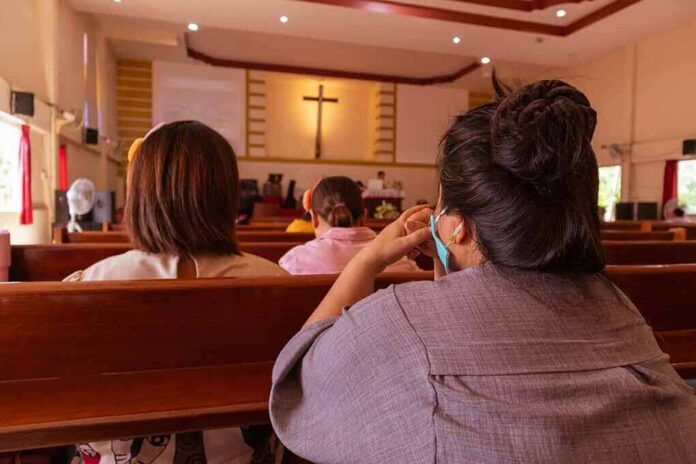
Conservative outlets published an undercover video on August 20 that attributes sharp comments to Rev. Babs Miller, a minister at St. Andrew’s Presbyterian Church in Austin, which reporting describes as Talarico’s longtime congregation. In the clip, Miller is quoted saying Talarico’s “sudden moderation” is political theater and that “once he gets elected, he’ll change his tune back to where he was.” The video’s circulation quickly framed the race around authenticity and trust rather than policy details.
Coverage states the conversation happened in a church context and ties Miller to a pastoral role, which gives the allegation an inside-the-circle feel for viewers. Several outlets repeated the same core quotes and themes, increasing attention even without a full release of the raw footage. That repetition helped the story break into broader discourse and prompted questions about whether Talarico’s current messaging marks a real shift or a campaign-season pose.
What We Do Not Know From the Available Footage
Reports describe the released clip as short and edited, with no full, uncut version posted for public review. That means the prompts, full context, and any qualifiers are unknown. Without the raw file, timestamps, or a full transcript, the clip offers a narrow window that can magnify one line while hiding others. The quote targets Talarico’s future actions, which makes it interpretive rather than a direct admission by the candidate himself.
Because the footage rests on a covert exchange, the chain of custody and the editorial process remain opaque. Skeptics will ask whether leading questions or selective cuts shaped the final sound bite. Supporters of the claim will say the minister’s words stand on their own. Both views can hold some weight in the absence of full context. Until more material appears, the video supports a narrative but falls short of exhaustive proof of intent.
How Talarico’s Side Frames the Media Challenge
Talarico’s allies point to a months-long pattern of manipulated media to argue that critics distort his record. Earlier this year, national outlets reported a Senate campaign ad used an artificial intelligence deepfake of Talarico and repackaged past lines into a speech he never gave. The ad included a small “AI generated” disclosure, which fueled claims that political actors are blending truth and fabrication to shape opinions before facts can catch up.
@jamestalarico @TeamTalaricoHQ @Reverend_Rigby Rev. Babs Miller is minister to the parish at the church James Talarico has called home since he was two. On hidden camera she said this about his new, milder positions:
“I can guarantee you that once he gets elected, he’ll change…— Conservwarrior (@Conservwarrior2) September 16, 2026
His team and fact-checkers also pushed back on a border clip shared online, calling it “deceptively edited” and saying opponents cut off a key part of his sentence. They argue the larger pattern is clear: use short videos to fit a story, move fast, and force the target to explain context later. That defense does not disprove the new church clip, but it explains why many voters across the spectrum now doubt splashy one-liners without full tapes.
Why This Resonates With Voters on Both Sides
Americans across the aisle feel politics is staged by elites, with images crafted by consultants while real problems go unsolved. Quick, edited videos tap that anger. If the minister’s quote reflects real strategy, it signals voters are being managed. If the clip is cut to mislead, it shows how easily media can manipulate the public. Either way, the episode feeds a shared worry: powerful actors can bend the truth while ordinary people carry the costs.
What Would Clarify the Truth
Three steps would cut through the fog. First, release the full, unedited recording with audio metadata and timestamps for independent review. Second, obtain an on-the-record statement from Rev. Miller explaining the remarks and context. Third, map Talarico’s policy statements over time to test the “sudden moderation” claim against a real timeline. These moves would not end debate, but they would replace guesswork with verifiable facts.
Sources:
youtube.com, thehornnews.com, dailywire.com, huffpost.com, cnn.com, politifact.com