Treasury Secretary Scott Bessent told Congress a $5,000 payment to every American adult would not add one dollar to the federal deficit, even as he admitted gas and grocery prices were still climbing under his watch.
Story Snapshot
- Bessent testified before the House Financial Services Committee and said the proposed $5,000 “dividend” checks can be paid without increasing the deficit.
- He admitted gas prices rose and food-at-home costs climbed 2.5% since President Trump took office, though he called the gas increase temporary.
- Rep. Maxine Waters and other Democrats pressed him on whether tariffs are fueling inflation and challenged his fiscal math on the dividend plan.
- Independent Federal Reserve research shows tariffs have already pushed up consumer prices, complicating Bessent’s claim that tariffs are not to blame.
Democrats Press Bessent On Everyday Costs
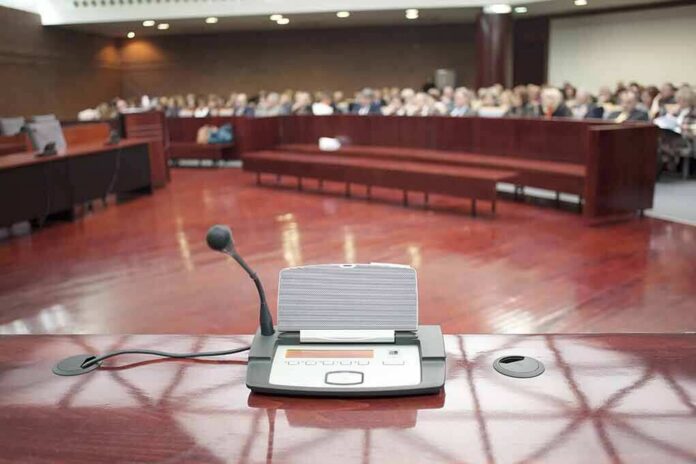
Lawmakers used back-to-back hearings in February and September 2026 to grill Bessent on why prices still feel high for working families. Rep. Maxine Waters and other Democrats on the House Financial Services Committee pushed him on gas, groceries, and housing costs, asking directly whether the administration’s trade policy was squeezing household budgets.
Rep. John Larson also confronted Bessent on gas prices, pressing him for a clear answer on whether relief was coming soon. Bessent responded by acknowledging the pain but insisting it would not last, telling lawmakers “gas prices have gone up, which I believe will be temporary”.
Treasury Chief Defends The Dividend Plan
Much of the September hearing centered on President Trump’s proposal to send $5,000 checks to American adults, a plan that could cost around $1.2 trillion. Bessent told Congress “there are ways to do it that would not affect the deficit,” rejecting warnings that the payout would blow a bigger hole in federal finances.
Outside analysts are not convinced. One estimate put the true cost near $1.15 trillion and predicted the spending could add several tenths of a percentage point to inflation as households spend the extra cash. That gap between Bessent’s assurance and independent number-crunching is exactly the kind of unresolved dispute both parties’ voters say they’re tired of hearing without a straight answer.
Tariffs Become A Flashpoint In The Hearing
Bessent has repeatedly argued tariffs are not driving inflation, pointing lawmakers to Federal Reserve Bank of San Francisco research and what he called “150 years of data.” He instead blamed rising housing and rental costs on immigration policy, a claim Democrats used to accuse him of dodging the tariff question entirely.
Sources:
That defense runs into trouble when checked against the government’s own economists. Federal Reserve staff research has found tariffs raised core goods prices by more than 3 percent through early 2026, accounting for nearly all the excess inflation in that category. Other Fed studies describe a slower, delayed pass-through, but nearly all agree tariffs pushed prices up to some degree [17].
Independent Research Complicates The Picture
Bessent has not been entirely dismissive of the pain. He told a Fox News host directly that “prices are too high,” blaming part of the pressure on an energy shock tied to wars in Iran and Ukraine rather than domestic policy alone [13]. He has also said core inflation, separate from food and energy, was heading down and would keep falling as those conflicts ease [14].
That mix of admissions and denials leaves regular Americans in a familiar spot: watching officials argue over which numbers to trust while their own grocery and gas receipts keep climbing. Whether the $5,000 checks arrive without new debt, and whether tariffs get more blame than they deserve, remains an open fight in Washington with no independent budget score yet settled.
Sources:
youtube.com, rawstory.com, cnbc.com, archive.org, nationalreview.com