
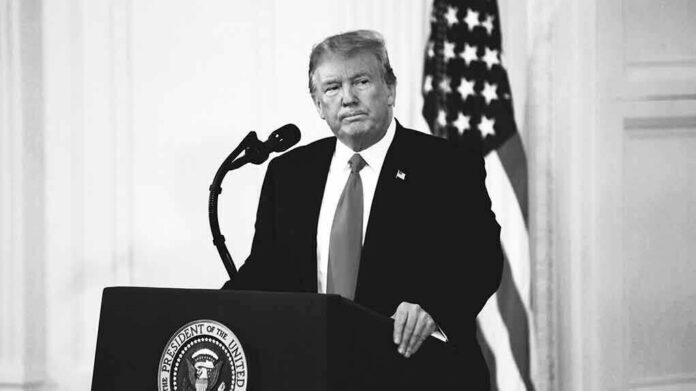
President Trump posted a “Lion versus the Jackal” video on X that cast his rivals as scavengers and himself as the lion, reigniting the battle over hard-edged political messaging online.
Story Snapshot
- Trump shared a “Lion versus the Jackal” montage on X, framing opponents as scavengers.
- The post fits his long-running use of viral, meme-style videos to project strength.
- Supporters saw a rallying message; critics saw more divisive imagery and rhetoric.
- The episode highlights how social media blurs lines between policy message and provocation.
What Happened: A Combative Video Drop on X
On Friday night, President Trump released a “Lion versus the Jackal” video on X. The montage set Trump as the lion and his political opponents as jackals. The clip used quick cuts and dramatic narration to portray constant attacks on Trump and a forceful comeback by the “lion”. The format echoed past Trump posts that use short, symbolic videos to make a point in plain terms. The message was about strength, enemies, and a promised return to order.
The video followed a pattern familiar to Trump’s audience. He often leverages short, emotional clips that spread fast across platforms. These pieces turn complex fights into easy symbols. That approach rewards speed and feeling over detail. It drives friendly shares and hostile backlash at the same time. The resulting storm pulls attention to Trump’s feed and away from slower policy talk. It is political theater for the scroll era.
Why It Matters: Messaging That Mobilizes and Polarizes
Trump’s lion-and-jackal framing is part of his broader media strategy. He has used stylized or edited imagery many times to set the tone for debates and to shape headlines. The point is not only to persuade. It is also to show dominance and resolve. That style works well with the incentives of social platforms. These systems reward heat, conflict, and novelty. The approach can energize supporters who feel institutions have failed them and want a fighter.
Critics argue that the same style deepens social rifts and distracts from governing. They say it turns rivals into enemies and policy into combat. Past episodes show how fast such content can spark outrage across the aisle, then force damage control from the White House or allies. The cycle is familiar: post, amplify, condemn, defend, and move on to the next clip. Each round leaves the public more focused on spectacle than solutions.
The Bigger Picture: Politics by Meme in a Distrustful Era
Trump’s online tactics tap into a wider mood in the country. Many Americans on the right and left believe Washington serves the well-connected first. They see high prices, shaky services, and leaders who talk past them. In that climate, sharp, simple videos hit hard. They promise clarity and action. They also feed a constant us-versus-them mindset that can crowd out patient problem-solving. The result is engagement without closure for core issues.
President Trump Releases Historic “Lion vs. The Jackal” Pro-American Video Exposing Scavenger Democrat Hyenas (Video) * The Gateway Pundit * by Jim Hoft https://t.co/NO3iXVtumc
— iamfish (@iamfish111) September 19, 2026
Data on Trump’s feeds shows that reposts and quick-hit visuals make up a large share of what reaches his audience, underscoring how platforms amplify short-form symbolism over long policy threads. Newsrooms and fact-checkers then rush to react. Supporters frame pushback as proof that elites fear plain talk. Opponents see the clips as stunts that corrode norms. Either way, the model keeps working, because attention is the prize and the algorithm keeps score.
Sources:
thegatewaypundit.com, x.com, thehill.com