House Republicans are building a massive 2026 war chest even as grassroots conservatives ask why Washington can fund campaigns overnight but still can’t deliver border security, lower energy costs, and an end to new foreign wars.
Story Snapshot
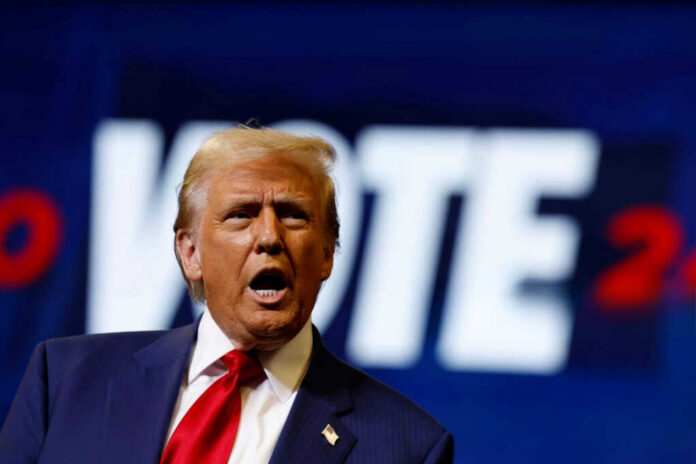
- President Donald Trump headlined the NRCC’s annual President’s Dinner on March 25, 2026, at Union Station in Washington, D.C., a centerpiece fundraiser ahead of the midterms.
- NRCC Chair Rep. Richard Hudson was expected to announce a major fundraising haul, following 2025’s record-setting $35.2 million dinner.
- House Republicans are defending a razor-thin majority while Democrats keep near-parity fundraising through the DCCC.
- The dinner landed amid a DHS funding lapse and broader voter anxiety over security, energy prices, and Middle East instability.
Trump’s NRCC Dinner: Money, Messaging, and Midterm Math
President Trump addressed House Republicans, donors, and supporters at the NRCC President’s Dinner on March 25, 2026, at Union Station in Washington, D.C., with remarks scheduled for the evening. The committee framed the event as a key step toward protecting and expanding the GOP House majority in November. Organizers also emphasized Trump’s continued central role in Republican fundraising, even as tight margins force strategic discipline in swing districts.
NRCC Chair Rep. Richard Hudson was expected to announce a significant total from the event, though reporting available at the time did not yet include the final number. The fundraising bar is high: the 2025 dinner featuring Trump raised $35.2 million and helped power a broader off-year haul that put the NRCC on unusually strong financial footing. This year’s push signals leadership’s belief that money will again decide the margin in expensive media markets.
Record Fundraising Meets a Razor-Thin Majority
The NRCC’s financial gains come with a warning label: Democrats are not being outgunned the way they sometimes were in prior cycles. Reports cited the NRCC raising $117.2 million in 2025, while the Democratic Congressional Campaign Committee nearly matched it, leaving both sides with roughly equivalent cash reserves. That dynamic shifts the midterm focus from simply “who has more money” to which party can recruit better candidates and maintain message discipline.
For conservative voters, that message discipline matters because campaign money does not automatically translate into legislative results. The same Washington that can fill a ballroom with donors still faces public frustration about inflation pressures, high energy costs, and day-to-day affordability. The available reporting also noted polling signals that economic and immigration issues—traditional GOP strengths—can become liabilities if voters conclude results are not matching promises, regardless of party branding.
DHS Funding Lapse Raises Security Stakes at Home
The dinner unfolded during a Department of Homeland Security funding lapse that had stretched more than a month, increasing pressure on lawmakers to reach an agreement. Reporting connected the standoff to growing concerns over airport security struggles and broader instability, placing basic government competence back on the ballot. For a conservative audience that prioritizes rule of law and border enforcement, a prolonged DHS disruption is a practical governance issue, not a talking point.
Trump’s Leverage Helps—and Can Complicate—Capitol Hill Strategy
Trump’s presence reliably energizes donors and activists, but the reporting also described recent moments of tension between the White House and congressional strategy. Earlier in March 2026, Trump pushed House Republicans toward a partisan elections bill with slim odds of becoming law, creating complications for leadership trying to manage floor time and negotiations. That reality underscores a midterm risk: even friendly majorities can burn time on symbolic fights while voters demand measurable wins.
What to Watch Next: The Numbers and the Agenda Voters Actually Feel
The immediate question is how large the 2026 NRCC dinner haul ultimately was, and how quickly the cash gets deployed into vulnerable seats. A second question is whether fundraising momentum translates into a sharper focus on issues voters experience directly—energy prices, public safety, immigration enforcement, and accountability in federal agencies. With Democrats showing they can compete financially, Republicans may need more than a record dinner to hold the House.
Limited data remains on the final fundraising total and the full substance of Trump’s remarks as reported at the time, so the near-term impact is hard to quantify. Still, the strategic picture is clear: Republicans are trying to project unity and momentum heading into 2026, while many conservative voters are demanding proof that campaign promises will become policy outcomes—especially on security and costs that hit families first.