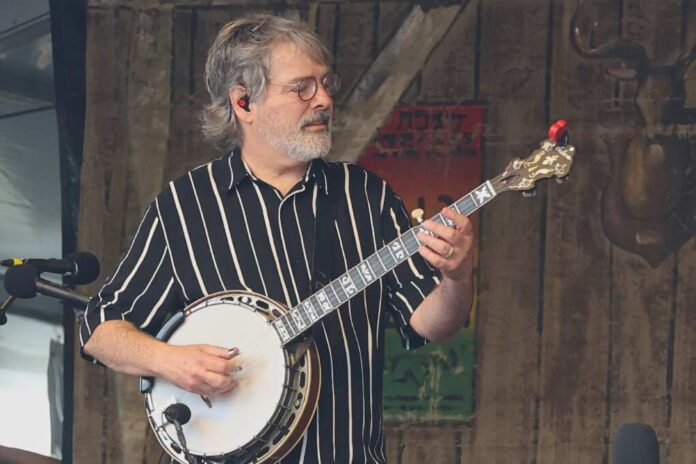
In an era where political correctness seems to infiltrate every corner of society, Grammy-winning banjo virtuoso Béla Fleck’s recent cancellation of his Kennedy Center performances due to “politics” has sparked a heated debate about the increasing political polarization in American arts institutions. His decision sets a precedent for artists using performance withdrawals as political statements, raising questions about their roles in politically charged environments and subjecting the high-profile Kennedy Center to scrutiny over its affiliations and perceived political leanings.
Story Highlights
- Béla Fleck, a Grammy-winning banjo player, canceled his Kennedy Center performances citing “politics.”
- The decision highlights increasing political polarization in American arts institutions.
- Fleck’s move raises questions about artists’ roles in politically charged environments.
- The Kennedy Center faces scrutiny over its political affiliations and donor influences.
Béla Fleck’s Decision to Cancel
Béla Fleck, renowned for his virtuosity and innovation, has stirred controversy by canceling his performances at the Kennedy Center. Citing “politics” as the reason, Fleck’s decision reflects a broader trend of artists using cancellations as political statements. While specific grievances were not detailed, the move underscores the growing intersection of art and politics, especially in high-profile venues like the Kennedy Center, which is often subject to federal and donor politics.
This cancellation is not an isolated incident. It fits a pattern where artists increasingly face pressure to take sides on contentious issues, from cultural disputes to donor controversies. The Kennedy Center has found itself in the crosshairs of such debates, with its programming and donor affiliations often scrutinized for political implications. Fleck’s decision to withdraw highlights the complex dynamics at play between artists and institutions.
Béla Fleck just announced he’s cancelling his performance at the Kennedy Center with the National Symphony Orchestra 💪 pic.twitter.com/yLTU3rMvqn
— Wu Tang is for the Children (@WUTangKids) January 6, 2026
Implications for the Kennedy Center
The Kennedy Center, a symbol of cultural prestige, now grapples with the fallout from Fleck’s cancellation. It raises important questions about the institution’s perceived political leanings and its ability to maintain neutrality. As artists like Fleck take stands, the Center must navigate these challenges while preserving its relationships with artists, donors, and audiences. The incident may prompt a reevaluation of its policies and affiliations to prevent future cancellations.
For the Kennedy Center, Fleck’s decision could lead to operational and reputational challenges. With the need to issue refunds and potentially reschedule shows, the Center must manage the financial and public relations aspects carefully. The situation could also influence other artists’ decisions to perform at the venue, as they reconsider the political implications of their engagements.
Impact on Artists and Audiences
Fleck’s cancellation has a ripple effect on both artists and audiences. For artists, it sets a precedent for using performance decisions as political leverage. This trend may encourage more musicians to scrutinize their associations with institutions like the Kennedy Center. For audiences, the expectation of political clarity from both artists and venues may increase, affecting how performances are marketed and perceived.
In the broader context, Fleck’s actions and their reception illustrate the ongoing politicization of the arts. This development challenges the notion of cultural spaces as neutral territories and encourages more explicit conversations among artists and audiences about the conditions under which performances occur.
Sources:
18-time Grammy winner cancels Kennedy Center show
Béla Fleck cancels Kennedy Center appearance, says it’s become charged and political
Bela Fleck Cancels Concert at Trump’s Kennedy Center
Musician Béla Fleck is the latest to cancel Kennedy Center performance