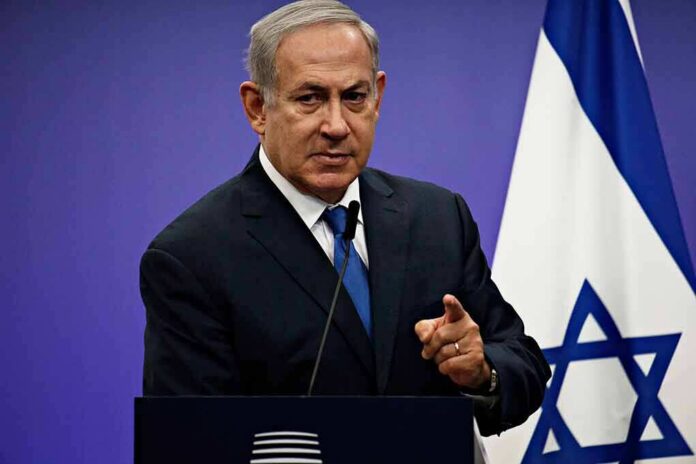
President Trump issued a “Complete and Total Endorsement” of Israeli Prime Minister Benjamin Netanyahu just nine days before Israel’s national vote, tying the choice to U.S. security against Iran.
Story Snapshot
- Trump endorsed Netanyahu’s reelection in a direct social post, calling him a partner for peace against Iran.
- The endorsement landed nine days before Israel’s October 27 election, raising its campaign impact.
- Netanyahu publicly thanked Trump and framed their work as a joint mission.
- Trump had declined to endorse Netanyahu days earlier, then reversed course.
What Trump Said And Why It Matters
President Trump wrote that his “Complete and Total Endorsement” backs Benjamin “Bibi” Netanyahu in Israel’s upcoming election. Trump praised Netanyahu as a “Great Warrior Prime Minister” and “partner for peace” in efforts against Iran. He linked Netanyahu’s leadership to continued United States–Israel cooperation, stressing shared security aims. Reporters noted the language came in a formal-style letter posted on social media. The message framed the stakes around Iran and regional security rather than domestic Israeli issues.
Trump’s endorsement targeted a real-time political event. Israel’s parliamentary vote is scheduled for October 27, placing the statement inside the final campaign stretch. That timing made the message clearly relevant to Netanyahu’s reelection push. Trump’s post also suggested that replacing Netanyahu could weaken coordination with the United States on Iran. That claim centered the security tie as the key reason for choosing Israel’s leader, which fits Trump’s broader focus on deterrence and alliances on his terms.
How Netanyahu Responded And What We Can Verify
Prime Minister Netanyahu publicly thanked Trump. In an official social post, Netanyahu said, “Thank you, President Trump, for the tremendous support and the joint work. Together we will complete the mission!” That response confirmed receipt and acceptance of the endorsement by the candidate himself. It also reinforced the shared message of security partnership. Major outlets covered the exchange as a campaign boost that Netanyahu sought in a tight, high-stakes race near the finish line.
Coverage also highlighted Trump’s shift in position. Days before the endorsement, Trump told an interviewer he had not decided to back Netanyahu. He said he “had a good relationship” but stopped short of a pledge. The formal endorsement then arrived on October 18. That quick turn created a contrast between caution and a late, full-throated push. The reversal does not change the fact of endorsement, but it shapes how observers read the timing and intent.
Why The Timing And Framing Hit A Nerve
American leaders and Israeli leaders have long used their ties for political gain at home. Past U.S. moves, like high-profile announcements near Israeli elections, became campaign assets. Trump’s public backing fits that pattern. The focus on Iran gives the message extra weight, since Iran policy touches fuel prices, military risk, and regional trade. Voters in both countries watch those costs. That is why a single post can echo far outside Israel’s ballot box and into U.S. debates about power and priorities.
"Trump endorses his ally Netanyahu in Israel’s upcoming election, says he is ‘partner’ US demands" – Reuters #SmartNews https://t.co/EHmBbRklIV
— Nazim Abdul-Latif (@goldeinmind) October 18, 2026
The endorsement also lands in a season of wider public frustration. Many conservatives see strength against Iran and support for Israel as vital. Many liberals worry about escalation and the human costs of conflict. Yet both sides share a concern that leaders use foreign policy as a stage for politics. Trump’s move shows how quickly a U.S. message can shape another nation’s campaign. It also shows how election clocks can drive security talk, even when long-term plans are not spelled out.
What We Know, And The Limits Of The Record
The record is clear on core facts: Trump endorsed Netanyahu, tied it to Iran, and did so nine days before the vote. Netanyahu thanked him and embraced the message. Reporting reproduces Trump’s wording, the date, and the election timeline. The sources do not prove whether Netanyahu is the strongest choice for U.S. interests. They do not identify a specific peace deal behind Trump’s “partner for peace” claim. The documentation shows the politics and the pitch, not a measured outcome study.
Bottom Line For U.S. Readers
Trump put the weight of the presidency behind Netanyahu at a decisive moment and made Iran the reason. That helps Netanyahu with voters who prize a tight U.S.–Israel bond, and it signals how the White House views regional risks. For Americans, the move previews coming fights over energy costs, military exposure, and how much politics should steer foreign ties. The message is simple but sweeping: who leads Israel matters for how the United States plans and pays for security in the Middle East.
Sources:
thegatewaypundit.com, nytimes.com, cnn.com, aljazeera.com, rmb.reuters.com, wsoctv.com, winnipeg.citynews.ca