President Trump spoke live with two astronauts aboard the International Space Station, turning the Oval Office into a classroom on American space ambition.
Story Snapshot
- Trump held a live video call with astronauts Peggy Whitson and Jack Fischer on the station.
- The exchange highlighted American research in orbit and future goals for deep space.
- The call followed a long tradition of presidents speaking with crews in space.
- Trump pressed on timelines and cheered U.S. leadership in space exploration.
What Happened: A Live Link From the Oval Office to Orbit
On April 24, 2017, President Trump joined a live video call with the International Space Station. Mission Control in Houston opened the line. Trump asked if the crew could hear him, and station commander Peggy Whitson confirmed a clear signal. NASA astronaut Jack Fischer also joined the downlink. The call marked a public moment to celebrate Whitson’s record-setting time in space and to spotlight ongoing research in microgravity that supports health, science, and future missions.
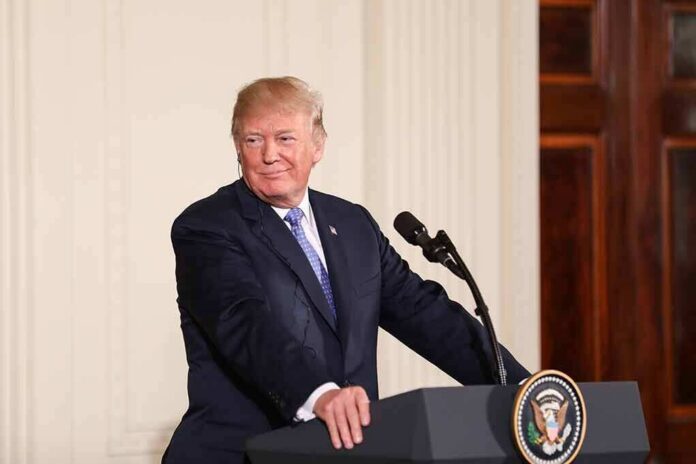
White House cameras showed the President in the Oval Office, joined by guests as he spoke with the crew. The astronauts described life and work in orbit, including experiments that test how the human body adapts to space. Trump praised their work and asked direct questions about next steps for exploration. The tone mixed ceremony with curiosity, as the call aimed to connect Americans at home with the crew’s daily tasks and big goals beyond low Earth orbit.
Why It Matters: Space Goals, Deadlines, and Public Attention
During the call, Trump pressed on how soon astronauts could reach Mars. His push for a faster timeline drew headlines and underscored a theme he returns to often: speed, results, and national pride. Coverage at the time noted he floated an aggressive date in a light, offhand way, which sparked debate about how to balance ambition with safety, budgets, and engineering limits. The moment helped frame space as a test of American will and focus, not only of science and hardware.
Calls like this can do more than mark a milestone. They can rally public attention and help secure support for big projects that span many years and many Congresses. The astronauts’ updates gave a human face to programs that can seem distant or slow. For families watching, the message was simple: Americans are still pushing boundaries in space, and kids who study science today could help lead the next mission to the Moon or Mars tomorrow.
The Bigger Picture: A Presidential Tradition and a Civic Moment
Presidents have dialed into space for decades. President Barack Obama spoke with the International Space Station and Space Shuttle crews by satellite in 2009 and 2010, using the same basic format: a greeting, a voice check, and a back-and-forth with astronauts. The ritual ties the office to the frontier and reminds both parties that spaceflight is national work. Trump’s 2017 call fit this pattern while stressing speed and American-made excellence.
In an era when many citizens feel the system fails them, moments like this can still unite. The call did not fix high prices, mistrust, or waste in Washington. It did show public servants doing hard work with clear goals and visible results. For some, that is a welcome break from daily fights. For others, it is a prompt to ask whether bold targets in space can inspire the same urgency to solve problems at home, where results feel overdue.
Sources:
trumpwhitehouse.archives.gov, youtube.com, nytimes.com