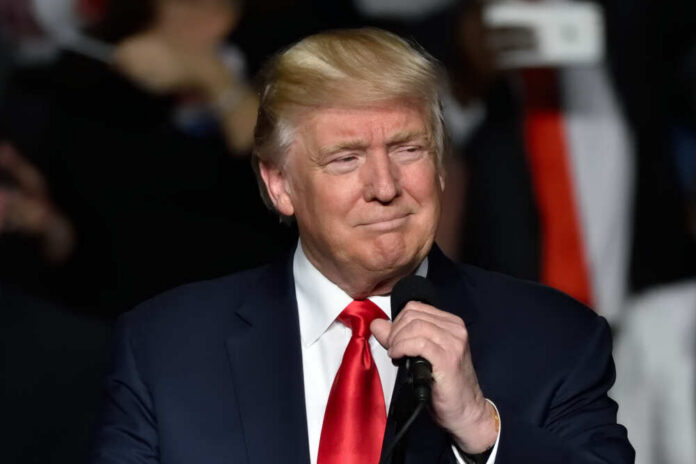
President Trump’s primetime election speech has reignited a high‑stakes clash between his push for stricter voting rules and an establishment still insisting past elections were clean.
Story Snapshot
- Trump used a rare primetime address to spotlight alleged foreign meddling and voting machine risks while calling for tougher national voting laws.
- The White House launched a document website of newly declassified election files, which critics say lacks proof that votes were changed.
- Intelligence and justice reports still say no foreign actor altered voting systems or vote counts in 2020, clashing with Trump’s warnings.
- Trump’s “Save America” style reforms would tighten voter ID and mail‑in rules, which Democrats and media attack as “restrictive” despite weak evidence of fraud.
Trump Puts Election Security Front and Center Before Midterms
President Trump chose a rare primetime slot to talk directly to the country about elections, security, and trust in the vote. He tied the upcoming midterms to bigger questions conservatives have asked for years: who controls our voting systems, and can foreign powers or partisan insiders tip the scales. In his address, he warned about serious flaws in the current system and said he was declassifying intelligence on foreign interference and voting machine weaknesses tied to the 2018 and 2020 elections.
The timing was no accident. Republicans face tough races that could shape the rest of Trump’s second term, and Democrats continue to use “election denier” labels to attack anyone who questions the 2020 result. By going on national television, Trump worked to seize the narrative, argue that past elections were vulnerable, and build support for a national push on voter identification and ballot rules. For many right‑leaning voters, the speech felt like long‑overdue attention to problems they have watched grow for a decade.
Declassified Files, Foreign Threats, and the Machine Question
During the address, Trump said newly released intelligence showed “shocking vulnerabilities” in America’s election systems, including risks from foreign actors like China, Russia, and Iran targeting voter data and equipment. As he spoke, the White House rolled out a new website with investigation files, intelligence analysis, and correspondence meant to highlight these concerns. Supporters cheered the transparency and argued this kind of sunlight is what Washington should have provided years ago instead of hiding problems behind classified labels.
Critics, including establishment media and Democratic lawmakers, immediately claimed the files did not prove that any votes were changed or that results were altered. They pointed back to a 2021 intelligence community assessment that said there were no signs a foreign actor “altered any technical aspect of the voting process,” even while noting Russian and Iranian cyber campaigns touched some election networks. A joint statement from the Department of Justice and Department of Homeland Security likewise said they found no evidence that foreign government‑linked actors blocked voting, changed votes, or disrupted counting in 2020.
Trump’s Claims Collide With Official Narratives
Trump’s address did more than raise technical concerns; it challenged years of official assurances head‑on. He has long argued that millions of voter records are vulnerable and that foreign powers could steal data or even generate fake ballots, and he now presents intelligence declassification as backing for those fears. Yet House Intelligence Committee Democrats responded by warning that “no intelligence to the contrary” of the 2021 assessment has ever been given to them, accusing the White House of “weaponizing” selective documents to justify new voting limits.
This clash leaves voters caught between two very different pictures. On one side, Trump and many conservatives say the system is too easy to exploit, especially with loose mail‑in rules, weak voter ID, and opaque election technology. On the other, federal reports and most legacy outlets keep repeating that there is no proof of large‑scale fraud or foreign vote‑changing, even as they admit cyber threats exist and cannot be fully removed from complex computer‑based voting systems. For a public already skeptical after years of mixed messages, the gap between these claims only deepens mistrust.
Push for Stricter Voting Laws and the Fight Over “Voter Suppression”
Trump used the speech to build support for a package of reforms often described by backers as a “Save America” approach to voting. He highlighted national voter ID standards, tighter controls on mail‑in ballots, and stronger chain‑of‑custody rules as basic common‑sense steps to secure elections. Many conservatives see these ideas as simple protections of one person, one vote. They believe clear identification and clean voter rolls are essential if citizens are going to trust results again after years of doubt.
On July 16, 2026 (yesterday), President Trump delivered a primetime address from the White House on election security. In it, he:
• Publicly referenced intelligence claiming China illicitly acquired ~220 million U.S. voter files (names, addresses, phone numbers, political party…— American Girl (@BlueLadyDi) July 17, 2026
Democrats and most major media outlets quickly painted these proposals as “restrictive laws” that would make voting harder, especially for groups they see as part of their base. Yet election experts have repeatedly found little evidence of the kind of widespread impersonation fraud that strict ID would block, while also noting that unsubstantiated fraud claims can lower confidence in elections themselves. That leaves a hard tension for conservatives: secure the system enough to restore trust without giving the left more ammunition to shout “voter suppression” every time Republicans push tighter rules.
Media Blackouts, “Weaponized Intel,” and What Comes Next
Trump’s speech also exposed a widening divide between the White House and the legacy media. Several big broadcast networks declined to air the address live, a rare move for a sitting president speaking on national security and election integrity. To many on the right, that looked like yet another attempt to control the story and keep voters from hearing anything that questions the 2020 narrative or supports stronger ID and ballot safeguards.
At the same time, Democratic leaders and allied commentators rushed to frame the declassification effort as a “weaponized” use of intelligence to grab more federal power over elections. They argue that amplifying doubts, without hard proof of changed vote totals, harms faith in the system. But for many Trump supporters, it is the secrecy, shifting stories, and quick media dismissals that erode trust. As the midterms near, the country now faces two competing fears: one that foreign powers and lax rules threaten honest votes, and another that raising those alarms will itself damage confidence in our elections for years to come.
Sources:
youtube.com, politico.com, reuters.com, npr.org, stylemagazine.com, x.com, intel.gov, int.nyt.com, 2021-2025.state.gov, pmc.ncbi.nlm.nih.gov, cambridge.org, brennancenter.org