New York City’s school system opened a formal probe after a Brooklyn teacher allegedly praised Yahya al-Sinwar, the Hamas leader tied to the October 7 attack, in a group chat.
Story Snapshot
- Named teacher tied to alleged “Long live Yahya al-Sinwar” message in lawsuit.
- New York City Department of Education says the case was sent for investigation.
- Reports cite additional anti-Israel images from the teacher’s social media.
- The legal and policy question turns on off-duty speech and school disruption.
What Sparked The Investigation
Named reports state that Damien Neva, a special education teacher at Public School 77 in Brooklyn, allegedly wrote “Long live Yahya al-Sinwar” in a Park Slope Food Coop Signal group chat in November 2024. Coverage says the quote surfaced in a lawsuit by Jewish coop members who challenged efforts to boycott Israeli products. The reporting describes the quote as a direct message in the chat. The underlying complaint and full chat record were not provided in the coverage cited.
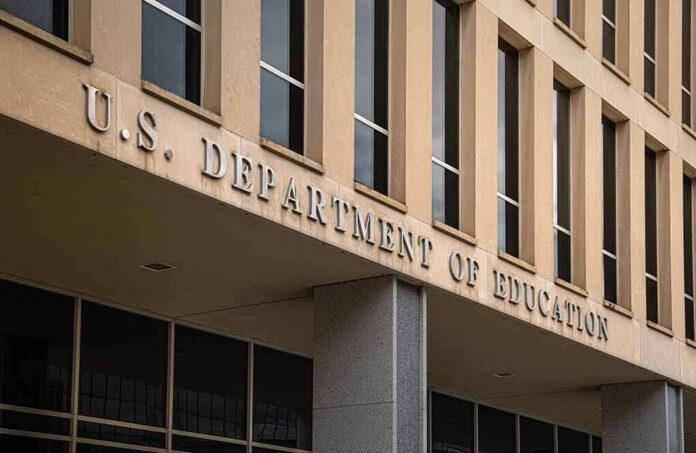
The New York City Department of Education said the allegation “has been reported and referred for investigation, in accordance with Chancellor’s Regulations,” according to outlets that contacted the agency. That referral means the case goes into a standard review process used for staff conduct. It does not mean the claim has been proven. The teacher did not issue a public statement in the coverage reviewed. One outlet said he declined comment when approached by a reporter.
Alleged Social Media Pattern And Public Reaction
Additional reports say the teacher’s social media accounts showed anti-Israel images. Those included a crossed-out Israel sticker, a Star of David over the Statue of Liberty, and a comparison between Warsaw in 1944 and Palestine in 2024. The articles did not include verified originals, which leaves open questions about context and timing. Still, the images described fueled anger among parents and community members who see praise for a terror leader as beyond protected debate.
The controversy taps a wider public concern that schools move too slowly on staff misconduct yet too quickly on speech. People on the right argue this proves double standards and tolerance for extremism in elite spaces. People on the left argue off-duty speech, even offensive, can still be protected if it does not disrupt school. Both sides worry that officials protect their own rules over the needs of families and students.
What The Rules Allow And Why It Matters
Courts weigh a public employee’s speech rights against a school’s need to run safely and smoothly. Legal guides explain that speech on public issues can be protected, but districts may act when posts cause concrete disruption or threaten student safety or trust. That balancing test explains why school leaders often start with an investigation. They must link the speech to impact at school, not just to political outrage outside the classroom.
For families, the stakes feel high. The October 7 attack killed and traumatized many, and praise for its architect will strike some as an endorsement of violence. For teachers, due process and clear lines matter too. The system must prove a real job nexus before it punishes off-duty speech. When leaders hide the ball, both sides suspect the process is rigged. That erodes trust and feeds the view that powerful insiders protect themselves, not the public.
What To Watch Next
Watch for three things. First, whether investigators confirm the chat post with original records from the lawsuit. Second, whether the district shows school-based disruption, such as parent withdrawals, safety complaints, or classroom issues. Third, whether the teacher or union offers a response. If facts are verified and a work nexus is shown, discipline may follow. If not, policy training or a warning is more likely than removal under current legal standards.
Sources:
thegatewaypundit.com, nypost.com, timesofisrael.com