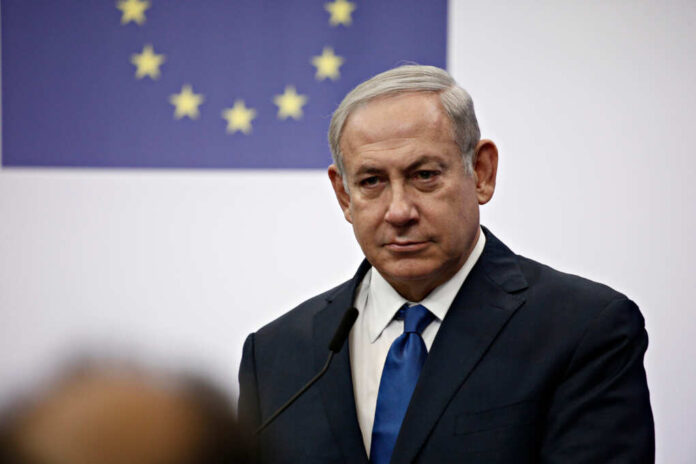
Benjamin Netanyahu’s decision to join President Trump’s Gaza Board of Peace marks a critical shift in Middle Eastern politics, underscoring a pivotal U.S.-Israel alliance.
Story Highlights
- Netanyahu joins Trump’s Board of Peace despite initial criticisms.
- The board aims to demilitarize Gaza and replace Hamas.
- Trump’s plan emphasizes U.S.-Israel alignment amid global tensions.
- Netanyahu’s decision follows an ICC arrest warrant.
Netanyahu’s Strategic Move
Israeli Prime Minister Benjamin Netanyahu has decided to join the newly created Board of Peace, led by U.S. President Donald Trump. This decision marks a significant turnaround from Netanyahu’s earlier criticisms of the board’s composition, which includes figures from Turkey and Qatar. The board is tasked with overseeing the next phase of Trump’s 20-point Gaza peace plan, aiming to demilitarize the region and replace Hamas. This move highlights the ongoing strategic partnership between the U.S. and Israel.
Netanyahu’s acceptance comes despite an International Criminal Court warrant against him for alleged war crimes. His decision underscores the importance of U.S. backing in navigating international pressures and maintaining security in Israel. The announcement, made via social media, aligns with Trump’s efforts to cement his Middle Eastern legacy by advancing a peace framework that bypasses traditional UN channels.
Watch:
Background and Implications
The Gaza peace plan, unveiled in September 2025, builds on historical attempts to stabilize the region, such as Israel’s 2005 withdrawal, which Trump critiqued as a failed venture. The plan’s first phase successfully negotiated the release of hostages, reinforcing Netanyahu’s strategy. However, with Hamas still undefeated and one hostage remaining, the success of phase two hinges on complex negotiations and the board’s effectiveness in mobilizing resources for Gaza’s demilitarization.
The board includes influential figures such as Jared Kushner, Marco Rubio, and Steve Witkoff, who are instrumental in shaping the plan’s execution. Despite tensions with Turkey and Qatar’s involvement, Trump’s approach seeks to redefine the power dynamics in the Middle East, challenging the status quo and potentially reshaping international relations.
Challenges and Future Prospects
The decision to include Netanyahu reflects strategic calculations amidst geopolitical tensions. While the alliance with the U.S. strengthens Israel’s security stance, it also risks inflaming regional rivalries. Trump’s plan, viewed by some as sidelining the UN, faces criticism for potentially allowing a resurgence of Hamas under rival influences. As phase two progresses, the board’s ability to enforce a stable transition in Gaza remains a focal point for international observers.
In the short term, the plan could gain momentum at the upcoming Davos signing ceremony. However, long-term success depends on effective disarmament strategies and the establishment of a technocratic Palestinian administration. The outcome will significantly impact regional stability and the broader Middle Eastern peace landscape.
Sources:
Netanyahu Agrees to Join Trump’s Gaza Board of Peace After Initial Pushback
Trump Gaza Push a Recipe for Hamas’s Revival, But Netanyahu is Unwilling to Stir the Pot
Gaza Peace Plan