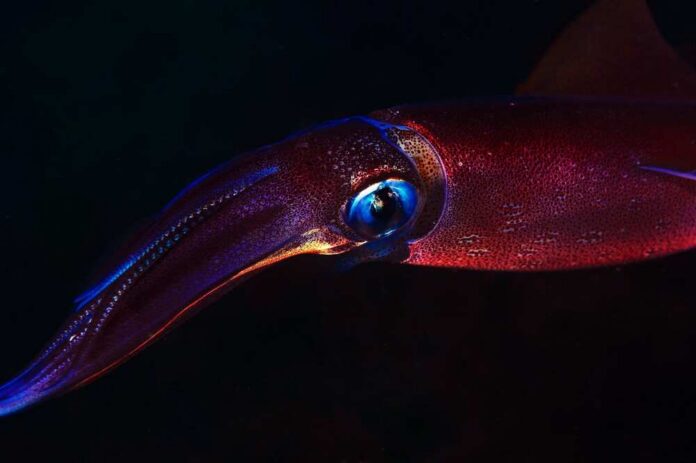
Scientists have detected giant squid DNA in deep ocean canyons off Western Australia for the first time in over 25 years, revealing mysteries hidden in one of Earth’s least explored ecosystems.
Story Snapshot
- Giant squid DNA detected in six water samples from submarine canyons at depths exceeding 4,510 meters off Western Australia
- First eDNA detection of the elusive species in Western Australian waters and northernmost record in the entire eastern Indian Ocean
- Revolutionary environmental DNA technology allows scientists to identify species without direct observation or capture
- Comprehensive survey identified 226 species across 11 major animal groups in previously unexplored canyon ecosystems
Groundbreaking Discovery in Unexplored Waters
Researchers from Curtin University, the University of Western Australia, and the Western Australian Museum detected genetic traces of giant squid in Cape Range and Cloates submarine canyons located approximately 1,200 kilometers north of Perth. The team collected over 1,000 water samples using the Schmidt Ocean Institute’s R/V Falkor research vessel, marking the first confirmed eDNA record of Architeuthis dux in the region since before 2001. Only two other historical records of giant squid existed in Western Australian waters prior to this survey.
Revolutionary DNA Technology Unlocks Deep-Sea Secrets
Environmental DNA methodology allows scientists to detect species through genetic material shed naturally via skin, mucus, and other biological processes, eliminating the need for direct observation or capture. This approach proves particularly valuable for studying elusive creatures like giant squid, which inhabit extreme depths ranging from 300 to over 1,000 meters and are rarely encountered alive. The technology represents a paradigm shift for marine research, enabling comprehensive biodiversity assessments in environments previously considered too challenging to study effectively using traditional methods.
Rich Ecosystems Reveal Depth-Stratified Biodiversity
The survey identified 226 species across 11 major animal groups, including pygmy sperm whales, Cuvier’s beaked whales, sleeper sharks, and deep-sea corals. Dr. Lisa Kirkendale, Head of Aquatic Zoology at the Western Australian Museum, emphasized that these canyons represent incredibly rich ecosystems that remained largely unexplored due to extreme depth challenges. Each depth zone exhibited unique taxonomic composition, with distinct species assemblages adapted to specific environmental conditions. The two canyon systems showed different biodiversity patterns, indicating complex ecological zonation previously unknown to science.
Implications for Conservation and Future Research
The discovery provides crucial data for marine conservation planning and resource management in Australian waters. The identification of previously undetected species and confirmation of giant squid presence supports the case for expanded marine protected areas to safeguard these fragile deep-sea ecosystems from potentially damaging activities such as deep-sea mining or drilling. The validation of eDNA methodology for extreme-depth applications positions this technology as the standard for future deep-sea biodiversity surveys, likely inspiring additional expeditions to other unexplored submarine canyons worldwide and accelerating our understanding of Earth’s final frontier.
Sources:
Giant squid eDNA discovery in Australia – Discover Wildlife
Giant squid found in Western Australian waters in eDNA study – Oceanographic Magazine
Giant squid among rare elusive marine life detected – Phys.org
Deep sea giant squid and unknown species – Indian Defence Review