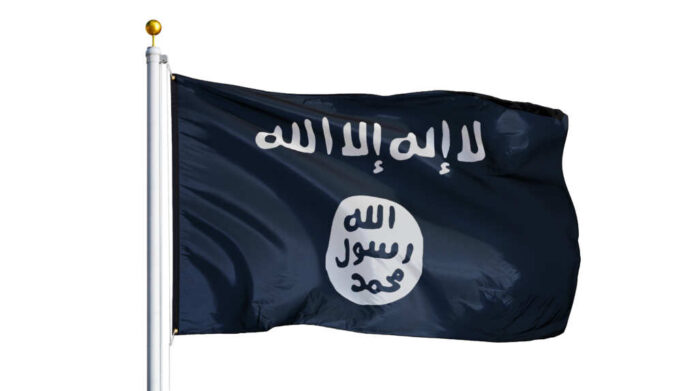
The black flag of ISIS is once again dominating headlines, signaling a dangerous resurgence of the terror group that is actively exploiting the global instability and security vacuums created by a distracted West. Following the fall of the Assad regime in late 2024, Syria descended into a chaos of competing militias, allowing ISIS cells to reactivate and transform into an agile, borderless insurgency. This comeback is unfolding as Western powers are focused elsewhere and have reduced their presence in the region. The escalating threat, spanning from the Middle East to Europe and the U.S., serves as a stark warning about the failures of weak borders, globalist fantasies, and the high cost of ignoring hard security realities.
Story Snapshot
- ISIS is resurging in Syria and abroad after the fall of Assad and years of complacency about the terror threat.
- Power vacuums, U.S. and coalition drawdowns, and distracted Western leadership are giving jihadists new room to operate.
- Attacks from the Middle East to Europe and the U.S. show ISIS has shifted to a stealthy, borderless insurgency.
- For American conservatives, this is a hard warning about weak borders, failed globalism, and the cost of ignoring hard security realities.
ISIS Exploits Syria’s Collapse and a Global Security Vacuum
After the Assad regime fell in December 2024, Syria slid into a dangerous security vacuum that jihadists quickly learned to exploit. Competing militias, tribal forces, and interim authorities carved up territory, leaving large stretches of southern and northeastern Syria effectively ungoverned. ISIS cells, which had never fully disappeared, reactivated across this broken landscape. The black flag returned not as a symbol of a formal caliphate, but as the calling card of an agile insurgency feeding on chaos, corruption, and weak states.
Through 2025, ISIS attacks have surged in key Syrian regions that once were held up as proof of victory over the group. In the northeast, Kurdish-led forces tracking terror activity report that ISIS militants carried out more than one hundred attacks by late summer, already blowing past the previous year’s total. In the south, cells operating around Daraa and Suweida have staged assassinations, bombings, and filmed executions designed to terrorize locals and signal that the organization is back in business despite years of Western triumphalism.
Bondi gunmen had links to ISIS | 9 News Australia
From Territorial Caliphate to Shadowy Global Network
A decade ago, ISIS ruled a statelet across Iraq and Syria, complete with tax systems, courts, and its notorious black flag over captured cities. Today, it no longer holds large, contiguous territory, but that does not mean the threat has faded. The group has adapted into a looser network of cells, affiliates, and inspired attackers spread across the Middle East, Africa, Europe, and the West. Instead of armored convoys, it relies on hidden safe houses, encrypted communications, and opportunistic strikes against soft civilian and security targets.
Analysts now describe ISIS as organizationally weakened but strategically nimble, able to shift quickly between local insurgency and transnational terror. Its propagandists still use the black banner in videos and online messaging, but more as a rallying symbol than a flag planted over a capital. The group exploits detention camps in northeastern Syria as long-term recruitment pools, taps into grievances in Iraq’s disputed territories, and rides waves of instability in Africa and Afghanistan. For American readers, this is a reminder that terrorism mutates; it rarely disappears when Washington declares “mission accomplished.”
Western Drawdowns, Global Distraction, and the Cost of Complacency
The ISIS comeback is not happening in a vacuum; it is unfolding while Western governments are distracted by great-power politics, climate agendas, and domestic ideological battles. Official assessments in 2025 warn that the global response to ISIS is waning just as the group is regaining operational tempo. U.N.-linked reporting highlights that ISIS and al-Qaida threats are escalating in Africa, with Syria still a major hub. Yet U.S. and coalition troop levels in Syria and Iraq have been cut, shrinking the on-the-ground pressure that once kept jihadists off balance.
Recent timelines show U.S. forces in Syria reduced to fewer than a thousand troops, with parallel drawdowns beginning in Iraq. Those cuts line up with a noticeable spike in ISIS attacks in April and May 2025, suggesting that terrorists are reading the same troop charts Western voters never see. For American conservatives who spent years warning that premature withdrawals from Iraq created ISIS in the first place, this pattern feels painfully familiar. When Washington turns inward or chases fashionable causes, hard men with black flags rush to fill the vacuum.
Southern Syria: Demilitarized Zones, Border Politics, and Terror Safe Havens
Southern Syria offers a case study in how complex border politics and half-measures can unintentionally shelter extremists. The region around Daraa and the Yarmouk Basin is formally constrained by demilitarization arrangements tied to Israeli security concerns. Heavy Syrian forces are limited, airspace is tightly controlled, and a patchwork of local militias fills the gap. Military analysts in regional media now argue that these restrictions have created a gray zone where lightly armed ISIS cells can move and regroup with fewer obstacles than conventional forces.
ISIS has used that space to send a message. A video of a captured General Security member executed in the Daraa countryside circulated as a deliberate “we are back” announcement. Claims of responsibility for bombings of a church in Damascus, a security site in Deir ez-Zor, and attempts near sensitive shrines show the group can strike beyond rural hideouts. For Americans, this highlights a broader lesson: when outside powers micromanage borders and demilitarize front lines without restoring real order, terrorists, not peaceful civil society, are usually the first to take advantage.
Why This Matters to Americans Who Care About Security and Sovereignty
For U.S. readers already frustrated by years of open borders, endless wars, and political leaders obsessed with pronouns instead of protection, the renewed ISIS threat reinforces core concerns. A world with more failed states, more security vacuums, and weaker Western resolve is a world where America faces higher risks at home. The same ideology that fuels bombings in Syria has inspired attacks in Iran, Russia, Germany, and even New Orleans, reminding us that oceans and slogans cannot substitute for vigilance and strength.
Conservatives who value a strong military, secure borders, and a clear-eyed view of evil will see the black flag’s return as both a warning and a call to sanity. The lesson of 2024–2025 is not that America must police every street in the Middle East, but that ignoring hard threats while fixating on globalist fantasies carries a price. As Trump’s new administration focuses again on national sovereignty and hard power, the ISIS resurgence is a sobering reminder of what happens when the West lets its guard down.
Watch the report: ISIS is Back — Recent Islamic-State-Inspired Attacks Are Pointing to A Growing Threat
Sources:
Black Flags in Southern Syria: Who Is Helping ISIS Expand and Regroup?
Academic analysis of ISIS post-caliphate networks and regional dynamics
How ISIS could be linked to the deadly Bondi Beach mass shooting | CBC News.