The Justice Department has ordered every state to prove its elections are secure while demanding access to millions of voters’ most sensitive personal data.
Story Snapshot
- The Department of Justice (DOJ) sent warning letters to election officials in all 50 states and Washington, D.C., tying them to criminal liability if noncitizens vote.
- DOJ is suing dozens of states to obtain full voter rolls, including driver’s license and Social Security numbers, raising major privacy concerns.
- Courts in several states have already thrown out DOJ lawsuits, saying the federal government has no authority to seize this confidential data.
- Both conservative and liberal groups warn the fight could let Washington quietly centralize control over state-run elections and deepen public mistrust.
What DOJ Is Demanding From the States
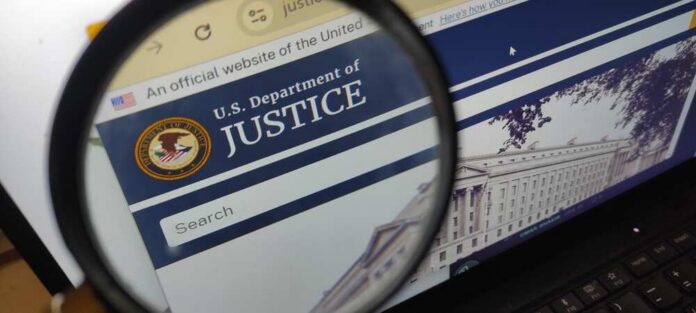
The Trump administration’s Department of Justice has launched a nationwide push to collect detailed voter information from almost every state and Washington, D.C. Starting in May, the department began sending formal letters to chief election officials demanding complete statewide voter registration lists, including home addresses, driver’s license numbers, and partial Social Security numbers. In early August, DOJ escalated by sending a new set of letters signed by the head of the Civil Rights Division, reiterating its demand for full databases and citing federal record laws as the basis for the request. DOJ says it needs this information to check whether states are following federal rules for keeping voter rolls accurate and ensuring only eligible citizens vote.
These letters do more than ask for cooperation. They warn that election officers who knowingly keep noncitizens on voter rolls or allow them to cast ballots could face criminal charges under federal law. A DOJ spokesperson has framed the effort as simply enforcing existing rules so that “only citizens vote in federal elections.” For many Americans worried about illegal immigration and voter fraud, that sounds like long-awaited action. But the scope of the request is massive. At least 48 states and Washington, D.C., have received demands for their full voter registration lists, and DOJ has sued Washington, D.C., and 30 states that refused to provide unredacted data with driver’s license and Social Security numbers.
Privacy Fears and Courtroom Pushback
Voting rights groups, privacy advocates, and many state officials say the federal government is going far beyond what the law allows. The Brennan Center for Justice notes that these voter files contain highly sensitive personal data and warns that collecting them in one federal system “raises serious privacy and security concerns” and may violate state and federal laws. Common Cause and Protect Democracy have sued DOJ to stop what they describe as an attempt to build an unprecedented national voter database and seize control of list maintenance, a job the Constitution and federal statutes leave to the states. Their lawsuit points out that no law gives DOJ power to run nationwide voter purges based on its own data matching.
The courts are starting to agree. Judges in at least eight states, including Arizona, Maine, Wisconsin, Michigan, Oregon, California, Massachusetts, and Rhode Island, have dismissed DOJ lawsuits seeking unredacted voter rolls. Every judge to rule so far has found the demands for confidential data unlawful. A separate Brennan Center tracker shows DOJ has filed 30 suits and already seen 11 dismissed, underscoring how shaky its legal footing appears. Even some Republican-led states have balked. Illinois declined to hand over sensitive data, and experts like the Center for Election Innovation and Research argue “there is zero federal law” entitling DOJ to that level of personal information. Yet other states, many in the Deep South and Great Plains, have complied and sent their full lists, including driver’s license and Social Security numbers.
Is There Evidence of Widespread Noncitizen Voting?
For citizens on both the right and the left, the key question is simple: is there real evidence that noncitizen voting is a major problem, big enough to justify this kind of federal power grab? So far, the public record says no. Multiple analyses, including conservative legal databases and bipartisan research, find that noncitizen voting is “exceedingly rare,” with only a small number of cases documented over decades. Even DOJ has not produced proof of systemic noncitizen voting to match the scale of its enforcement push. State election officials in places like Michigan, Arizona, Nevada, and Utah say they see no sign of a widespread problem and describe their voter rolls as clean and already in line with state law.
This gap between fear and facts fuels deep frustration. Many conservatives believe past administrations ignored fraud risks, while many liberals see the new campaign as a way to scare election workers and weaken access to the ballot. Both sides can look at this fight and see a familiar pattern: Washington claiming emergency powers, demanding more data, and threatening more control, even when the evidence is thin. Research on past fraud claims shows that constant talk about “rigged” or “illegal” voting can sharply reduce public trust, especially among the president’s own supporters. That loss of trust, once spread, is hard to repair.
States, Lawsuits, and the Fear of Federal Takeover
The clash is not only about data; it is also about who runs elections in America. Elections are supposed to be managed by the states, with the federal government setting some guardrails but not holding the keys to every voting system. Yet the Brennan Center tracker and advocacy lawsuits show DOJ trying to centralize voter information and even compare it against the Department of Homeland Security’s Systematic Alien Verification for Entitlements program, a database critics say is “notoriously inaccurate.” Privacy advocates warn that this could lead to false matches and pressure on states to purge legitimate voters, especially naturalized citizens with complex records.
Washington State
ELECTION 2026
DOJ threatens Washington State election officials with prosecution if noncitizens vote
July 7, 2026
Federal authorities on Tuesday threatened Washington State election officials with criminal prosecution if they fail to prevent noncitizens from… pic.twitter.com/iMpKM70sXn
— S.A. Dupres (@Susan_Dupres) July 8, 2026
Civil liberties groups like the American Civil Liberties Union have joined 25 states and Washington, D.C., in legal action to block DOJ’s data seizure, arguing the federal government must “stay out of elections” when it comes to sensitive personal information. The Campaign Legal Center says bluntly that DOJ is “attempting to exert control over our elections and seize voter data,” and has taken legal action in five states to stop the effort. For many Americans of all political stripes, this looks less like protecting elections and more like building a federal tool that future administrations—of any party—could use to pressure states, punish opponents, or chill voter participation. In a time when people already feel the “deep state” serves insiders first, the image of one central database holding the private data of nearly every voter may confirm their worst fears.
Sources:
brennancenter.org, youtube.com, democracydocket.com, nytimes.com, nbcnews.com, facebook.com, justice.gov