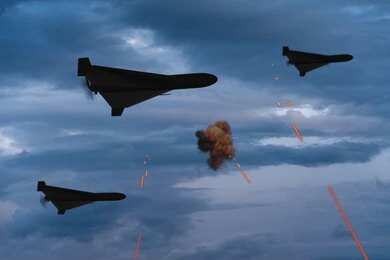
Ukrainian drones just hit Russia’s largest oil refinery — deep inside Siberia, 2,500 kilometers from the front lines — and the facility lost roughly three-quarters of its production capacity overnight.
Story Highlights
- On July 6, 2026, Ukrainian drones struck the Omsk refinery in Siberia for the first time, triggering fires and forcing a production halt.
- The refinery lost an estimated 75% of its output capacity, according to military analysts, though Russia disputes the full extent of the damage.
- Ukrainian forces have now struck Russian oil refineries at least 194 times in the first half of 2026, creating fuel shortages across dozens of Russian regions.
- Russia’s base oil exports have nearly stopped since early June, driving up lubricant prices globally.
A Strike Deep Into Siberia
Ukraine’s military confirmed the July 6 attack on the Omsk refinery, Russia’s largest. The facility sits roughly 2,500 kilometers from the Ukrainian border — a distance that would have been unreachable just two years ago. Ukraine’s Special Operations Forces said the strike hit the refinery’s main crude processing unit, which handles about 8.4 million tonnes of oil per year. Social media footage showed heavy smoke rising from the facility shortly after the attack.
Industry sources cited by Reuters reported that the primary crude processing unit caught fire and that a second major unit was also knocked offline — not from a direct hit, but because the fire damaged its control systems. That second unit could potentially restart soon, sources said. Russia’s regional governor confirmed damage and said emergency crews responded. Putin’s envoy to Siberia, Anatoly Seryshev, said no workers were injured and that a full damage assessment was underway.
How Big Is the Damage — and Who’s Telling the Truth?
Ukraine’s military claims the Omsk refinery lost about 75% of its production capacity and suspended operations entirely. A separate Ukrainian military report puts the total share of Russia’s refining capacity knocked offline — across all strikes — at roughly 43%. The International Energy Agency, a Western watchdog, puts that nationwide figure at “more than 20%.” Russia, meanwhile, called the Omsk damage “minor” and claimed its air defenses shot down 600 of 625 drones launched in recent days — a 98% interception rate.
The gap between those numbers is wide, and the truth likely sits somewhere in between. Russia controls the refinery and has every reason to downplay the damage. Ukraine has every reason to talk it up. What’s not in dispute: the plant halted operations, fires burned, and independent industry sources confirmed the strike caused real disruption. Footage from the scene backed that up. What remains unclear is exactly how long repairs will take and how much of the damage is permanent.
Russia’s Fuel Supply Is Under Serious Strain
The Omsk strike is not a one-off. Ukrainian forces hit Russian oil refineries, fuel depots, and terminals at least 194 times in the first half of 2026 alone, according to a Financial Times analysis. Some facilities have been struck multiple times. Russia’s base oil exports — used to make engine lubricants — have essentially stopped since early June, according to industry sources, pushing lubricant prices higher worldwide. Gas lines have grown at stations across more than 50 Russian regions as domestic fuel supplies tighten.
❗️ Bingo. Saratov oil refinery fully halted operations after the July 8 drone attack, Reuters reported. Gasoline prices in some Russian regions have already reached 200–300 rubles per liter. #Ukraine
— NOELREPORTS 🇪🇺 🇺🇦 (@NOELreports) July 9, 2026
Ukraine also struck oil facilities in the Yaroslavl region and other areas around the same time, President Volodymyr Zelensky confirmed. Earlier in the spring, Ukrainian drones hit the Lukoil refinery in Perm and a nearby pipeline, triggering fires and what has been described as a significant environmental disaster. The pattern is clear: Ukraine is running a sustained, high-frequency campaign aimed at starving Russia’s war machine of fuel revenue and domestic supply. Russia responded to recent strikes with intensified missile attacks on Kyiv, killing at least 22 civilians — a grim reminder that every escalation carries a human cost on both sides.
Why This Matters Beyond the Battlefield
Oil is Russia’s financial lifeline. Export revenue from oil and gas funds the military, pays soldiers, and keeps the Russian economy from collapsing under the weight of sanctions. Knocking out refining capacity doesn’t just hurt the army — it squeezes ordinary Russians at the pump and chips away at the Kremlin’s ability to sustain a long war. Military legal scholars note that oil infrastructure is considered a legitimate military target under international law, since fuel is essential to modern warfare.
For Americans watching from the sidelines, the stakes are real too. Disruptions to Russian oil output ripple through global energy markets. Prices at the pump don’t stay local. And the longer this war drags on — with no peace talks in sight, as sources close to the Kremlin told Reuters that Putin is rejecting negotiations — the more unpredictable those ripples become. Whether you supported U.S. involvement or not, the economic consequences of this conflict are already reaching beyond Europe’s borders.
Sources:
caliber.az, themoscowtimes.com, reuters.com, kyivindependent.com, youtube.com, cnbc.com, kyivpost.com, en.wikipedia.org