At the very moment the Supreme Court says states can bar transgender girls from women’s sports, the National Collegiate Athletic Association (NCAA) is signaling that its own policy is staying put.
Story Snapshot
- The Supreme Court upheld Idaho and West Virginia laws reserving girls’ and women’s sports for biological females under Title IX.
- NCAA President Charlie Baker says that ruling does not change the NCAA’s transgender athlete policy.
- NCAA rules now bar athletes assigned male at birth from women’s competition but still let schools follow stricter state laws.
Supreme Court backs state bans while leaving big questions open
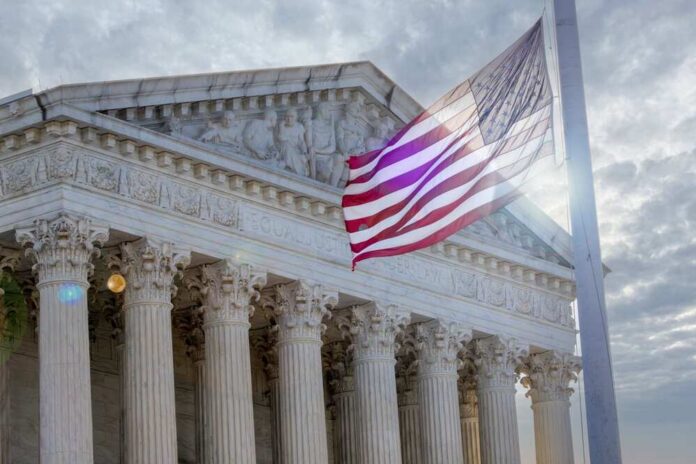
The United States Supreme Court recently ruled that states may keep girls’ and women’s sports reserved for biological females without violating federal civil rights laws. Justice Brett Kavanaugh wrote the opinion, saying separate teams for biological males and females are “reasonable” because of physical differences that affect fairness and safety. The justices upheld laws in Idaho and West Virginia, finding they do not violate Title IX, the main federal law that bans sex discrimination in schools that get federal money.
The Court did not settle every legal issue around transgender athletes. In the West Virginia case, the justices were split over whether the law violates the Constitution for the specific student involved, Becky Pepper-Jackson. That means future lawsuits are likely, especially on equal protection grounds. Still, the core message from the nation’s highest court is clear: states now have firm legal cover if they choose to keep female sports teams limited to biological girls and women.
NCAA’s 2025 policy shift: bans in competition, room for state control
While the Supreme Court wrestled with these questions, the NCAA took its own major step. On February 6, 2025, the NCAA Board of Governors approved a new transgender participation policy that bans student-athletes who were assigned male at birth from competing in women’s championships. The association presented this change as aligning its rules with what it called current federal guidance and with state efforts to “protect fairness and safety” in women’s sports.
The NCAA policy goes further than many people realize. It says that member schools are subject to local, state, and federal laws and that such laws supersede NCAA rules when there is a conflict. In simple terms, if a state bars transgender girls from girls’ sports, the school must follow that state ban even if NCAA policy would have allowed more participation. At the same time, the policy allows athletes assigned male at birth to practice with women’s teams and receive related medical care and benefits, even though they cannot compete in women’s events.
Charlie Baker: Supreme Court ruling changes states, not the NCAA
After the Supreme Court decision, many expected the NCAA to tighten its rules even more. Instead, NCAA President Charlie Baker told “Face the Nation” that the ruling does not change the NCAA’s transgender athlete policy. Baker stressed that the association already adjusted its rules in 2025 and that its current policy was designed to work alongside different state laws. In his view, the Court’s opinion confirms that states can choose their own path, but it does not force a new national standard inside college sports.
This stance means the NCAA is trying to walk a narrow line. On paper, it now bars athletes assigned male at birth from women’s competition. In practice, it also leaves key decisions to states and schools. In conservative-leaning states that ban transgender girls from female sports, school officials may feel backed by both state law and the Supreme Court. In more liberal states that allow transgender participation, schools may look to the NCAA policy’s practice allowances and medical support to keep doors open where they can.
27 states, a handful of athletes, and millions watching the system
Outside of the courtroom and NCAA offices, real people are living the impact of these choices. By mid-2026, roughly half the country’s states have passed laws limiting transgender girls from competing on girls’ teams, with reports placing the number around the high twenties. Yet advocates on all sides agree that the number of transgender athletes directly affected is small compared with the millions of students who play sports. That fuels a powerful question many Americans now ask: why are elite institutions fighting over a tiny group while bigger problems go unsolved?
NCAA president Charlie Baker reacts to Supreme Court ruling on transgender athletes https://t.co/Uv3Fm3Uk4t #FoxNews NCAA ever permits a biological male to compete against woman may the righteous anger of the American people force the NCAA to make it clear that biology DNA is the…
— JohnathanHuntington12345 (@Hunti1Johnathan) July 5, 2026
Researchers and medical experts also disagree over how much advantage, if any, transgender women retain after hormone treatment. Some reviews say bans are not supported by strong scientific evidence and note that existing rules already demand testosterone suppression before competition. Other policy analysts argue that biological male puberty gives lasting gains in speed and strength that hormones cannot fully erase, especially in power sports. The Supreme Court’s decision sided with the latter view on fairness, even as major medical groups and civil rights advocates continue to push back.
Why this clash feeds broad anger at “the system”
For many Americans on the right and the left, this fight is not just about sports; it is about trust. Conservatives see the ruling as long overdue protection for women’s sports and proof that some institutions finally admit biology matters. Liberals see it as a painful setback for a tiny, vulnerable group and fear it will lead to more exclusion. Both groups, however, increasingly share a deeper worry: that national organizations and government leaders are playing politics while ordinary families pay the price.
The NCAA’s message of “no policy shift” after such a major Supreme Court ruling adds to that frustration. To some, it looks like a powerful group trying to stay neutral to protect its own brand and funding, rather than squarely facing the hard trade-offs in front of it. The Court says states may draw a clear line around women’s sports. The NCAA says its rules already cover fairness but also bend to local law. Caught between these forces are young athletes, parents, and coaches who just want rules they can understand and trust.
Sources:
redstate.com, goprincetontigers.com, hartwick.edu, transathlete.com, npr.org, scholarship.law.wm.edu, apa.org