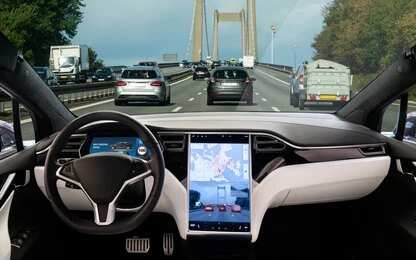
Europe’s newest car safety rule now puts a camera pointed at the driver in every new vehicle sold across the bloc.
Quick Take
- The European Union says new passenger cars and vans must now include driver monitoring systems that watch for distraction and drowsiness.
- The rule is part of the General Safety Regulation, also called GSR2, and the European Commission says it began applying on 7 July 2026.
- Supporters say the systems can cut crashes caused by fatigue and inattention.
- Critics say the same technology can feel like in-car surveillance, even when the rules limit how the data is handled.
What the New Rule Requires
The European Commission says all new passenger cars and vans sold in the European Union must now include safety systems that help detect driver drowsiness and distraction. One of those systems is a driver-facing camera that checks whether the driver looks away from the road or appears tired. The Commission links the rule to its road-safety plan and says the goal is fewer crashes and fewer deaths.
Other reports on the rule say the camera can track eye movement, head position, and gaze direction to see whether the driver is distracted. Those reports also say the system can warn the driver if attention moves to a phone or the car screen for too long, especially at higher speeds. The exact technical details vary by source, but the basic idea is the same: the car watches the driver to trigger a warning before a mistake turns into a crash.
Why Supporters Say It Matters
Supporters frame the mandate as a simple road-safety tool. The European Commission says the wider safety package is expected to help save more than 25,000 lives and avoid at least 140,000 serious injuries by 2038. That is a big promise, and it explains why regulators keep pushing these systems into new cars. They want the car itself to catch warning signs that a person may miss on a long drive, at night, or after a tiring day.
Industry write-ups backing the rule say the driver drowsiness system uses a driver-facing camera to alert the driver if it detects inattention. Other summaries say the rule covers all newly registered vehicles from July 2026 after earlier rollout dates for new vehicle types. Taken together, those reports show a clear shift: this is no longer an optional add-on for some models. It is becoming part of the standard safety package for the European market.
Why Privacy Critics Are Alarmed
The privacy fight comes from the same place as many modern tech fights: people do not trust companies or governments to stop at the stated purpose. A privacy-focused industry article says driver-facing cameras can be lawful if they follow strict rules under the General Data Protection Regulation, including transparency, data minimization, and secure handling. That still leaves a gap between legal compliance and public comfort. Many drivers hear “camera pointed at your face” and think surveillance, not safety.
26.
EU Regulation 2019/2144, known as the "New Vehicle General Safety Regulation" or GSR2 for short, brought in mandatory automated vehicle driver assistance tools for all new cars, rolling out in three phases – Phase 1 in July 2022, Phase 2 in July 2024, and Phase 3 in July… pic.twitter.com/bDN8VwC884
— Gully Foyle #UKTrade (@TerraOrBust) July 2, 2026
That concern is not limited to one side of the political divide. People who dislike heavy regulation see another mandate from distant institutions. People who distrust big firms see another sensor system inside a private vehicle. The result is a familiar public split: safety advocates point to crash prevention, while privacy critics worry the technology normalizes constant monitoring in everyday life. The debate now turns less on whether the camera exists, and more on who controls the data and how much trust the public still has.
What Still Needs Clear Answers
One unresolved issue is how much data the system keeps, if any, in real use. Some summaries say driver monitoring must follow strict privacy rules and should not keep unnecessary footage. Other commentary, however, keeps warning that camera systems can be expanded later for fleet tracking, accident review, or performance scoring in other settings. Those are real concerns, but they are not the same as proof that the EU mandate itself requires permanent storage.
The bigger story is that this policy lands in a low-trust moment. Many readers already believe both Brussels and major automakers move too fast and explain too little. The rule may improve safety, and the Commission says that is the point. But the backlash shows how quickly a road-safety tool can become a symbol of a larger fear: that modern cars are turning into mobile data devices first and transportation second.
Sources:
reclaimthenet.org, facebook.com, explainx.ai, instagram.com, reddit.com, nationwidefleetinstallations.com