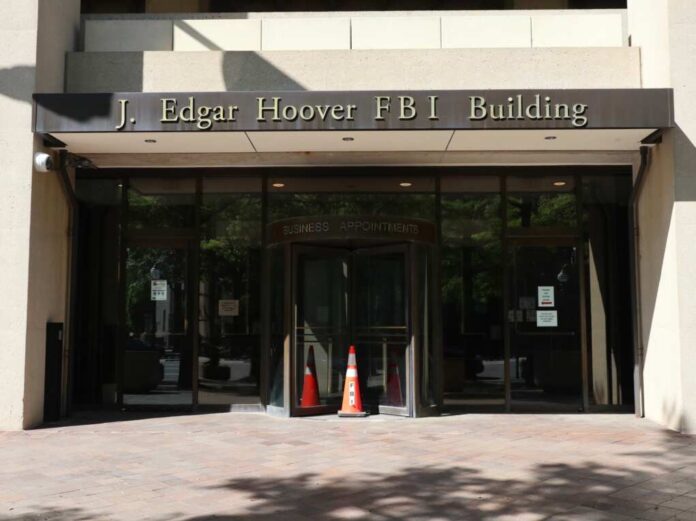
The permanent shutdown of the FBI’s J. Edgar Hoover Building signals a long-awaited reckoning with an agency many conservatives believe lost its way.
Story Snapshot
- The FBI’s iconic J. Edgar Hoover Building in Washington, DC is being shut down permanently under Director Kash Patel.
- Conservatives see the closure as a chance to confront years of politicization, anti-Trump bias, and abuses of power.
- The move fits President Trump’s broader 2025 agenda of shrinking the federal bureaucracy and restoring constitutional limits.
- Questions remain about how the FBI will be restructured, relocated, and held accountable going forward.
Permanent Closure of a Symbol of Federal Power
FBI Director Kash Patel’s confirmation that the J. Edgar Hoover Building will be shut down permanently marks the end of one of Washington’s most recognizable and controversial symbols of federal power. For decades, this concrete fortress on Pennsylvania Avenue represented an agency that grew more secretive, more political, and more removed from everyday Americans. Conservatives who watched the FBI target parents at school board meetings and drag its feet on real crime see this closure as overdue course correction.
Trump’s return to the White House in 2025 set the stage for this dramatic decision, because it came after years of conservative criticism that the FBI had turned into a weaponized bureaucracy rather than a neutral law enforcement agency. From Russiagate to aggressive surveillance tools, many on the right concluded the institution could not be trusted to police itself. Shutting down the headquarters building sends a clear signal that business as usual in Washington is no longer acceptable.
Why Conservatives Distrusted the Hoover-Era FBI
Conservative frustration with the FBI did not appear overnight; it built over years of patterns that looked less like blind justice and more like partisan warfare. High-profile investigations of Donald Trump and his allies, contrasted with kid-glove treatment of favored Democrats, fueled the belief that the Bureau had internalized a Beltway, anti-populist worldview. Parents speaking out against woke school policies, traditional Catholics, and gun owners all watched uneasily as federal law enforcement seemed more focused on them than on violent criminals or cartels.
When Americans watched the rise of woke training, DEI mandates, and politicized language inside federal agencies, they reasonably asked whether those same trends had seeped into the FBI’s culture and priorities. The J. Edgar Hoover Building came to symbolize not simply law enforcement, but a permanent security bureaucracy comfortable surveilling citizens, leaking for political advantage, and stonewalling Congress. Conservative voters, already tired of globalist policies and open-border chaos, became convinced that powerful unelected officials were insulated from any real consequences.
How the Shutdown Fits Trump’s Broader 2025 Agenda
The permanent closure of the Hoover Building aligns with President Trump’s second-term campaign promises to dismantle parts of the deep state and shrink unaccountable Washington power centers. In 2025 his administration has pushed executive actions aimed at closing or downsizing federal departments, cutting radical DEI programs, and ending the weaponization of government against political opponents. Removing the FBI from its long-time headquarters fits that pattern of targeting entrenched bureaucratic strongholds instead of merely swapping out a few managers at the top.
For conservatives who believe in limited government and the Constitution’s checks and balances, physically breaking up a central hub of power is more than symbolism. It raises the possibility of dispersing FBI functions, tightening oversight, and redirecting resources toward real crime instead of ideological policing. The closure also complements Trump’s broader efforts to secure the border, prioritize American citizens in federal benefits, and rein in runaway spending, showing that reform is not limited to economic policy but reaches law enforcement itself.
Key Questions About What Comes Next for the FBI
Even as many on the right welcome the Hoover Building’s shutdown, serious questions remain about what comes next. Americans deserve to know whether the FBI will be decentralized into regional offices, folded into a restructured law enforcement framework, or rebuilt with stricter limits on surveillance and political activity. The danger is that a cosmetic move—closing one building—could be used to claim reform while leaving the same culture and incentives untouched behind different office walls or under a different name.
🚨 BOOM: FBI Director Kash Patel just DROPPED THE HAMMER – the corrupt J. Edgar Hoover Building in DC is officially SHUTTING DOWN!
After 20 years of failed deep state schemes, Patel kills the $5 BILLION boondoggle to build a fancy new HQ.
Instead, FBI moves into the existing… pic.twitter.com/ZxL5w861DO
— Gunther Eagleman™ (@GuntherEagleman) December 26, 2025
Constitution-minded citizens will be watching closely for concrete safeguards: stronger protections for the First and Second Amendments, real penalties for abusing FISA powers, clear bans on targeting citizens for speech, faith, or conservative activism, and transparent cooperation with congressional oversight. The permanent shutdown of the J. Edgar Hoover Building is a meaningful first step, but conservatives understand that reclaiming equal justice under law requires sustained pressure, precise structural reforms, and a refusal to let the security state quietly reassemble itself out of public view.
Sources:
FBI to move out of brutalist J Edgar Hoover building in Washington DC
The FBI’s J. Edgar Hoover building in DC is closing permanently, Director Kash
J. Edgar Hoover Building to close for good as FBI relocates …