The Army halted Apache training flights nationwide after a Fort Hood crash killed two soldiers, underscoring a safety system straining under repeated mishaps.
Story Snapshot
- The Army paused AH-64 Apache training flights after a deadly Texas crash.
- Two soldiers died when an Apache from Fort Hood went down in a field.
- Leaders said the stand-down stays until they understand the root cause.
- Army safety investigators are leading the formal crash investigation.
What Triggered The Stand-Down
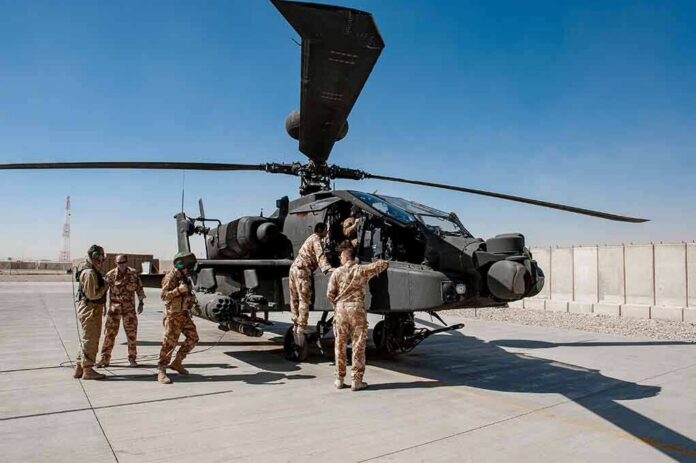
Army leaders ordered a temporary halt to all AH-64 Apache training flights after a fatal crash near Fort Hood in Texas. The Army said the pause will last until officials have a better grasp of the root cause of the accident, which happened earlier in the week. The helicopter was on a maintenance test flight when it “experienced a mishap,” according to reporting that cited the Army’s statement. This action targets training flights while investigators sort out what failed.
Two soldiers were killed when the Apache crashed into a field near Fort Hood, the Army’s large armored post in central Texas. Initial reports described a large fire and an immediate response from local and military crews. Reuters confirmed the deaths and location and tied the aircraft to Fort Hood-based forces. The loss of life drove urgency for the pause, which is a common response when commanders do not yet know if a wider risk affects other crews.
Who Is Investigating And What Comes Next
The United States Army Combat Readiness Center, which handles serious safety incidents, is leading the investigation, according to coverage that quoted the Army. Investigators will examine maintenance logs, training records, wreckage, and environmental factors. The Army did not release a cause and said it had no more details to share as of the stand-down announcement. A formal finding often takes weeks or months, but interim steps can restart training sooner if a clear hazard is ruled out.
The Army tied the pause to Apache training flights, not combat sorties, to keep focus on flight safety while protecting core missions. That approach matches past practice after deadly helicopter crashes. In recent years, Army leaders imposed safety pauses to review procedures and reduce risk across units when fatal mishaps spiked. The goal is simple: slow down, brief hazards, fix gaps, and then return to normal operations with more confidence.
Why This Matters For Readiness And Trust
Safety pauses pull pilots from the air and can delay qualifications, which affects readiness in the short term. Training downtime, however, can prevent a wider tragedy if a systemic fault exists. The Apache is the Army’s primary attack helicopter, so leaders balance risk to crews with the need to stay sharp for real missions. The Army’s clear message—learn the cause first, then fly—reflects that balance and a duty to the families who expect their loved ones to come home.
The U.S. Army said Friday it is temporarily halting Apache helicopter training flights after two soldiers were killed earlier this week in a crash near Fort Hood, Texas. https://t.co/xrSLuKyx04 pic.twitter.com/Dk3XkyekZf
— CBS News Texas (@CBSNewsTexas) August 14, 2026
Americans watching this story see a familiar pattern: government systems react after lives are lost, then share little until reports are done. That breeds doubts about competence and priorities across the political spectrum. Here, the process is straightforward and documented by multiple outlets: a fatal crash, a training stand-down, and a formal probe by the Army’s safety experts. The test will be how fast the Army identifies the cause, fixes it, and shows its work to the public.
Sources:
kvia.com, abcnews.com, cbsnews.com, usatoday.com