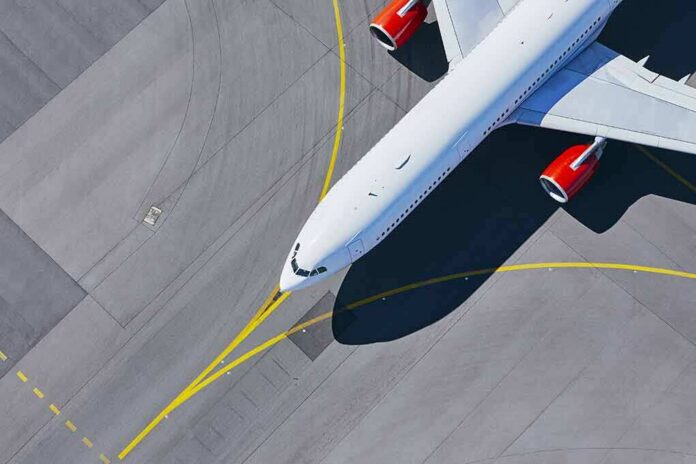
A violent cockpit clash on a Dubai-to-Tel Aviv flight forced an emergency diversion to Saudi Arabia, yet everyone made it home safe.
Story Snapshot
- Flydubai flight FZ1073 diverted to Tabuk, Saudi Arabia, after a cockpit altercation.
- Airline said on-duty crew secured the aircraft and landed safely; all aboard accounted for.
- Emergency signals and a sharp descent preceded the safe landing, according to reports.
- Officials in Israel described a possible attack in the cockpit; investigations continue.
What Happened Aboard Flight FZ1073
Flydubai confirmed that an altercation occurred on the flight deck of flight FZ1073 from Dubai to Tel Aviv on September 30. The airline said on-duty Flydubai crew traveling on the flight secured the aircraft and diverted to Tabuk Airport in Saudi Arabia, where it landed safely. The airline added that all passengers and crew were safe and accounted for, and urged against premature speculation about motives until investigations finish.
Published reports from Israel described a violent confrontation between the pilots, with emergency signals sent during the incident. Israeli officials told reporters that a co-pilot stabbed the captain in a possible attempted attack, but authorities did not label it a hijacking. Local accounts said passengers and cabin crew helped subdue the situation before the aircraft descended and diverted to Tabuk, where Saudi authorities received the flight.
How The Diversion Unfolded In The Air
Flight-tracking reports and major outlets said the aircraft abruptly reversed course near the Saudi-Jordanian border and descended quickly before landing at about 9:45 a.m. local time at a civil-military airport in Tabuk. Coverage noted emergency squawk transmissions before the diversion. After landing, Flydubai arranged replacement aircraft to move passengers and crew onward, as the carrier and regional authorities began formal inquiries into the cockpit clash.
Passengers described fear during the sharp drop and relief once the plane stopped on the ground. Newsrooms tracked the flight path changes in real time, which amplified public concern across the region. The flow of quick signals, anonymous briefings, and live updates created a wave of breaking news before investigators released any full findings, a pattern common in aviation crises that start with urgent safety decisions and only later shift to cause and accountability.
Why This Incident Resonates Beyond One Flight
A cockpit fight is rare, but even rare events expose weak spots in systems we trust. People across the political spectrum worry that leaders and large institutions react slowly, communicate poorly, and protect themselves first. The fast spread of partial details about this flight tapped those fears again. Early reports focused on danger in the sky; the airline focused on safety in the landing. Both are true, and both demand clear, prompt facts from responsible authorities.
The passengers on Flydubai Flight FZ1073 from Dubai to Tel Aviv landed safely at Ben Gurion Airport after an emergency diversion to Tabuk, Saudi Arabia.
The flight originally carried about 174 passengers, most of whom were Israeli, including 27 children. Mid-flight, the… pic.twitter.com/n9kkCWSM7Y
— T_CAS videos (@tecas2000) September 30, 2026
Aviation safety depends on training, strong cockpit protocols, and quick action under stress. On this flight, trained crew secured the aircraft and diverted to a safe runway. That is a victory for procedure and for the people on board. Investigators now need to document what sparked the clash, how emergency steps worked, and what should change. Public trust grows when officials share verifiable timelines, decisions, and fixes without spin or delay.
Sources:
youtube.com, reuters.com, nytimes.com