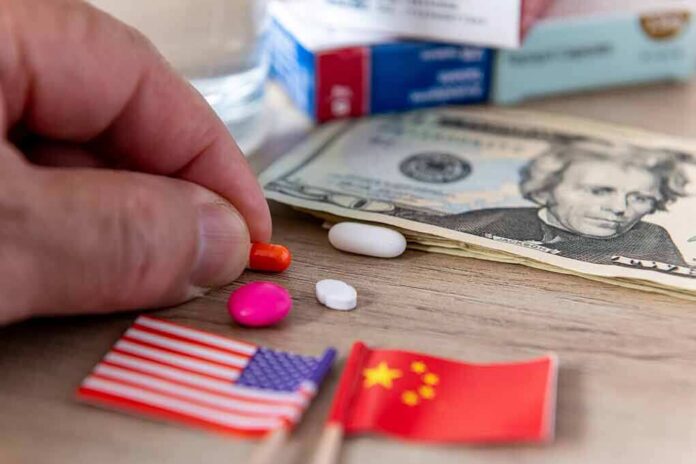
Federal prosecutors say a cross-border ring pumped fake Ozempic into the U.S. market, cutting corners on safety while cashing in on sky-high demand.
Story Snapshot
- A Florida grand jury indicted two men in an alleged counterfeit Ozempic scheme.
- Prosecutors say the group sourced from unauthorized sellers in China and sold at deep discounts.
- Charges include conspiracy, smuggling, and selling counterfeit prescription drugs.
- Food and Drug Administration warnings show rising risks from fake weight-loss drugs.
Indictment Alleges A Transnational Counterfeit-Drug Pipeline
The Department of Justice announced that a federal grand jury in the Middle District of Florida indicted Swapnadip Roy and Vicky Ramancha. The indictment alleges a transnational plan to move counterfeit Ozempic into the United States and sell it through distributors at cut-rate prices. Prosecutors say the conduct began around July 2023 and ran into April 2024. The case centers on counterfeit prescription drugs, public safety, and deception in the supply chain.
The Justice Department says the charges include one count of conspiracy to commit smuggling and to defraud the United States, three counts of smuggling, and two counts of selling or holding counterfeit drugs for sale. Officials allege the operation sourced product from unauthorized sellers in China and included counterfeit packaging, inserts, pen labels, and needles designed to mimic real Ozempic made by Novo Nordisk. The court unsealed the indictment on June 9, 2026.
How The Alleged Scheme Worked, According To Prosecutors
According to the charging papers, the defendants and co-conspirators bought fake Ozempic from unauthorized Chinese sources. They allegedly moved it to the United States and sold it to other co-conspirators and distributors at deep discounts. Those discounts made the product attractive during a time of intense demand and limited supply. Prosecutors say the kits looked real to downstream buyers because of imitation packaging and accessories that matched the genuine product’s appearance.
The Justice Department’s case mirrors a pattern seen in other counterfeit-drug prosecutions. The government highlights foreign sourcing, deceptive labeling, and the sale of cut-rate product that bypasses the legal drug supply chain. Officials frame these cases as efforts to protect patients who may never know a product is fake. The indictment is a charging document. The defendants are presumed innocent unless and until proven guilty in court.
Public-Health Stakes In A Hot Market For Weight-Loss Drugs
The Food and Drug Administration has warned that counterfeit Ozempic can contain the wrong dose, wrong ingredients, or no active ingredient at all. That can harm people who rely on steady dosing for diabetes care or weight management. The agency has flagged growing risks around unapproved and counterfeit glucagon-like peptide-1 drugs as demand surged. Seizures by customs officers underscore how fake supply can slip toward buyers when demand is high and the product is expensive.
Two Indian nationals charged with smuggling counterfeit Ozempic from China: DOJ – The criminal indictment in Florida comes as the use of GLP-1 drugs such as Novo's Ozempic for weight loss has hit new highs among U.S. adults. Via @CNBC:https://t.co/tW0x8SOEW4
— 🌊💙 Viking Resistance 💙🌊 (@BlueCrewViking) September 29, 2026
Customs and drug-safety warnings show the enforcement picture behind the Florida case. U.S. Customs and Border Protection reports repeated seizures of shipments that include fake or unapproved semaglutide products. These actions sit alongside Food and Drug Administration alerts that aim to steer buyers toward licensed pharmacies and away from unverified sellers. Together, these records help explain why prosecutors move quickly when they see a channel feeding counterfeit drugs into the market.
Why This Matters For Both Sides Of The Aisle
This case hits a nerve that crosses party lines. Families want safe, real medicine, not knockoffs. Seniors and working adults face high prices and short supplies. Many see a system that rewards middlemen while patients take the risk. When fake drugs enter the U.S. stream, it shows weak points at the border, in online markets, and in enforcement. A clean supply chain should be basic governance. People expect the government they fund to keep dangerous fakes out.