President Trump’s blunt claim that the Iran ceasefire is “over” even as talks continue shows how distant Washington’s words have drifted from any clear, reliable plan to keep America out of another long, confusing war.
Story Snapshot
- Trump says the U.S.-Iran ceasefire is “over” after new strikes, but no formal document ends the deal.
- The United States military hit more than 80 Iranian targets, saying Iran attacked commercial ships first.
- Iran’s leaders insist the U.S. broke the ceasefire first and accuse Washington of “bullying and extortion.”
- Despite his harsh words, Trump still allows negotiators to keep talking with Iran behind the scenes.
Trump declares ceasefire ‘over’ while missiles fly
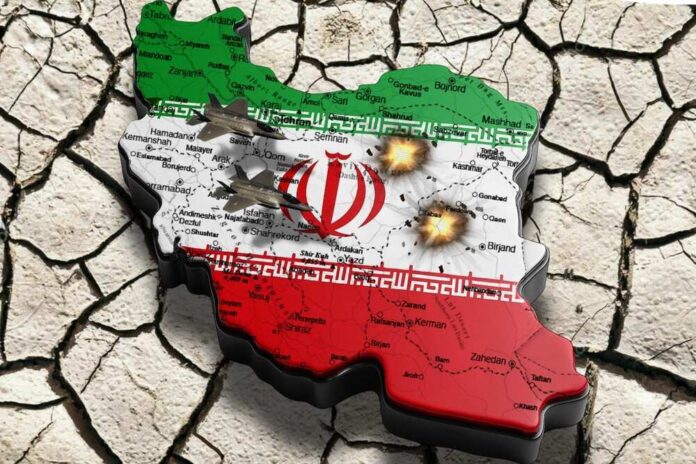
On July 8, 2026, President Donald Trump told reporters at a NATO summit in Turkey that the ceasefire with Iran was “over,” calling Iranian leaders “scum” and “sick people.” He said Iran had attacked three commercial ships in the Strait of Hormuz and used that claim to justify new United States strikes. The U.S. Central Command reported hitting more than 80 Iranian military targets, including air defense systems and naval sites, in what it called direct retaliation.
Trump’s language was personal and harsh, not legal or formal. He said, “To me, I think it’s over. I don’t want to deal with them anymore,” then immediately added that he would still let “our wonderful negotiators keep talking if they want.” That mix of “it’s over” and “keep talking” makes it hard for Americans to know if the ceasefire is truly dead or if this is another round of pressure tactics. It also raises questions about who is really in charge of war decisions: the law, Congress, or the president’s mood.
A ceasefire built on a thin piece of paper
The ceasefire Trump now says is finished grew out of the Islamabad Memorandum, signed on June 17, 2026. That memo set up a 60‑day window to negotiate terms to end the war and reopen the Strait of Hormuz, a narrow waterway that carries about one‑fifth of the world’s daily oil trade. Analysts warned from the start that the agreement was brief, vague, and more of a stop‑gap than a real peace deal, leaving many hard issues — like nuclear rules and sanctions — unresolved.
Reports show the ceasefire had been violated “by both sides numerous times” even before Trump’s latest move. Strikes, drone incidents, and arguments over what areas were covered — such as Lebanon — chipped away at trust. Yet no public executive order, White House memo, or State Department legal opinion has been released to say the Islamabad deal is formally cancelled. In other words, the piece of paper still exists, even as both sides keep firing and claim the other broke it first.
Iran says the U.S. broke the deal first
The Iranian Revolutionary Guard Corps, a powerful arm of Iran’s military, answered Trump’s statement with its own. It said the “child‑killing and terrorist U.S. military” had “openly violated the ceasefire and violated the Islamabad understanding by launching an airstrike.” Iranian state media described damage to military sites and even the perimeter of a nuclear power plant area, painting the United States as the aggressor and insisting Iran’s later missile strikes were a response, not the opening shot.
Iran’s Foreign Ministry also attacked Washington’s behavior, calling it “bullying and extortion” and accusing the U.S. of breaking the memorandum’s terms. At the same time, Iran has not released detailed satellite images, ship logs, or outside forensic reports to prove the United States is wrong about the attacks on the three commercial vessels. So each side now tells a story that suits its interests, while independent facts lag behind. For Americans who already suspect the “deep state” and foreign policy elites, this kind of foggy evidence feeds the feeling that no one is being straight with them.
Talks continue, but trust keeps shrinking
Despite saying the ceasefire is “over,” Trump also claims Iran begged to resume talks and that the United States agreed to more meetings. Earlier reports showed negotiators had reached a tentative deal to extend the ceasefire by 60 days and reopen the Strait of Hormuz, but were still waiting on Trump’s final approval. The Congressional Research Service later described the April and June ceasefire arrangements as “fragile” and on “life support,” noting that both sides were still firing at times even while talks were underway.
Members of Congress from both parties have tried to resist more open war by passing a resolution to block Trump from resuming large‑scale military action. Outside experts at think tanks like the Center for Strategic and International Studies warned that this style of “ceasefire without end” — shaky pauses mixed with threats — lets the conflict drag on without clear victory or peace. For many Americans who already feel the federal government is failing them, this looks like one more case where leaders talk tough on TV but never deliver a stable, honest plan.
What this says about U.S. power and broken promises
This clash with Iran fits a pattern going back years: short ceasefires, fast violations, and leaders on both sides claiming the other fired first. Trump’s earlier comments that the ceasefire was “on life support” and that “a whole civilization will die tonight” if Iran refused his terms show how often threats are used as tools, not last resorts. Each cycle of strikes and counter‑strikes puts troops, sailors, and civilians at risk while energy prices, shipping costs, and global markets swing up and down.
People on the right see another foreign crisis where elites talk about “diplomacy” yet let Iran play games and attack ships, while hardworking Americans pay higher prices at the pump. People on the left see a White House using crude insults and airstrikes instead of clear law and careful planning, with Congress struggling to limit a president who acts first and explains later. Both sides can agree on one thing: a government that cannot say plainly whether a ceasefire is truly over, or prove who broke it first, is a government that has lost control of its own war powers — and that should worry everyone.
Sources:
redstate.com, politico.com, en.wikipedia.org, axios.com, instagram.com, youtube.com, npr.org, britannica.com, congress.gov, csis.org