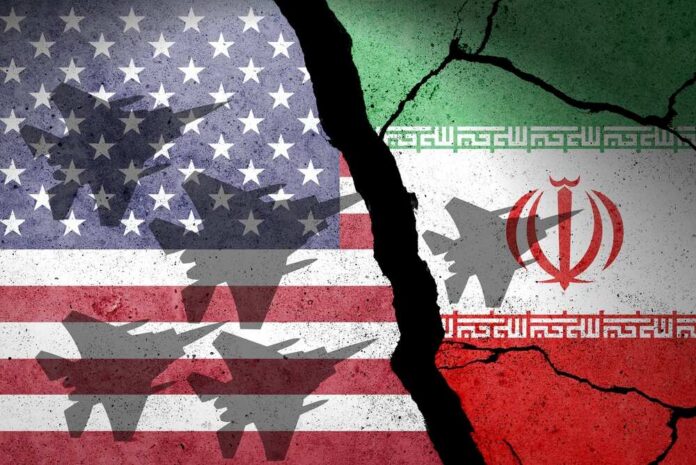
President Trump has instructed his inner circle to prepare for an extended economic siege against Iran, declaring that reopening the Strait of Hormuz would destroy any chance of reaching a diplomatic agreement with the regime.
Story Snapshot
- Trump links blockade maintenance directly to negotiating leverage, refusing to reopen the Strait of Hormuz
- Iran reportedly losing $500 million daily due to the blockade of critical global oil shipping route
- Administration demands 20-year nuclear restrictions while Iran counters with 5-year proposal
- Vice President Vance describes U.S.-Iran positions as “worlds apart” after diplomatic visit
Maximum Pressure Strategy Takes Hold
President Trump has committed to maintaining an indefinite blockade of Iran’s oil exports through the Strait of Hormuz, rejecting calls from intermediaries to ease pressure. Trump stated via Truth Social that reopening the strait would eliminate any possibility of a diplomatic agreement with Iran. The administration views the blockade as essential to preserving leverage in negotiations, arguing that without it, the United States would lose its strategic advantage. This approach signals a return to maximum pressure tactics rather than quick diplomatic resolutions that characterized previous administrations’ dealings with Tehran.
Economic Warfare Through Strategic Chokepoint
The Strait of Hormuz serves as a critical passage for approximately one-third of the world’s seaborne oil, making its closure a significant economic weapon. Iran faces severe financial distress, with the Trump administration claiming the regime is losing approximately $500 million per day due to the blockade. This represents a direct challenge to Iran’s primary revenue source and puts enormous pressure on the regime’s ability to fund government operations. The economic strangulation strategy aims to force Iranian concessions on nuclear capabilities without military invasion, though it disrupts global energy markets and impacts oil consumers worldwide.
Nuclear Restrictions Divide Negotiations
Fundamental disagreements over nuclear restrictions have stalled diplomatic progress between Washington and Tehran. The Trump administration demands Iran accept a 20-year nuclear restriction, while Iran has countered with a proposal for only 5 years. Vice President Vance recently departed Islamabad after describing the two nations as “worlds apart” in their positions, indicating negotiations remain in early stages. Pentagon officials acknowledge that military operations have been effective and successful, yet recognize the need for a clear plan to wind down operations and achieve a concrete outcome that addresses Iran’s nuclear ambitions.
Long-Term Implications for American Strategy
The administration’s willingness to sustain military and economic pressure indefinitely raises questions about long-term sustainability and potential consequences. Pentagon wargaming scenarios have examined extended blockade operations, but officials acknowledge the cyclical nature of Iran policy challenges. The strategy risks broader regional conflict if negotiations fail or military incidents occur during blockade enforcement. For Americans frustrated with decades of ineffective Iran policy, the maximum pressure approach offers a departure from previous diplomatic concessions. However, the impact on global oil markets and the potential for escalation remain significant concerns as the standoff continues with no resolution in sight.
Trump Reportedly Told Inner Circle To Prepare for Prolonged Blockade of Iran https://t.co/J6RvJPmYPY
— Mediaite (@Mediaite) April 29, 2026
The blockade reflects a fundamental question about how America deals with adversarial regimes: whether sustained economic pressure can achieve what diplomatic engagement has failed to accomplish over multiple presidential administrations. For citizens tired of endless foreign entanglements, the approach promises results through strength rather than negotiations that often seem to benefit Iran more than American interests.