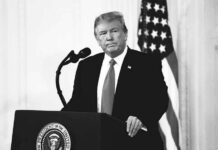
Donald Trump just told Lebanon’s president that Israel is already redeploying troops from southern Lebanon, while hinting he might even talk to Hezbollah to get a deal done.
Story Snapshot
- Trump hosts Lebanese President Joseph Aoun at the White House for a rare, high-stakes summit.
- Aoun pushes Trump to pressure Israel to withdraw troops and end what he calls “occupation.”
- A new United States-backed framework ties Israeli withdrawal to disarming Hezbollah and strengthening the Lebanese army.
- Trump signals that Israeli forces are “in the process” of redeploying and says the United States will keep helping Lebanon’s military.
Trump’s White House Meeting Puts Lebanon Back On The Map
President Donald Trump brought Lebanon to center stage by hosting Lebanese President Joseph Aoun at the White House, the first visit by a Lebanese head of state in many years. The meeting comes after months of war between Israel and the Iran-backed Hezbollah group, with Israeli forces still holding ground in southern Lebanon. Aoun arrived in Washington with a clear mission: get Trump’s help to stop Israeli strikes, push for troop withdrawal, and open the door to a long-term peace.
The timing is not random. Lebanon is battered, with people displaced and villages damaged by fighting. Aoun said his visit aims to “stop Israel’s killing and destruction and ultimately end its occupation.” For Trump, this meeting fits his style: personal diplomacy, one-on-one leverage, and visible deals. Both leaders know one thing clearly. Without American pressure and guarantees, Israel will not pull back, and Hezbollah will not hand over its guns.
The Framework Deal That Changes The Rules
The backbone of these talks is a new Trilateral Framework agreement signed in Washington between the United States, Israel, and Lebanon. The deal sets out a path to end hostilities, disarm Hezbollah, and see Israeli troops gradually leave Lebanese territory. It also says that, in the end, only the Lebanese state, through its army, will control the south. That means no more private militias deciding when rockets fly or war starts.
On paper, the plan looks simple. Israel withdraws. Hezbollah moves north and disarms. The Lebanese Armed Forces take over the border. But in the Middle East, paper is the easy part. Implementation is already uneven. Israeli forces remain in parts of southern Lebanon, and Hezbollah openly rejects the idea of direct talks with Israel and refuses to give up its arsenal. That tension sits at the center of Aoun’s appeal to Trump: only strong United States backing can make the framework real.
Trump’s Message: Israel Is “In The Process” Of Redeploying
When reporters asked Trump if he would pressure Israel to withdraw, he did not duck the question. He said he would “look at that” and added that Israeli forces are “in the process” of redeploying from some areas. United States officials say operations have begun in three pilot villages, with Lebanese troops already in control of two of them and preparing to move into the third once Israel leaves. That is small, but it is the first concrete sign that the framework is more than talk.
Trump also underlined that Washington has “very concrete plans” to keep supporting the Lebanese army. From a common-sense conservative view, that matters. If Lebanon’s own national army does not gain control, then Hezbollah — an armed group backed by Iran — stays in charge of security in the south. Supporting a national government force, rather than an Iran-backed militia, lines up with basic American interests: push back on Tehran, back sovereign governments, and reduce chances of another all-out war.
Aoun’s Bet: Only Trump Has Enough Leverage On Israel
Aoun’s team has made it clear they see Trump as the only leader with enough leverage to move Israel. One official said Aoun believes “only Trump” can pressure Israel to implement the June 26 agreement and withdraw troops. Aoun wants more than a pause. He wants a permanent ceasefire, full Israeli withdrawal, the release of Lebanese detainees, and help rebuilding shattered areas. He also insists any direct meeting with Israeli Prime Minister Benjamin Netanyahu is off the table as long as troops remain in Lebanon.
1 PM Bottom-of-the-Hour News
President Trump meets with Lebanon's president at the White House today, as the U-S tries to broker a peace deal between Lebanon and Israel.
NewsNation's Cory Smith…: “The fragile ceasefire between Israel and Hezbollah also sure to dominate the… pic.twitter.com/xMyZSNsYmQ— Worldwide News Network (@WorldwideNNX) July 21, 2026
That stance reflects Lebanon’s internal politics. Many Lebanese support negotiations to end the war, but they do not want their president seen as bending to Israel while parts of their land are still occupied. From a conservative, American lens, Aoun’s position is cautious but logical. A leader must defend national sovereignty first. Trump, in turn, is trying to use the carrot of United States support and the stick of his influence with Israel to push both sides toward a deal without forcing Beirut into a photo-op it cannot sell at home.
The Bigger Pattern: Ceasefires That Fail Without Real Control
This meeting fits a long pattern of United States-brokered attempts to calm the Israel-Lebanon front that break down when Hezbollah stays armed and border control stays fuzzy. Previous deals have called for Lebanon’s army to secure the south and for militias to move away from the border, but those promises rarely hold for long. The new framework tries a tougher link: no full peace and no complete Israeli withdrawal until Hezbollah gives up heavy weapons and the state truly controls its territory.
There is a hard truth here. Israel will not trust a paper promise while rockets can still fly over the border. Lebanon will not accept a lasting deal if foreign troops remain on its soil forever. The United States is trying to bridge that gap by backing Lebanon’s army, reassuring Israel about security, and keeping pressure on Hezbollah through sanctions and diplomacy. Trump’s willingness to say he would even “speak to Hezbollah” if needed shows how wide he is ready to cast the net to avoid a wider regional war.
Sources:
youtube.com, bbc.co.uk, jpost.com, kmph.com, naharnet.com, 2news.com, thehill.com, israelpolicyforum.org, arabcenterdc.org