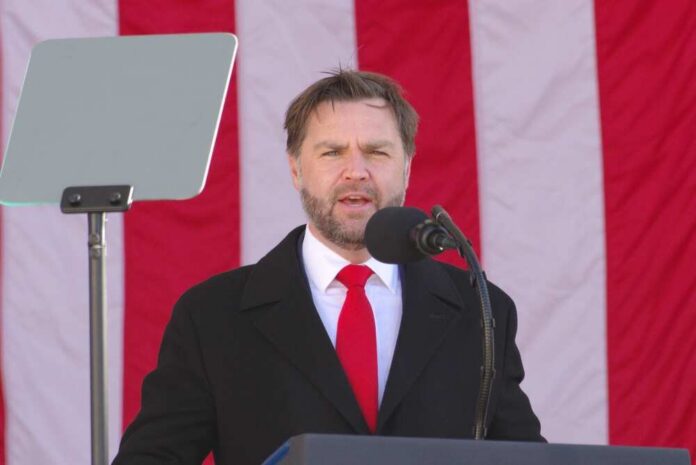
Vice President J.D. Vance will return to Pakistan to lead critical Iran negotiations despite President Trump publicly suggesting he wouldn’t attend, exposing confusion within the administration at a pivotal moment in Middle East diplomacy.
Story Snapshot
- White House confirmed Vance will lead second round of Iran peace talks after Trump initially said he wouldn’t attend
- First round of negotiations lasted 21 hours but failed to produce agreement as Iran refused to compromise
- Vance will be accompanied by senior officials including Jared Kushner and Steve Witkoff, signaling high-stakes urgency
- Talks occur amid escalating tensions with approaching ceasefire expiry and threats of military strikes
White House Reversal Creates Diplomatic Confusion
The White House confirmed April 19 that Vice President Vance will lead the U.S. delegation for second-round Iran talks in Pakistan, contradicting President Trump’s earlier statement that Vance would not attend. White House Press Secretary Karoline Leavitt announced Vance would travel to Islamabad alongside Special Envoy Steve Witkoff and presidential advisor Jared Kushner. Trump had told ABC News hours earlier that Vance wouldn’t make the trip due to security concerns related to its short-notice nature. A White House official later explained to CNN that “things changed,” without providing specific details about the reversal.
First Round Negotiations Yield No Breakthrough
Vance’s initial negotiating session in Islamabad lasted approximately 21 hours but ended without agreement, according to multiple reports. Tehran refused to compromise on core demands during the marathon talks. The negotiations represent the highest-level U.S.-Iran diplomatic engagement since the 1979 Islamic Revolution, making them historically significant regardless of outcome. Trump reportedly checked in multiple times during the first round and solicited assessments of Vance’s performance from others, suggesting concerns about the vice president’s effectiveness. The presence of multiple senior officials for round two indicates either reinforcement of negotiating power or potential concerns about Vance’s solo capabilities.
High-Stakes Diplomacy Amid Military Threats
The talks unfold against a backdrop of escalating regional tensions and looming deadlines. Iran allegedly fired weapons near the strategically critical Strait of Hormuz, prompting urgent diplomatic intervention. An existing ceasefire agreement approaches expiry, creating time pressure for negotiators to achieve breakthrough. Defense Secretary Pete Hegseth has promised “unprecedented strikes” on Iran in coming days, establishing a simultaneous diplomatic and military pressure campaign. This dual approach reflects classic “carrot and stick” foreign policy but raises questions about whether mixed signals undermine negotiating credibility or strengthen American leverage.
Performance Questions Shadow Vance’s Leadership Role
Trump’s initial decision to sideline Vance, followed by the White House reversal, reveals internal dynamics that concern Americans tired of government dysfunction. While Trump emphasized “JD’s great” when announcing Vance wouldn’t attend, the statement rang hollow given the simultaneous exclusion. The addition of Kushner and Witkoff to the delegation suggests either lack of confidence in Vance alone or deliberate escalation of diplomatic firepower. Prediction markets show only 3.7 percent probability of no U.S.-Iran meeting by June 30, indicating confidence in continued engagement despite first-round setbacks. For voters who elected Trump to restore American strength abroad, mixed messages from the White House raise concerns about whether internal disagreements compromise national interests.
The second round of talks commenced April 20 in Pakistan, with success or failure carrying significant implications for Persian Gulf stability, energy markets dependent on Strait of Hormuz security, and the broader question of whether diplomatic engagement can resolve decades of U.S.-Iran hostility. The outcome will also determine whether Vance proves capable of handling high-stakes negotiations or whether Trump’s initial hesitation reflected justified concerns about his vice president’s diplomatic abilities.
Sources:
Trump Benches Vance in Humiliating Move – The Daily Beast
U.S.-Iran peace talks: Vance to lead delegation in Pakistan – Axios
Vance is on standby in Iran talks – Politico
Despite Trump remarks, White House says Vance will go to Pakistan for Iran talks – Times of Israel
Vance to Lead US Delegation for Iran Talks in Pakistan, Confirms White House – Crypto Briefing
Trump, JD Vance, Pakistan, Iran ceasefire talks, threats, infrastructure, Hormuz – Fortune