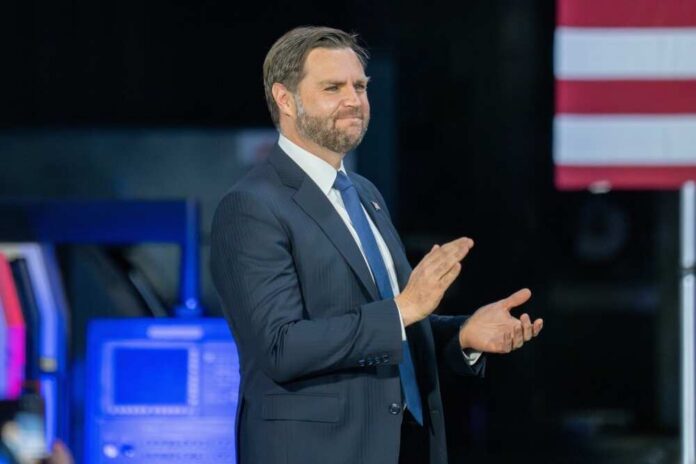
A fresh clash between Washington and the Vatican is raising an old question: who gets the final word when faith, politics, and sovereignty collide?
Quick Take
- Vice President J.D. Vance told Pope Leo XIV to “be careful” on theology and urged the Vatican to avoid weighing in on U.S. public policy.
- A satirical headline casting Vance as a “pope” spread quickly, but it hinges on real quotes and a real dispute about church-state boundaries.
- Commentators split sharply: critics argue Vance showed hubris as a recent Catholic convert, while defenders say elected officials may push back when religious leaders “meddle” in civil affairs.
- No formal diplomatic rupture has been reported, but the episode highlights how global religious authority and America First politics keep colliding.
Vance’s warning to the Vatican puts sovereignty back in the spotlight
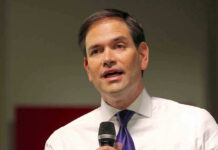
Vice President J.D. Vance’s remarks on April 15, 2026, landed like a thunderclap in political and religious circles. Reports summarized his message as a warning that Pope Leo XIV should “be careful” when discussing theology and should focus on church matters and Catholic morality rather than American public policy. The immediate controversy was less about one line than about jurisdiction: whether a global faith leader should directly pressure U.S. policy under a Republican-controlled federal government.
The dispute also exposed a communications gap that frustrates voters across the spectrum: institutions speaking past each other while ordinary citizens face rising costs and cultural conflict at home. Conservatives who already distrust international bodies heard a familiar theme—an external authority commenting on American governance. Liberals who see moral advocacy as central to religious leadership heard a different concern—politicians policing a church’s voice. The available reporting does not indicate any immediate action beyond public argument, but the symbolism is potent.
A satirical “Pope Vance” headline rides on real quotes and real tension
The argument escalated online after Political Wire published a satirical post titled “Pope John David Vance the First.” The piece’s core joke is that Vance sounded as if he were positioning himself above the pope on Catholic competence, with commentator Tom Nichols quoted as portraying Vance as implying the pontiff “wasn’t a very good, or very smart, Catholic.” The satire matters because it can blur the line between commentary and documented events, especially in a fast-moving news cycle.
Separating humor from substantiated facts is straightforward here: the “crowning” imagery is not literal, while the underlying claim—Vance publicly rebuked the pope and urged the Vatican to avoid U.S. policy—is consistent across the sources provided, including a video clip cited in the research. What remains less clear, based on the limited materials, is the precise context of Pope Leo XIV’s initial statements and how directly they targeted Trump administration policies rather than general moral teachings applied to public life.
Competing frameworks: JFK-style restraint vs. “magistrate” pushback
Critics of Vance’s posture pointed to earlier models of Catholic public service, where politicians emphasized that personal faith would not become a governing mandate. Political Wire’s framing invoked that tradition by contrasting Vance’s approach with figures such as John F. Kennedy and Mario Cuomo, who argued for a clear boundary between church authority and state decision-making. In that telling, a vice president correcting a pope reads as performative and dismissive, particularly from a relatively recent convert.
Defenders took nearly the opposite view. Steven Wedgeworth, writing for Ad Fontes, argued that popes can err when they move from spiritual authority into policy prescriptions. Wedgeworth’s defense leans on a Protestant-flavored “vocation” framework—ministers should tend to church teaching while civil magistrates govern—and even reaches back to Reformation-era arguments that rulers may correct bishops when clergy overstep. That approach treats Vance’s comment less as theological arrogance and more as a boundary-setting move.
What this reveals about the broader 2026 political mood
The bigger story is not a one-day soundbite; it is how rapidly elite institutions trigger public backlash when they appear to dismiss the limits of their role. Many Americans—right and left—already believe powerful networks, from global organizations to entrenched bureaucracies, behave as if voters are an afterthought. In that environment, any hint of “outside” influence over U.S. policy can become a lightning rod. For conservatives, the episode reinforces concerns about global moral pressure aligning with “globalist” politics.
At the same time, the episode highlights the risk of politicians turning faith disputes into governing theater. The sources provided do not show an official Vatican response or a formal diplomatic conflict as of April 16, 2026, suggesting the fight remains rhetorical. Still, rhetorical clashes shape coalitions. U.S. Catholics are not monolithic, and this could harden divisions between traditionalists who want stronger resistance to external pressure and Catholics who believe a pope’s moral voice necessarily applies to issues debated in Congress and the White House.
Sources:
Pope John David Vance the First
J.D. Vance Is Right About the Pope