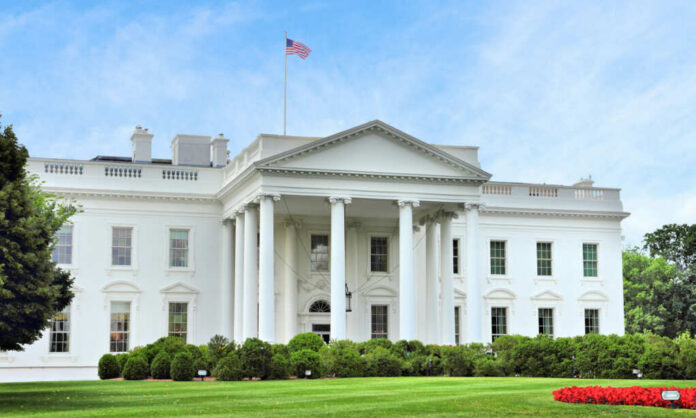
A federal judge just told the Trump administration that “national security” isn’t a blank check to remake the White House without Congress.
Quick Take
- U.S. District Judge Richard Leon blocked above-ground construction of President Trump’s proposed White House ballroom, while allowing limited protective measures and some underground security work to continue.
- The dispute centers on whether the administration can rely on national-security exceptions to proceed without congressional approval after the East Wing was demolished.
- The D.C. Circuit ordered Judge Leon to clarify how national security should be handled, citing risks created by an open excavation near the Executive Residence.
- The Justice Department appealed again after Leon’s clarified order, setting up a fast-moving legal fight with potential for higher-court review.
Judge Leon’s clarified order: above-ground halted, security stabilization allowed
U.S. District Judge Richard Leon issued a clarified order stopping above-ground work on a proposed 90,000-square-foot ballroom intended to replace the White House East Wing. Leon still permitted narrow steps “strictly necessary” to protect the site—work such as sealing and waterproofing—so the partially altered area does not become a security or safety hazard. The order also allows certain underground national-security work to continue, but not in a way that effectively commits the government to the ballroom’s full above-ground footprint.
The order came after the D.C. Circuit Court of Appeals temporarily extended a stay and sent the matter back to Leon, directing him to address national-security concerns raised by the case’s unusual posture. A key issue is that demolition already happened, and the courts faced the practical risk of leaving what has been described as a dangerously large open area near the Executive Residence. Leon’s response tried to thread the needle: prevent unlawful above-ground construction while allowing limited measures to keep the site stable and secure.
A timeline that raised alarms: announcement, demolition, lawsuit, injunction, appeal
President Trump announced the privately funded ballroom plan in summer 2025, pitching it as a major upgrade that would also complement enhanced security. In October 2025, the East Wing was unexpectedly demolished, triggering a lawsuit from the National Trust for Historic Preservation. By March 2026, Leon issued a preliminary injunction finding the administration lacked legal authority to proceed without congressional approval. After additional appeals-court activity in April, Leon clarified the order and stayed it briefly to allow the Justice Department to pursue further review.
This sequence matters because it placed judges in the uncomfortable position of balancing process against immediate operational realities. Court fights about federal buildings usually happen before a wrecking ball shows up. Here, demolition first and litigation later left the courts weighing two competing risks: letting a potentially unauthorized project continue, or freezing activity and leaving hazardous conditions in a uniquely sensitive location. The appellate court’s short stay and remand signaled it took the on-site risk seriously even as the underlying legal questions remained unsettled.
Where the legal line is being drawn: Congress, preservation laws, and executive power
Leon’s rulings repeatedly emphasize a basic constitutional and statutory principle: the President is a steward of public property, not its owner, and major changes to the White House complex cannot simply be willed into existence. The administration argued national security demands the project, describing threats that range from modern weapons to other hazards. Leon rejected the idea that invoking security automatically authorizes above-ground construction without Congress, warning that national security does not override legal limits when the requested relief is sweeping and permanent.
For conservative readers who value limited government and the separation of powers, the core issue is less about a ballroom and more about precedent. If any administration can bypass Congress by labeling a large, visible construction project “security-related,” then legislative oversight becomes optional in practice. At the same time, the case shows a real-world tension: the government must protect the president and the White House, especially with evolving threats. Leon’s approach attempts to preserve lawful procedure while allowing short-term mitigation to keep the site safe.
Political and practical fallout: a stalled private project and a broader trust problem
The project’s scale and financing also fuel the controversy. Reports place the ballroom plan at roughly $400 million and describe it as privately funded, a detail supporters view as avoiding taxpayer expense while critics see it as a way to sidestep Congress. Either way, the stoppage delays a high-profile construction effort at the country’s most symbolic address. Operationally, the White House must manage a disrupted footprint, and legally, the administration’s latest appeal keeps the outcome uncertain.
https://t.co/Ww3794qjCA
REBUKE: Judge blocks above-ground construction of White House ballroom…— Billy Camou (@billycamou) April 16, 2026
The deeper takeaway is how quickly even basic governance questions—who has authority, who must approve, and what rules apply to historic public property—end up in court. Many Americans across the political spectrum already suspect that Washington runs on insiders and procedural games rather than clear accountability. This case reinforces that frustration in a different way: the public sees demolition, injunctions, emergency stays, and dueling claims of security necessity, yet no clean, transparent process that resolves the dispute before irreversible steps occur.
Sources:
Federal judge blocks above-ground White House ballroom construction
Federal judge blocks above-ground White House ballroom construction
Judge orders Trump halt White House ballroom construction, escalating legal feud