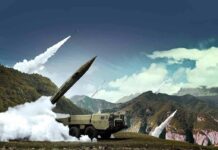
The Trump administration is systematically dismantling Iran’s ability to rebuild its weapons arsenal by targeting the financial networks and front companies that keep the regime armed with missiles and drones.
Quick Take
- Treasury imposed sanctions on 14 Iranian, Turkish, and UAE-based entities on May 5, 2026, blocking procurement networks for missiles and Shahed-136 drones
- The “Economic Fury” strategy targets middlemen and transport operators like Mahan Air, directly hitting Iran’s ability to reconstitute stockpiles depleted in ongoing conflict
- Ceasefire negotiations remain stalled while the U.S. applies maximum financial pressure, signaling resolve to weaken Iran’s asymmetric capabilities
- U.S. munitions production surges to replace Patriot and Tomahawk stocks, indicating long-term commitment to the conflict
Treasury Escalates Financial Warfare Against Iran’s Arms Networks
The U.S. Department of Treasury’s Office of Foreign Assets Control announced the fifth round of nonproliferation sanctions targeting Iran’s weapons procurement infrastructure. The action blocks all U.S.-jurisdiction assets of 14 individuals, entities, and aircraft operating across Iran, Turkey, and the United Arab Emirates. These targets directly facilitated the movement of missiles, unmanned aerial vehicles, and critical components for the Iranian Revolutionary Guard Corps, according to Treasury Secretary Scott Bessent’s statement accompanying the designations.
Following the Money to Disrupt Procurement
The designated entities include Pishgam Electronic Safeh, a key supplier of Shahed-136 drone components, and Adak Pargas Pars, which procured sodium perchlorate used in missile propellant production. Mahan Air, previously designated for supporting the IRGC-Quds Force, faces expanded sanctions through newly identified affiliates. Treasury officials emphasized that blocking financial access forces Iran’s procurement networks to operate at reduced capacity, directly undermining efforts to rebuild stockpiles damaged during U.S. military operations in 2025.
The Strategic Context: Depleted U.S. Stocks Drive Production Surge
The sanctions campaign occurs as U.S. Patriot and Tomahawk inventories face significant depletion from sustained operations. The Pentagon has accelerated munitions production to replace consumed stocks, signaling that American planners expect the conflict to continue beyond current ceasefire discussions. This dual approach—simultaneously degrading Iran’s rebuild capacity while restocking American arsenals—reflects a strategy of economic and military pressure designed to exhaust the Iranian regime’s options.
Stalled Diplomacy, Intensified Economic Pressure
Ceasefire negotiations between the U.S. and Iran have stalled, with neither side demonstrating willingness to compromise on core demands. By tightening financial restrictions on weapons procurement networks, the Trump administration maintains pressure on Iran’s military capabilities independent of diplomatic progress. The strategy follows a pattern established under the National Security Presidential Memorandum 2, which prioritizes “following the money” to disrupt illicit arms flows and WMD proliferation networks globally.
Regional Vulnerabilities and Secondary Effects
The sanctions expose vulnerabilities in Turkey and UAE-based intermediaries who facilitate Iranian procurement. These entities, now designated and facing asset freezes, face pressure to cease operations or risk secondary sanctions. The action signals to regional actors that participating in Iran’s weapons networks carries severe financial consequences. This approach extends American financial leverage beyond direct Iranian targets to encompass the global infrastructure enabling Tehran’s military ambitions.
While Ceasefire Talks Stall, the U.S. Is Squeezing the Network Keeping Iran Armedhttps://t.co/3XFS9sQM6i
— RedState (@RedState) May 9, 2026
The Treasury’s escalating campaign reflects a broader recognition across both political parties that the federal government must deploy all available tools—financial, diplomatic, and military—to address genuine national security threats. Whether one views the Iran conflict through a national security or humanitarian lens, the reality remains: Iran’s weapons networks threaten American interests, allied nations, and global energy markets. The administration’s focus on disrupting financial flows rather than announcing new military strikes suggests confidence that economic pressure, combined with military readiness, can achieve strategic objectives without further escalation.
Sources:
Economic Fury Targets Iranian Missile and UAV Procurement Networks – U.S. Treasury Press Release
US Imposes New Sanctions on Iran-Linked Weapons Networks – Kurdistan24
U.S. Drains Critical Missile Stockpiles; Iran War Yearslong Rebuild Looms – Fox News