Joint US-Saudi airstrikes just hit a key piece of Iraq’s own security forces, exposing how “terrorist” militias and state-backed units have become the same targets in a war most ordinary people never chose.
Story Snapshot
- Strikes hit Popular Mobilization Forces (PMF) bases across Iraq, killing about 20 fighters and wounding dozens.
- Washington and Riyadh say they targeted Iran-aligned militants tied to drone attacks on US troops and Saudi oil facilities.
- The PMF is both a state-sanctioned security force and an umbrella for powerful Iran-backed militias that often act on their own.
- Iraq’s government is squeezed between US and Saudi demands to curb these groups and the risk of internal backlash and wider war.
What Was Hit In The Joint US-Saudi Strikes
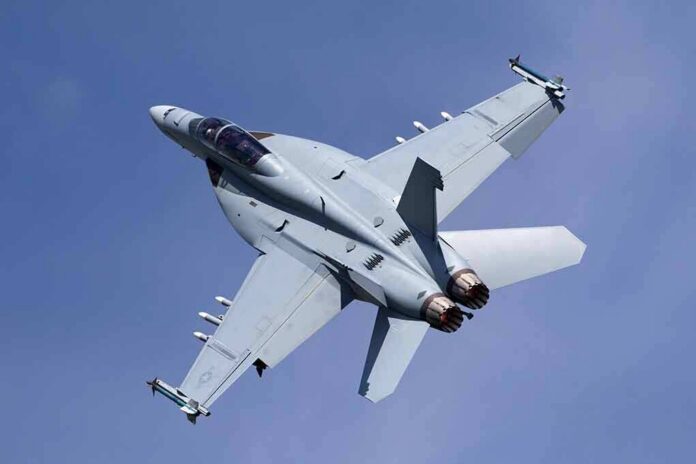
U.S. Central Command and the Saudi Arabian armed forces say their jets carried out precision strikes on multiple “terrorist logistics and weapons sites” in eastern Iraq on July 28. They frame the operation as a direct answer to more than 30 drone attacks in 72 hours on U.S. forces and Saudi energy facilities, which they blame on militants directed by Iran’s Islamic Revolutionary Guard Corps. Iraqi reports say bases and headquarters of the Popular Mobilization Forces, or PMF, were hit in at least seven provinces, including Baghdad, Nineveh, Basra, Kirkuk, Karbala, Wasit, and Diyala.
The PMF itself says that at least 20 of its members were killed and 32 wounded at sites across Iraq, a toll echoed in several news reports. One PMF command in Nineveh describes seven separate strikes on the 4th Battalion of the 30th Brigade and an Anti-Armor Directorate near Mosul, killing ten fighters and injuring six. Images from Diyala show emergency crews at a shattered PMF base, underscoring that these were fixed, official facilities, not hidden camps. The PMF calls the operation a “very dangerous escalation” and a clear violation of Iraqi sovereignty.
Who The PMF Militants Are
The Popular Mobilization Forces grew out of a 2014 call to arms when the so-called Islamic State overran large parts of Iraq. Many Iraqis volunteered, and dozens of armed factions formed an umbrella alliance known as Hashed al-Shaabi, or PMF, to help push the extremists back, often fighting alongside, and sometimes instead of, the regular army. Since then, Iraqi law has formally integrated the PMF into the country’s armed forces, giving it salaries, bases, and an official command structure as part of the state security apparatus.
Beneath that legal umbrella, however, the PMF is a maze of about 50 to 70 separate militias with different loyalties and outside sponsors. Most are Shia Muslim and maintain close ties to Iran, including factions like Kataib Hezbollah, Asaib Ahl al-Haq, Harakat Hezbollah al-Nujaba, and others that Western governments list as terrorist organizations. Analysts estimate more than 200,000 fighters across roughly 67 factions, with a smaller number of Sunni and minority units also under the PMF label. Some brigades answer mainly to Iraqi political leaders, but others take cues from Tehran and the Islamic Revolutionary Guard Corps, blurring the line between national defense and foreign proxy.
Why Washington And Riyadh Say These Groups Were Targeted
U.S. and Saudi officials argue that the strikes were not aimed at Iraq as a country but at Iran-aligned armed groups using Iraqi soil to attack American troops and Saudi oil infrastructure. Central Command says the targets were militants the Islamic Revolutionary Guard Corps had “directed to attack U.S. forces and Saudi energy infrastructure,” and that from February to April alone there were more than 600 attempted attacks on U.S. citizens and facilities by such groups in Iraq. Saudi statements link recent drones launched from Iraqi territory to “terrorist militias loyal to Iran” that tried to hit petroleum sites in the Eastern Province and Riyadh.
Many of the most active Iran-aligned factions inside the PMF are gathered in a loose alliance called the Islamic Resistance in Iraq. This coalition has claimed hundreds of attacks on U.S. bases in Iraq and across the region in support of Tehran during the wider Middle East war. Several of its member groups are already designated as foreign terrorist organizations by the U.S. government, based on past rocket and drone strikes and on ties to Iran’s security services. In Washington and Riyadh’s view, hitting PMF sites tied to these factions is part of a larger effort to stop Iran’s “shadow army” from operating across borders.
How Iraq Is Caught Between Militias, Allies, And Its Own People
Iraq’s leaders now face a near-impossible balancing act. On paper, the PMF is a legal arm of the Iraqi armed forces, and the country’s National Security Council has even authorized it to exercise self-defense against attacks. At the same time, Prime Minister Ali al-Zaidi has promised the U.S. that the most hardline Iran-backed militias will be disarmed or brought fully under state control by the end of September, recognizing that groups which answer to outside powers threaten Iraq’s stability and international ties. Every foreign strike on PMF facilities deepens that tension and raises the risk of internal unrest or retaliation.
In Iraq, the Baghdad government condemns US & Saudi airstrikes on PMF (Hashd) headquarters. The strikes come in response to Iranian attacks on US forces in the region & Iraqi militia drone strikes on Saudi Arabia. The PMF contains Iranian backed militias. https://t.co/EGvWMgW2oA
— David M. Witty (@DavidMWitty1) July 29, 2026
For ordinary Iraqis and for Americans watching from home, this looks like another case where faraway power struggles override the basic duty to protect citizens. The same units praised as heroes against the Islamic State are now bombed as terrorists, sometimes inside official bases, because regional rivals use them as tools. Many Iraqis see the strikes as proof that their country’s sovereignty is negotiable when big players’ interests are on the line, while many in the U.S. see yet another conflict where “precision” wars never seem to end. Both views feed the growing belief that distant elites and security bureaucracies, not voters, decide when and where lives are put at risk.
Sources:
insiderpaper.com, en.wikipedia.org, fdd.org, jpost.com, washingtoninstitute.org, nesa-center.org, greydynamics.com, aljazeera.com, youtube.com, euaa.europa.eu, lse.ac.uk, en.mehrnews.com, middleeasteye.net, economictimes.indiatimes.com, dw.com