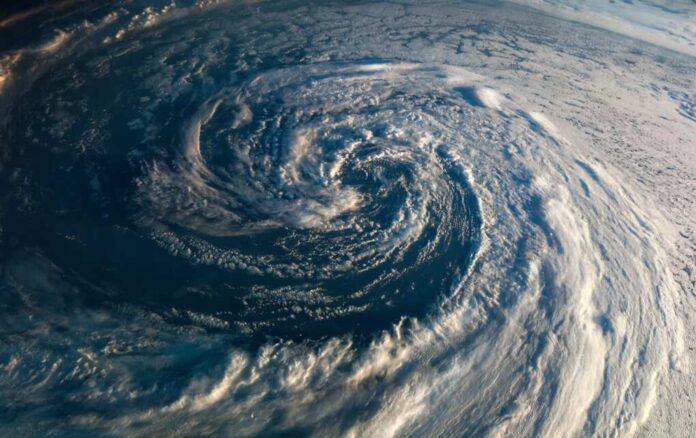
Pacific Typhoon Halong threatens to unleash catastrophic storms across America’s West Coast through a rare atmospheric phenomenon that could devastate California and Alaska with unprecedented flooding and hurricane-force winds.
Story Highlights
- Typhoon Halong’s energy will merge with Pacific jet stream, potentially triggering severe storms from Alaska to California
- Atmospheric teleconnection could bring heavy rain, snow, and flooding to US West Coast, similar to 2022’s costly Typhoon Merbok
- Hurricane-force winds expected in Alaska’s Bering Sea while California braces for flash flooding and travel disruptions
- Meteorologists warn of high forecast uncertainty due to complex dynamics of recurving typhoons crossing ocean basins
Dangerous Cross-Pacific Energy Transfer Threatens Multiple States
Super Typhoon Halong, after battering Japan’s Izu Islands with record rainfall and winds, is now tracking eastward across the Pacific Ocean where it will inject massive energy into the North Pacific jet stream. This atmospheric teleconnection represents a rare but highly destructive weather phenomenon where Pacific typhoons amplify North American storm systems thousands of miles away. The National Weather Service confirms high confidence that Halong’s remnants will reach Alaska’s Bering Sea by October 12-13, potentially bringing hurricane-force winds and coastal flooding to western Alaska communities.
California faces particularly serious threats as meteorologists forecast heavy rain and early-season snow across the Sierra Nevada mountains, with significant risks of flash flooding throughout the Bay Area and Central Valley. The storm’s timing coincides with California’s already stressed infrastructure from recent wildfires and floods, creating compounded vulnerabilities for millions of residents. Emergency services across multiple states are now coordinating disaster response plans as the complex storm system approaches North American shores.
Typhoon Halong (Typhoon No. 22) footage out of Japan, just off the coast of Tokyo, is wild. And it's so powerful, it'll be impacting the U.S.
Cyclone bomb will hit Alaska, leading to a strong storm for the West Coast. I've got a piece coming shortly breaking everything down. pic.twitter.com/dHrRlDIWGo
— Andrew Powell (@AndrewPow3ll) October 9, 2025
Historical Precedent Shows Potential for Massive Economic Damage
Typhoon Merbok’s 2022 impact serves as a sobering reminder of Pacific typhoon destruction potential, causing millions in infrastructure damage across Alaska and disrupting transportation networks for weeks. Weather experts draw direct comparisons between Merbok and Halong’s projected paths, though they caution that each recurving typhoon presents unique atmospheric dynamics that challenge forecasting precision. The 2022 event brought severe flooding to Alaska’s coastal communities and demonstrated how Pacific storm energy can overwhelm unprepared regions thousands of miles from the original typhoon.
Insurance and disaster recovery sectors are already preparing for potentially massive claims as the storm approaches populated West Coast areas. Local governments from Alaska to California have begun issuing preliminary warnings and activating emergency response protocols, recognizing that atmospheric teleconnections often exceed normal weather prediction capabilities. The economic disruption could extend beyond immediate storm damage to include shipping delays, agricultural losses, and extended power outages across multiple states.
Forecast Uncertainty Complicates Emergency Preparedness Efforts
Meteorological agencies acknowledge significant uncertainty in predicting Halong’s exact downstream effects, particularly regarding the storm’s specific track and intensity when it reaches North American weather systems. The Japan Meteorological Agency reports that Halong’s record-breaking wind speeds and rainfall during its Japan approach suggest exceptional energy content that could be amplified when merged with jet stream dynamics. National Weather Service forecasters emphasize that recurving typhoon models often lose precision as storms transition between ocean basins and interact with different atmospheric patterns.
This forecast uncertainty creates challenges for emergency management officials who must balance public safety warnings with the inherent unpredictability of cross-Pacific atmospheric teleconnections. Climate scientists note that such extreme weather events are becoming more frequent and severe, reflecting broader patterns of atmospheric instability that complicate traditional forecasting methods. The situation underscores the need for improved meteorological models and enhanced disaster preparedness strategies as Pacific storm systems increasingly impact North American weather patterns.
Sources:
Super Typhoon Could Trigger Unprecedented Weather Turmoil On U.S. West Coast
Remnants of Typhoon Halong could bring further flooding to western Alaska
Typhoon Halong: Japan hit by powerful storm that could send ‘shockwaves’ to USA
Typhoon Halong mapped: Emergency warning for Japanese islands and heavy rain forecast for California