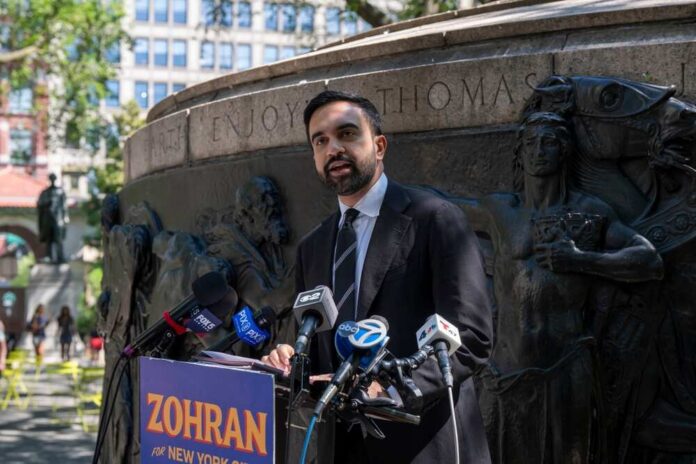
New York City’s new mayor is reopening the “equity vs. excellence” war in public schools—and families who rely on gifted programs as a ladder out are bracing for the fallout.
Story Snapshot
- Mayor Zohran Mamdani’s team says it wants to end or reshape gifted-and-talented placement for kindergarteners and delay entry to later grades, arguing five-year-old testing is unfair.
- Critics, including Defending Education, warn the plan would weaken accelerated learning and hit high-achieving low-income students hardest.
- NYC’s gifted programs already shifted under prior mayors, moving from early exams to teacher nominations and lotteries, after years of political and legal battles.
- The proposal lands as Republicans run Washington in 2026, but education policy remains largely local—making city and state leadership decisive.
What Mamdani is proposing—and what his office is emphasizing
Mayor Zohran Mamdani, a democratic socialist who took office in January 2026, has drawn renewed scrutiny for a plan centered on New York City’s Gifted and Talented pipeline. Reporting indicates the mayor’s side opposes testing five-year-olds for kindergarten gifted placement and wants a model that delays entry until at least third grade. His office argues the goal is rigorous instruction “for all” students rather than separating children early, even as critics read the approach as a phase-out.
The distinction matters because the public debate is no longer just about whether gifted education should exist, but about when and how a child can access it. Supporters of earlier identification argue families need clear, predictable pathways to challenging coursework. Mamdani’s message suggests he wants advanced learning broadly available without sorting kids at age five—an idea that sounds inclusive, but depends heavily on execution inside a massive system.
Why gifted programs became a political flashpoint in NYC
New York City runs the nation’s largest school district, and coverage describes a system with large Black and Latino enrollment and significant economic disadvantage. Gifted-and-talented programs have long served as one of the few widely recognized routes to higher-performing school environments, helping retain families who might otherwise leave for private schools or the suburbs. Under earlier reforms, the city scrapped a controversial exam for four-year-olds and moved toward teacher nominations and lotteries.
Politics around the programs have been unstable for years. Former Mayor Bill de Blasio pushed to phase out elementary gifted programs late in his tenure, and later leadership reversed course, expanding seats and shifting attention to access beginning in third grade. Courts have also been pulled into the fight: legal challenges have tested whether the programs discriminate, and reporting notes rulings that the judiciary should not set education policy. That history makes Mamdani’s new push feel less like a tweak and more like another major swing of the pendulum.
Critics say the plan risks flattening opportunity, not expanding it
Education advocates from Defending Education argue that delaying or dismantling early gifted identification undermines accelerated learning precisely when foundational skills are formed. Their concern is not theoretical: if a high-performing child in a low-income household loses access to a structured advanced track in the early grades, the family may have few alternatives. Critics also contend that reducing specialized options can trigger a “one-size-fits-all” classroom approach that fails both struggling students and high achievers.
Supporters of Mamdani’s approach view early selection as inequitable and point to disparities in who gets labeled gifted. That critique resonates in many districts, but it also raises a basic governance question: can a bureaucracy realistically deliver “rigorous instruction for all” without clear, enforceable standards for advanced coursework? The available reporting does not provide detailed implementation plans, timelines, or accountability metrics—leaving parents to fill in the gaps with worst-case assumptions and political suspicion.
The broader lesson for a country losing faith in institutions
Nationally, education debates increasingly mirror a wider collapse in trust. Many conservatives see “equity” language used to justify lowering standards rather than raising outcomes. Many liberals see selective programs as reinforcing segregation and privilege. A growing number of Americans in both camps, however, agree on a more unsettling point: government systems often protect their own interests—jobs, budgets, and talking points—while families struggle to secure a fair shot for their kids.
In practical terms, the NYC dispute will test whether city leaders can reform entry rules without destroying a proven upward-mobility tool. The strongest facts in current coverage show a real proposal to end or delay kindergarten gifted placement and a real counterclaim from the mayor’s office that it seeks rigor without early separation. Until the city publishes clear standards for advanced instruction and guarantees meaningful pathways for high-achieving students—especially from working-class neighborhoods—the political fight is likely to intensify.
Sources:
Education experts warn Mamdani plan could gut NYC gifted programs, hurt low-income students
Zohran Mamdani gifted and talented NYC school segregation Cuomo Sliwa