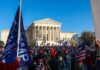
President Trump is turning Washington’s most protected federal spaces into a free, televised showcase of American speed—if the bureaucracy and congressional hurdles don’t choke it off first.
Story Snapshot
- President Trump signed a January 30, 2026 executive order to stage the “Freedom 250 Grand Prix,” an IndyCar street race in Washington, D.C., August 21–23.
- Federal agencies have been directed to map a route around the National Mall, with planning that includes major landmarks and Pennsylvania Avenue.
- Organizers say the event will be free and publicly accessible, with a FOX broadcast planned.
- Key unknowns include funding, traffic and security impacts, and whether Congress must approve aspects of federal land use.
Trump’s Order Puts the “Freedom 250” on the Calendar
President Donald Trump signed an executive order on January 30 directing federal agencies to organize an IndyCar street race in Washington, D.C., as part of the national “America 250” celebrations. The planned event, branded the “Freedom 250 Grand Prix,” is scheduled for August 21–23, 2026. Roger Penske, whose organization owns IndyCar and the Indianapolis Motor Speedway, attended the signing as the administration promoted the race as a high-visibility, patriotic centerpiece.
Transportation Secretary Sean Duffy has been one of the most prominent boosters, after sharing an AI-generated concept video that helped push the idea into the mainstream and eventually into official planning. Public statements tied to the rollout emphasize big visuals, big crowds, and the idea that everyday Americans can attend without paying for a ticket. That “free access” promise will matter, because much of the proposed footprint sits near federal property and heavy security zones.
A Track Around America’s Icons Raises Real-World Questions
Early descriptions place the circuit around the National Mall, with planning discussions referencing iconic sites such as the U.S. Capitol, the White House, and Pennsylvania Avenue. Officials have also talked publicly about IndyCar-level speeds that could approach roughly 190 mph in the right sections, which underscores how ambitious the concept is for a dense downtown environment. Safety barriers, emergency access, and secure perimeters are not optional details in D.C.; they are the entire project.
The executive order sets an aggressive timetable by directing the Departments of the Interior and Transportation to designate the route within a short window. That tight deadline may energize agencies that too often move at government speed, but it also concentrates risk: rushed planning can create avoidable conflicts with local operations, federal worker access, and tourism flows. The administration’s intent is clear—deliver a signature America 250 spectacle—yet the operational details will decide whether it becomes a smooth win or a bureaucratic grind.
Federal Land, Local Streets, and the Constitutional “Who Decides” Issue
Several reports highlight that congressional involvement could be required because of federal land use near the Mall and other protected spaces. That is a procedural reality conservatives should care about for a practical reason: big events in the capital shouldn’t become precedents for executive-branch shortcuts, even when the event itself is popular. The strongest case for the project is that it stays within lawful lanes, respects separation of powers, and doesn’t normalize backdoor control over public spaces.
D.C. Mayor Muriel Bowser has welcomed the race, framing it as a boost for the city’s reputation and tourism economy. Local support can reduce friction on permits, city services, and coordination, but it does not erase federal concerns—especially in corridors where multiple jurisdictions overlap. Residents should also expect disruption: a street circuit means closures, detours, staging areas, and security screening. The core tradeoff is straightforward—national celebration and economic activity versus weeks of disruption and high-cost logistics.
IndyCar’s Big Opportunity—and Its Unique D.C. Constraints
For IndyCar, a D.C. race is a prestige play that puts the series on a global postcard. IndyCar leadership has described the effort as revived after years of difficulty, suggesting the sport sees this as a rare opening that may not come again. Still, racing media has pointed to practical constraints that don’t exist on many street circuits, including restrictions that can limit signage and commercial activation on or near Capitol grounds—an issue that can affect revenue and sponsor visibility.
What Happens Next: Route, Funding, Security, and Public Access
The next phase is a test of whether the administration’s top-line message—free, accessible, and worthy of America 250—can survive real-world government requirements. Organizers and agencies must finalize a route, determine how costs are covered, and lock down the security plan for a high-speed event near sensitive sites. If the project stays transparent and lawful, it could become a rare unifying civic moment that celebrates American industry and sport without the usual divisive lecture.
If approvals bog down, the “Freedom 250” could also become a case study in how quickly big national ideas can get trapped in red tape, overlapping jurisdictions, and competing priorities. The reporting so far shows broad enthusiasm among political and racing stakeholders, but fewer specifics about funding and traffic mitigation, which are typically where public sentiment turns. For now, Trump has set the direction; the agencies and lawmakers will determine whether D.C. can actually host IndyCar at this scale.
Sources:
Trump orders IndyCar race on streets of DC as part of nation’s 250th celebration
Donald Trump signs executive order confirming IndyCar race in Washington D.C.
President Trump announces plans for Indycar race in DC: Freedom 250 Grand Prix, National Mall, America 250
Trump plans IndyCar race in Washington, D.C. for U.S. 250th anniversary celebration
Donald Trump wants an IndyCar street race in D.C.
IndyCar confirms Freedom 250 Grand Prix of Washington, D.C.
Celebrating American Greatness with American Motor Racing