Two Philadelphia police officers were shot a combined 15 times after responding to a gun call in West Philadelphia, a rapid burst of violence that officials say began the moment they reached the porch.
Story Highlights
- Police say one officer was shot three times and another was shot 12 times during the attack.
- Commissioner Kevin Bethel reported “significant gunfire” as officers arrived at North 52nd Street.
- Officers took a suspect into custody after finding him hiding in a tree; three guns were recovered.
- Local outlets reported both officers were rushed into surgery; officials had not released the suspect’s name.
What Happened on North 52nd Street
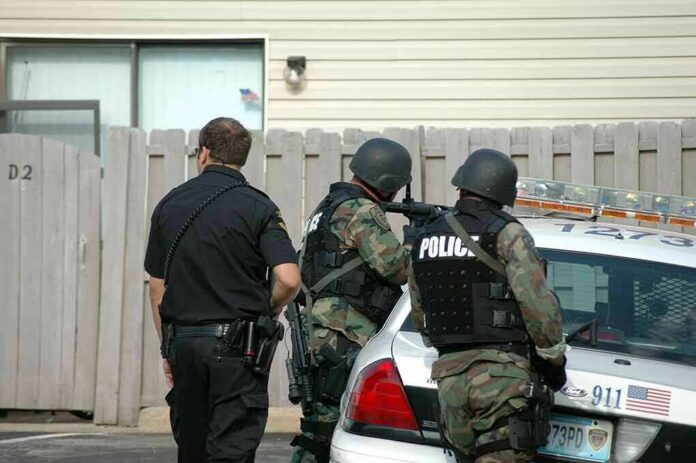
Philadelphia police officers responded after midnight to reports of a man with a gun at or near the 100 block of North 52nd Street. Philadelphia Police Commissioner Kevin Bethel said officers faced “significant gunfire” as they reached the porch. Two officers were struck multiple times in the initial exchange, and other responding officers also came under fire as they tried to secure the block and contain the scene. Local outlets placed the response shortly after 12:20 a.m., with the location consistent across reports.
Commissioner Bethel said one officer, age 40, was shot three times, and another, age 33, was shot 12 times. Reporters described both officers as being rushed to surgery in critical condition following the attack. Multiple stations and local sites carried the same figures and ages from the police briefing. Coverage framed the event as an ambush, reflecting on-scene descriptions, while also noting that investigators were still building a full timeline of the exchange.
Suspect Arrest and Weapons Recovery
Police said they found the suspect hiding in a tree near the scene and took him into custody without further gunfire. Officers recovered three firearms in total—two handguns and a shotgun—according to accounts drawn from Commissioner Bethel’s briefing. Bethel said one of the handguns had been taken from one of the wounded officers during the encounter. Those details came from multiple aligned reports published the same day across local and national outlets.
Authorities had not released the suspect’s name in the hours after the shooting. Outlets noted that investigators were processing the scene, logging the recovered weapons, and interviewing witnesses. Reporters emphasized that the case remained active, with formal charging decisions to follow. The official account came mainly through the commissioner’s statements, a common practice in fast-moving, overnight cases that are still under review.
Conflicting Casualty Reports and What Is Confirmed
Some later summaries asserted that one officer died, while many same-day reports described both officers as alive and in surgery. Police had not issued a final death announcement in the material reviewed here, and leading local outlets continued to list both officers as hospitalized. Given the difference, the safest confirmed facts from the initial briefings are the ages, the number of gunshot wounds, the location, and that both officers were rushed into surgery after the attack.
Breaking news often moves faster than formal updates, which can create mismatched accounts. Outlets that rely on early briefings may update at different times. In this case, reports were consistent on the scene details, the number of shots each officer took, the suspect’s arrest, and the gun recoveries. The open items were the suspect’s identity, motive, and a final medical update, which authorities typically release after notifying families and confirming details with hospitals.
Why This Matters Beyond One Block
Attacks on officers are rare but real, and they carry heavy weight for any city’s sense of order. Federal Bureau of Investigation (FBI) data show that, through the first nine months of 2024, firearms were involved in most felonious officer deaths, and a share were classified as ambush events, which involve surprise or preplanned attacks. That context helps explain the urgent police response, the language used by officials, and the community’s alarm when many shots are fired at once.
Philadelphia police officer killed, partner shot 12 times in ambush; suspect found hiding in tree https://t.co/FfgU9U3Bxs
— BeautifulMessyBall (@YodaKnows3) October 11, 2026
People across the political spectrum see scenes like this and feel the system is failing basic safety. Conservatives point to repeat violent crime and illegal guns. Liberals point to frayed social services and the widening gap between rich and poor. Both sides worry that leaders talk tough but deliver little. Incidents like this one feed that shared doubt, especially when facts trickle out slowly and families, neighbors, and officers are desperate for clear answers that match what they lived through.
What To Watch For Next
Watch for the police department’s next formal update on each officer’s condition and any announcement from the district attorney on charges. Expect details on the suspect’s identity once charges are filed. Look for confirmation of which weapons were fired and whether any gun belonged to an officer, as reported in the briefing. Those records—combined with body-camera video, dispatch logs, and witness interviews—will show how the first shots started and how the response spread across the block.
Sources:
townhall.com, noticias.foxnews.com, san.com