Riot police breaking a student human chain outside a Paris high school underscored how a protest over crumbling classrooms has become a nationwide showdown in France.
Story Highlights
- Students protested overcrowding, teacher shortages, and deteriorating buildings across France.
- Demonstrations spread beyond Paris to cities including Lyon, Marseille, and Nantes.
- Officials acknowledged some demands and ordered steps on teacher replacement and schedules.
- Hundreds of schools faced closures or blockades as street clashes escalated in some areas.
What Sparked The School Unrest
Students said classes were too crowded, teachers were missing, and buildings were in poor shape. Reports described dilapidated facilities and long school days that left teens exhausted. Protests started in and around Paris and then spread fast. By early October, the movement had grown into one of the largest school protests in years, touching hundreds of campuses. Government data and news reports aligned on the core grievances students raised about daily school conditions.
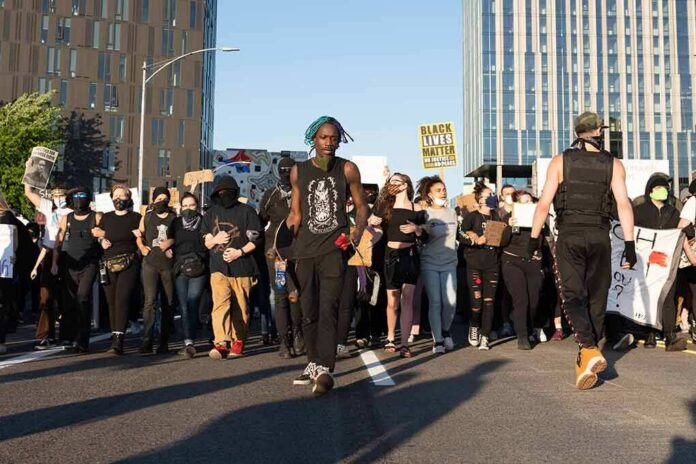
Images showed students forming blockades at school gates, with trash bins and makeshift barriers. Police moved in when access roads or entrances were blocked. Outside one Paris school, officers with shields pushed through a human chain to clear a roadway. That scene captured the shift from campus pressure to a broader public-order test. The clashes did not define every protest, but they raised the stakes and drew national attention to the students’ list of demands.
How Far The Protests Reached
Demonstrations spread from Paris to Lyon, Marseille, and Nantes. Street marches and school blockades ran through the morning hours in several cities. Student groups said the disruption touched a large share of high schools. Different outlets reported different counts as the week went on, but all described major, nationwide impact. Authorities and reporters both tied the unrest to school conditions rather than a single local dispute, signaling a broad push on education policy.
Officials reported closures, partial shutdowns, and suspended lessons at many campuses. Some protests stayed peaceful, while others saw fires, fireworks, and tear gas. Police announced arrests in several cities, and there were injuries among both students and officers in periods of street disorder. This mix of calm marches and tense clashes made the scale clear, even as it blurred lines between targeted school grievances and wider anger on the streets.
What The Government Is Doing
France’s education minister said parts of the students’ message were legitimate. The prime minister directed ministers to act on top concerns, including faster replacement of absent teachers and review of school-day length. These steps aimed to cool tensions while keeping schools open. The measures suggested the government sees classroom staffing and schedules as urgent fixes it can deliver first, while larger repairs and building upgrades may take longer.
French students are continuing nationwide protests over education conditions, with demonstrations reported in several cities and school blockades disrupting classes. In Lyon, police used tear gas as tensions rose during protests, while students in Paris blocked access to several… pic.twitter.com/sVHI0P1gKJ
— Ocean News (@OceanNewsUK) October 6, 2026
The bigger fight is about scarce public resources. Students want safe classrooms, enough teachers, and a school day that does not grind them down. Leaders must choose where to spend, how fast to hire, and which repairs to do first. That trade-off shows up in many countries, not just France. When services fail, people across the political spectrum see a system that takes taxes but struggles to deliver. That is why these campus protests drew a national spotlight so quickly.
Sources:
san.com, dw.com, yahoo.com, aa.com.tr, nypost.com, english.mathrubhumi.com, cbsnews.com, indianexpress.com, bbc.com, efe.com