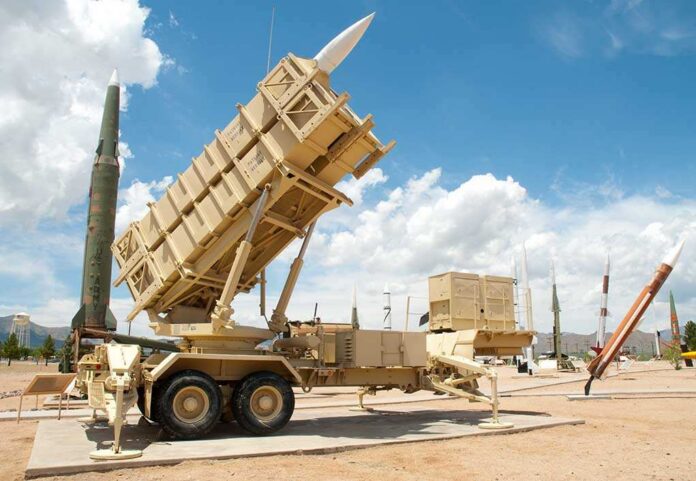
Iran’s missile force still carries clear traces of North Korean design, and U.S. officials have said that link has shaped Tehran’s arsenal for decades.
Quick Take
- North Korea began supplying missiles and missile help to Iran in the 1980s.
- U.S. and congressional sources say the two countries built a long missile partnership.
- Several Iranian missiles are widely described as derivatives of North Korean systems.
- Some analysts still disagree on whether the ties show deep joint design or mostly transfer and copying.
A Long Missile Partnership
Open-source reporting and U.S. government material both describe a long missile relationship between Iran and North Korea. The Congressional Research Service says Iran has developed a close working relationship with North Korea on many ballistic missile programs, starting with Scud missile purchases in the 1980s. Arms Control Association reporting also quotes a senior U.S. official saying North Korea was the principal supplier of ballistic missile technologies to Iran.
That history matters because it shaped the base of Iran’s liquid-fuel missile force. Reporting from Voice of America and other sources says the Shahab-3 family, including later variants such as Ghadr and Emad, traces back to North Korean technology, especially the Nodong line. Other reporting says North Korean technicians helped build missile production facilities, which gave Iran more than just finished weapons.
How the North Korean Lineage Shows Up
Analysts who study proliferation say the North Korean imprint is easiest to see in Iran’s medium-range liquid-fuel missiles. The Shahab-3 is often described as a Nodong-based design, and later Iranian versions are seen as local upgrades of that model. Some reports go further and argue that Iran’s Qiam and related systems also reflect North Korean help, although the public record is stronger on broad lineage than on exact transfer records.
That point reflects a larger problem in missile analysis. Public evidence often shows shared designs, similar parts, or matching flight profiles, but not every step in the transfer chain. The public record can support a solid conclusion that North Korea supplied missiles, components, and know-how to Iran. It is less able to prove every detail of who engineered which part, because much of that evidence remains classified or hidden.
"DRONES from IRAN, MISSILES and TROOPS from NORTH KOREA."
Senior Editor at Issue Insight John Kavulich analyzes the foreign support helping Russia sustain its war in Ukraine. pic.twitter.com/00nr90tYXI
— Al Arabiya English (@AlArabiya_Eng) August 11, 2026
Why the Relationship Still Matters
The Iran-North Korea missile link matters far beyond old history. Iranian missiles have been used against regional targets and United States positions, so any foreign help behind those systems affects current security risks. Reporting in recent years also says the two countries have kept talking about missile cooperation, which suggests the relationship did not end with the first wave of Scud-era transfers.
At the same time, some specialists urge caution about reading too much into public images alone. A 38 North analysis argued in 2016 that the evidence did not support a claim of deep joint development, even while it accepted that North Korea had supplied Iran with complete missiles and key components for decades. That split helps explain why the broad storyline is clear, but some technical claims still draw debate.
For readers, the main takeaway is simple: Iran’s missile force did not grow in isolation. It was built, in part, on North Korean missiles, parts, and technical help, and U.S. government sources have said that relationship meaningfully increased Iran’s capability. In a region already marked by war, sanctions, and arms racing, that history keeps echoing in every new launch and every new claim about the reach of Tehran’s arsenal.
Sources:
19fortyfive.com, iranwatch.org, ua.news, unitedagainstnucleariran.com, 38north.org, congress.gov, wisconsinproject.org, thesoufancenter.org, nationalsecurityjournal.org