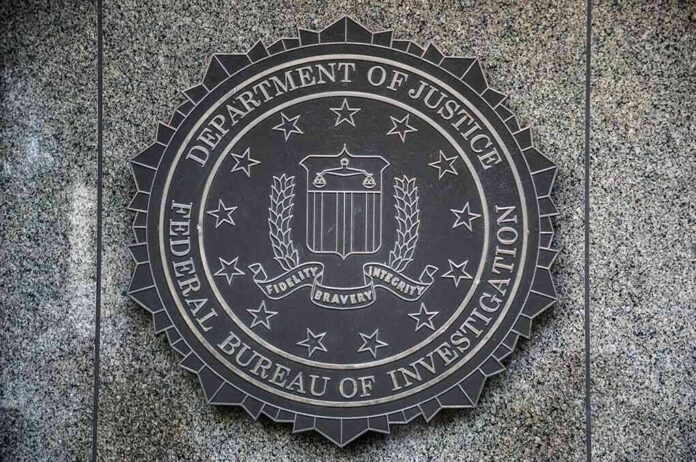
Reports say hackers breached the FBI’s national crime database, raising alarm about the safety of core police records used across America.
Story Snapshot
- CNN-based reports say the FBI is investigating a suspected breach of the National Crime Information Center (NCIC).
- NCIC connects federal, state, and local police for warrants, missing persons, and stolen property checks.
- This would be the second FBI-linked cyber incident reported in recent months, after a September case.
- Public reports do not state whether data was accessed, changed, or stolen at this time.
What investigators are probing right now
Multiple outlets reported that the Federal Bureau of Investigation (FBI) is looking into an apparent intrusion involving the National Crime Information Center, a core law-enforcement database used nationwide. CNN’s reporting, echoed by major outlets, cited two people briefed on the case who described an active probe into a suspected breach. Those accounts did not list the entry point or the date of compromise. The FBI had not issued a public confirmation at the time of those reports, according to coverage summarizing CNN’s story.
NCIC is central to daily policing. Officers across the country use it to check warrants, criminal histories, stolen vehicles and guns, protection orders, and missing or wanted persons. If attackers reached this system, the risk would extend beyond Washington. Police in towns and counties rely on quick, clean responses from NCIC during traffic stops and arrests. Any disruption or data change could affect arrests, background checks, or the safety decisions officers make on the street.
Why this incident matters beyond Washington
The reports frame this as the second FBI-related cyber issue in recent months, following a separate September incident tied to an employment website for the bureau. That pattern raises fresh questions about federal cyber defenses and their ripple effects across state and local agencies that depend on federal hubs. The stakes are simple: if a core police backbone falters, regular people may face delays, errors, or risks when law enforcement makes decisions that depend on those records.
Americans across the political spectrum worry that large federal systems fail to protect vital data or admit problems quickly. Many see powerful agencies as too slow, too secretive, or too focused on preserving their image. A breach of a lifeline system like NCIC hits that nerve. People on the right and left want honest updates, clear fixes, and safeguards that work. They also want accountability if preventable gaps let intruders in, given the high value of these records to public safety.
What we know, and what remains undisclosed in public reports
Published accounts identify NCIC as the targeted system and say the FBI opened an investigation into a suspected intrusion. The reports do not claim that data was accessed, altered, or removed, and they do not describe outage impacts for police users. They also do not name the attackers or detail the method used to get in. Those limits are common in early cybersecurity probes, especially when law-enforcement operations and sensitive data are in play.
The FBI is investigating an apparent hack of NCIC, the nationwide database of warrants, stolen property, and background checks officers use every day. Second FBI breach in recent months. #databreach #cybersecurity https://t.co/cmgEpSuGfK pic.twitter.com/4Bb0xAK50Y
— Breach Alarm (@BreachAlarm) November 21, 2026
Officials will need to clarify several issues as the investigation continues. First, whether intruders reached any records and, if so, which categories. Second, whether any data integrity checks found changes, and whether backups confirmed clean baselines. Third, whether agencies that connect to NCIC saw anomalies, slowdowns, or odd query results. Finally, whether this probe ties to other recent incidents or shows a different weakness that must be fixed across federal and state networks.
Sources:
facebook.com, bleepingcomputer.com, cnbc.com, news10.com, english.mathrubhumi.com