
Iran’s Supreme Leader has finally admitted to ordering the deaths of thousands of Iranian protesters while simultaneously blaming President Trump for the bloodshed.
Key Points
- Khamenei publicly acknowledged “thousands” killed in crackdown but blamed Trump and “seditionists”
- Human rights groups estimate 3,400 to 20,000 deaths during protests that began in December 2025
- Trump claims credit for halting 800+ planned executions through diplomatic pressure
- Over 200-hour internet blackout prevented independent verification of government violence
Regime Finally Admits Mass Killings
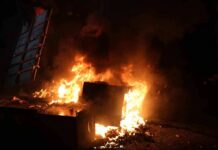
Ayatollah Ali Khamenei made a rare public admission during a Saturday speech that “thousands” of people have been killed during weeks of unrest across Iran. The Supreme Leader described the killings as occurring in an “inhuman, savage manner” while refusing to take responsibility for ordering the crackdown. This acknowledgment represents a dramatic shift from earlier official narratives that blamed external actors and terrorists for the violence.
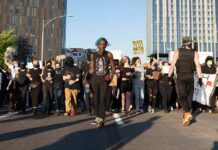
The protests began in late December 2025, triggered by economic hardship affecting ordinary Iranians. What started as demonstrations against financial struggles rapidly evolved into demands for the overthrow of Iran’s clerical-led government. Protesters in multiple cities chanted against Khamenei and invoked memories of the former monarchy, challenging the foundation of the Islamic Republic.
Watch:
Trump Intervention Halts Mass Executions
President Trump claimed credit for preventing Iran from executing over 800 detained protesters through diplomatic pressure. Trump stated that “nobody convinced me, I convinced myself” regarding the cancellations and declared that Iran announced it would not carry out mass executions following his public concerns. This represents a significant foreign policy victory for the Trump administration in confronting authoritarian brutality.
Iran’s announcement came after Trump’s public intervention, though human rights groups warn that trials and death sentences remain ongoing risks for the approximately 20,000 arrested protesters. The regime’s decision to halt executions demonstrates the effectiveness of strong American leadership in protecting human rights globally. Executions had been reported across at least 42 prisons between January 5-14, with the largest killing period occurring during a nationwide internet shutdown.
Brutal Crackdown Exposes Regime Weakness
The Iranian government deployed police, militia forces, and the Islamic Revolutionary Guard Corps to suppress demonstrations through overwhelming force. Authorities imposed severe restrictions on internet and mobile services, creating a communications blackout lasting over 200 hours to prevent documentation of their crimes. This digital suppression mirrors tactics used by history’s worst authoritarian regimes to hide mass violence from international scrutiny.
Human rights organizations estimate death tolls ranging from 3,400 to 20,000, with CBS reporting the highest figures based on accounts from Iranian medics and senior officials. The variation reflects the extreme difficulty of verification during internet blackouts and government information restrictions. Families witnessed mass burials at Behesht-e Zahra cemetery as the regime attempted to conceal the scale of its brutality.
#Iran’s supreme leader acknowledges thousands killed as Trump calls for new leadership: reports@FoxNews @GolinehAtai @NatalieAmiri #protest#protest https://t.co/KUCtWzKvsc #FoxNewshttps://t.co/uRqpX2Xpvz #FoxNews pic.twitter.com/eGmr0wmF6z
— Siamak-Davari🇩🇪 (@SiamakDavari) January 18, 2026
Opposition leader Reza Pahlavi, son of the former shah, argues the crackdown demonstrates regime weakness rather than strength. He advocates for sustained international pressure, targeted sanctions, and IRGC leadership strikes to hasten the Islamic Republic’s collapse. Pahlavi expressed confidence in Trump’s pledge that “help is on the way” for the Iranian people suffering under clerical tyranny.
Sources:
Khamenei blames protest casualties on Trump, calls him a criminal
Iran’s supreme leader acknowledges thousands killed as pressure builds on clerical rule
Live: Iran protests death toll tops 3,000, rights group; Ayatollah Khamenei, Trump crackdown