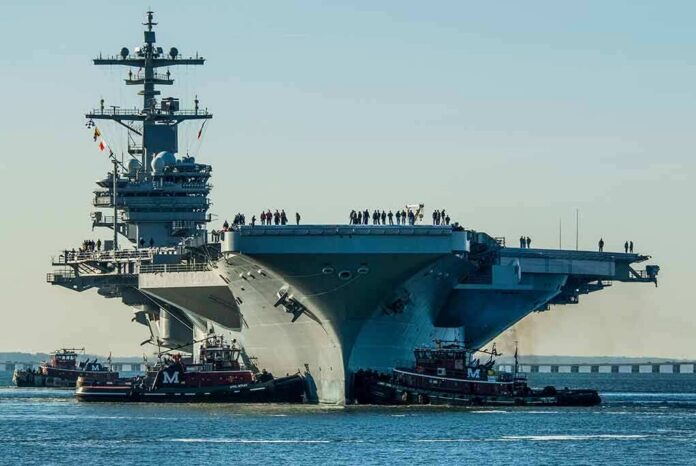
Brazil scuttled a 32,900-ton aircraft carrier loaded with hazardous materials in deep Atlantic waters after ports refused to take it, spotlighting a growing global failure to handle toxic military junk responsibly.
Story Snapshot
- Brazil’s Navy sank the ex–São Paulo far offshore, citing safety, cost, and lack of port options.
- Environmental groups warned of asbestos and chemicals polluting the seabed and food chain.
- Officials said the hull was too degraded to tow safely and risked an uncontrolled sinking.
- The episode shows how governments push off hard cleanup choices when transparency is thin.
What Brazil Did and Why It Says It Had To
Brazil’s Navy confirmed it scuttled the decommissioned carrier São Paulo about 350 kilometers off the coast in waters roughly five kilometers deep. Officials said studies guided the site choice to reduce risks to coasts and fishing grounds. They argued the hull had deteriorated so badly that a tow to a yard could fail, creating a larger hazard. They framed the sinking as a controlled operation to prevent broader harm to the state and the public purse.
The ship’s condition and a series of port refusals boxed the Navy in. Turkey had already turned the vessel away. Brazilian ports also would not accept it, citing toxic-material concerns and legal fights. Reporting described the ship as rusting and in poor shape, adding to the case that a long tow posed real risk. These events left officials claiming there were no safe, practical alternatives beyond deep-water disposal.
What Critics Say About Toxins and Treaties
Environmental groups called the carrier “toxic” and warned of pollution to the seabed and marine life. They pointed to asbestos, heavy metals, and other chemicals still aboard. Some advocacy statements alleged Brazil violated international environmental treaties. They argued scuttling shifts cleanup costs to the ocean and coastal communities and that better options existed on land, even if harder and more expensive to execute.
One maritime outlet cited Brazil’s environmental agency estimates of about 9.6 tons of asbestos plus hundreds of tons of hazardous paint and materials. That figure has circulated in reporting and activism. However, public records available in open reporting do not show a full, verified hazardous-materials inventory being released. That gap fuels distrust and adds weight to calls for independent testing of the site and surrounding seabed.
The Evidence We Have—and What Is Missing
Reporters documented the sinking location, the depth, the government’s rationale, and the chain of port refusals. They also captured the warnings from activists and prosecutors who pressed to stop the operation. What is not in public view are the technical studies Brazil said it used to pick the site and judge risk. The lack of a posted, peer-reviewed analysis or post-sinking monitoring plan leaves the public to take officials at their word, which many will not do.
The quantity and exact form of the toxic load remain the key factual dispute. Officials acknowledged hazardous materials aboard from the ship’s construction era. Activists claimed much larger totals, citing experience with similar vessels and prior audits. Without a released manifest and sampling data, the debate stays stuck. That is a policy failure as much as an environmental one, and it is solvable with transparency and third-party testing at the wreck site.
Why This Matters Beyond Brazil
This fight mirrors a larger pattern with retired warships worldwide. When a vessel is old, huge, and contaminated, costs and legal risks soar. Ports and politicians pass the burden along. Agencies fall back on the cheapest, quickest option that avoids near-term liability. Deep-water scuttling shifts risk out of sight, but not necessarily away. Without open data, people on the left and right see another example of elites avoiding hard cleanup work.
For readers in the United States, note the parallel at home. The United States Navy has studied costly, complex plans for dismantling nuclear and conventionally powered carriers, with full environmental impact statements and commercial-yard options to manage hazards. Those processes are expensive and slow, but they also show what transparency and planning can look like when the public demands it and agencies deliver documentation.
The Practical Next Steps to Restore Trust
Brazil can lower the temperature by releasing the site-selection studies it cited, the hazardous-materials inventory for the hull, and the engineering plan for scuttling. Independent labs should sample sediments and water near the wreck on a regular schedule, with results posted online. If contamination is detected, mitigation steps should be laid out. These are straightforward measures. They cost far less than the public trust that secrecy burns through.
This case is a warning. When governments hide the ball, citizens assume the worst. When ports block ships without offering a safer plan, the sea becomes the default dump site. That cycle breeds anger across the spectrum. Clear records, independent checks, and hard budgets for true cleanup are the only way to end it. The ocean deserves that. So do taxpayers and coastal families.
Sources:
nationalsecurityjournal.org, theguardian.com, washingtonpost.com, business-humanrights.org