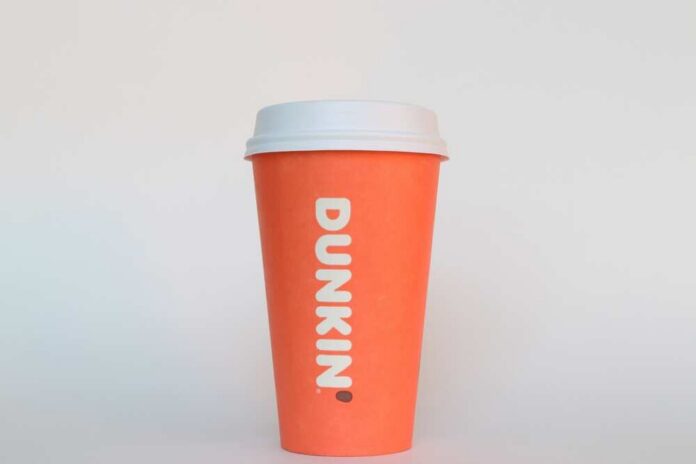
Dunkin’ is quietly testing a 48-ounce “coffee bucket” in select stores—leaving everyday customers asking why a basic product rollout has to feel like an exclusive club.
Quick Take
- Dunkin’ is testing a giant 48 oz drink container—about double its prior 24 oz largest size—in limited U.S. locations.
- Reports describe the rollout as “secret” testing, with no national release date or full store list publicly confirmed.
- Fans are frustrated by the limited availability and are being pushed to check whether their local store “made the cut.”
- Dunkin’s latest official announcements spotlight other menu promotions, while the bucket test spreads through media buzz and social chatter.
A “Bucket” Drink Test That’s Big on Buzz, Small on Access
Dunkin’ is drawing attention with a novelty-sized drink: a 48-ounce coffee “bucket” served in an oversized plastic container. Media reports say it’s being offered only in a limited number of stores, and the chain has not announced a nationwide rollout. That combination—an attention-grabbing product paired with restricted access—has fueled predictable backlash from loyal customers who want to buy it without playing a location guessing game.
Consumers have seen this playbook before across major brands: test a product quietly, measure demand, then decide whether it’s worth expanding. The frustration in this case isn’t just about caffeine. It’s about consistency and transparency—two things customers expect from big chains that market themselves as reliable, everyday stops. When a brand creates hype around a “giant” offering but limits it to select areas, it turns a simple purchase into a regional privilege.
What We Actually Know—and What Dunkin’ Hasn’t Said
Reporting indicates the 48-ounce bucket is in a test phase, described as “secretly testing,” and it roughly doubles Dunkin’s prior largest size of 24 ounces. The available coverage does not provide a definitive list of participating stores, nor does it include a clear timeline for expansion. Dunkin’s own newsroom has recently promoted other items, but the bucket itself hasn’t been highlighted in an official, detailed announcement within the provided research.
That gap matters because consumers are being directed to “see if yours made the cut,” which effectively shifts the burden to the customer to hunt for basic availability details. Companies have every right to test products, but customers also have a right to be skeptical when a brand uses scarcity to generate free marketing. If the goal is to gauge demand, basic transparency about test markets would reduce backlash without changing the business strategy.
Why Chains Use Limited Tests—and Why It Irritates Regular People
Dunkin’ operates in a fiercely competitive quick-service environment where Starbucks, McCafé, and others fight for traffic, loyalty, and higher ticket sizes. Limited tests help a chain measure sales, operations, and customer response without committing nationwide. Dunkin has a track record of experimenting with menu items and formats, and recent promotions show it is actively pushing new “fuel the day” offerings through collaborations and limited-time products.
Still, there’s a difference between a normal limited-time rollout and a “secret test” that spreads through rumor, photos, and media write-ups. The conservative consumer instinct here is common sense: people don’t like being manipulated. When a company appears to use controlled scarcity to whip up demand, it can feel like the same elitist, top-down mindset Americans have been pushing back on for years—decisions made by distant corporate planners while ordinary customers are left out.
What Happens Next: Expansion, Backlash, or Quiet Disappearance
In the short term, the bucket test will likely keep generating buzz, especially in markets where customers can actually buy it. Stores included in the test could see a traffic bump from curious buyers and social-media-driven word of mouth. In the long term, the test could lead to a wider rollout if sales are strong and operations are manageable—or it could stay a regional gimmick that disappears as quickly as it arrived.
The limitation is straightforward: the public information in the current reporting doesn’t confirm which locations have the bucket, how long the test runs, or what Dunkin’s criteria are for expansion. Until the company provides clear details, customers will keep doing what they always do—compare notes online, pressure the brand for answers, and vote with their wallets. A nationwide brand grows by serving everyone, not by teasing a product and then treating access like a prize.
Sources:
Dunkin’ fans frustrated as new coffee buckets launch in limited stores — see if yours made the cut
Dunkin is test giant 48 oz bucket drink