After years of Washington trying to force an all-EV future, America’s car market is quietly voting for hybrids instead.
Story Snapshot
- Automakers are expanding hybrid lineups in 2026 as consumers seek fuel savings without the hassles of full EV ownership.
- Industry signals point to a “dual-track” strategy: keep investing in EVs, but ramp up hybrids as a practical bridge technology.
- Edmunds rankings for 2026–2027 place the Honda Civic Hybrid, Hyundai Elantra Hybrid, Toyota Prius, and Toyota Corolla Hybrid among the leading options.
- Pricing pressure is increasing, with some new hybrids listed below $24,000, while higher trims stretch well above that.
Hybrids Surge as Consumers Reject One-Size-Fits-All Electrification
Automakers are leaning harder into hybrids in 2026, and the shift looks tied to basic kitchen-table math: gas prices fluctuate, household budgets are tight, and drivers still want predictable mobility. Multiple manufacturers are expanding hybrid offerings at the same time they continue investing in EVs, producing a “two-lane” electrification approach rather than a single mandated path. That market reality matters because it reduces dependence on government-driven outcomes and returns choice to drivers.
Hybrid technology also avoids the infrastructure bottlenecks that have frustrated many EV-curious buyers, including uneven charging availability and time costs associated with longer trips. While the research does not identify a single “new kind” of hybrid tied to the headline, it does show a clear pattern: car companies are pushing more hybrid models into showrooms across common American use-cases, from compact sedans to small SUVs to pickups. In practice, that means more options without forcing families into a single lifestyle.
What’s Actually New in 2026: Models, Prices, and Rankings
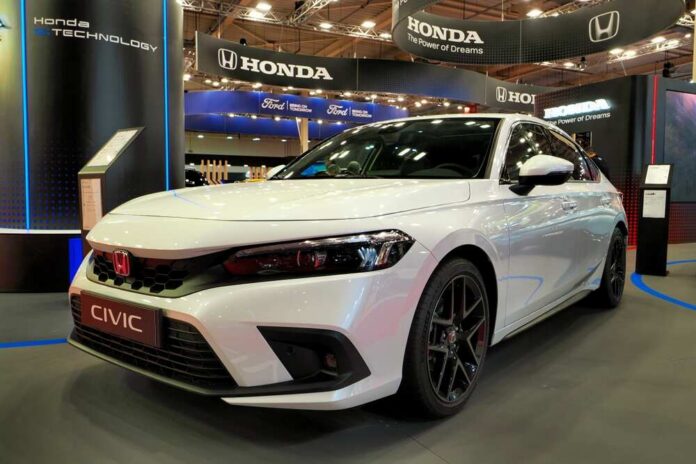
Several concrete 2026 model details highlight how competitive the hybrid market has become. Edmunds’ expert rankings for 2026–2027 list the Honda Civic Hybrid and Hyundai Elantra Hybrid at the top, with the Toyota Prius and Toyota Corolla Hybrid also near the front. MotorTrend lists recent model pricing that places the 2026 Hyundai Elantra Hybrid at about $23,870–$31,045 and the 2026 Honda Civic Hybrid at about $25,890–$34,790, reinforcing that hybrids are being positioned for mainstream buyers.
Why Automakers Are Choosing a “Bridge” Strategy Instead of an EV Sprint
Manufacturers appear to be hedging against uncertainty by offering both hybrids and EVs, rather than betting everything on one drivetrain. The research ties this strategy to consumer response to fuel-price volatility and ongoing interest in fuel efficiency. That approach also aligns with what many voters have been demanding from institutions for years: stop imposing sweeping plans that ignore local realities. A bridge strategy is not anti-innovation; it is a way to scale improvements without gambling household transportation on policy timelines.
The same dynamic shows up in how brands describe their lineups. Toyota continues positioning hybrids as core products, not niche experiments, and the broader market now follows similar logic. The research also points to plug-in hybrid examples that combine high mpg estimates with home charging capability, underscoring that electrification is not a binary choice between gas-only and battery-only. For families who want lower fuel costs but worry about charging access, that middle ground can be the difference between affordability and frustration.
What This Means for Costs, Freedom of Choice, and Energy Politics
Hybrid growth has near-term pocketbook implications: more competition can pressure prices, and the research notes entry-level hybrids starting under $24,000 in some rankings and roundups. For consumers, that is a practical win because it lowers the barrier to improved fuel economy without requiring a full EV purchase. For policymakers, it is a signal that Americans often prefer incremental, reliable improvements over expensive transitions that depend on government subsidies and perfect infrastructure execution.
The limits of the available reporting should also be stated plainly. The provided research does not confirm a single breakthrough “new kind of hybrid” arriving on U.S. streets; instead, it documents broad expansion across brands and categories. Still, that expansion is itself a consequential development in 2026: it suggests the market is correcting away from top-down expectations and toward what drivers can actually use day-to-day. In a country frustrated with elite mismanagement, consumer behavior is becoming the loudest vote.
Sources:
https://www.toyota.com/hybrid/
https://www.edmunds.com/hybrid/
https://www.hyundaiusa.com/us/en/electrified/hybrids
https://www.motortrend.com/rankings/hybrid-cars
https://www.caranddriver.com/rankings/best-hybrid-cars
https://www.ford.com/new-hybrids-evs/
https://www.greencarreports.com/news/hybrid-cars
https://www.autotrader.com/cars-for-sale/new-cars/hybrid