A rare, public clash between an American-born pope and a sitting U.S. president is turning immigration enforcement and war policy into a global test of moral authority versus executive power.
Quick Take
- Pope Leo XIV publicly rebuked President Trump over the Iran war and the administration’s mass deportation push, breaking with the Vatican’s usual caution about naming political leaders.
- Trump fired back on Truth Social, calling the pope “weak on crime” and “terrible for foreign policy,” and rejected calls to apologize.
- Senior U.S. Catholic leaders argue the Iran conflict fails “just war” standards and say deportations are sweeping up long-term residents, including parents of U.S. citizen children.
- The dispute is exposing a political fault line: Trump won Catholic voters by a wide margin, yet Catholic hierarchy criticism is intensifying in his second term.
Why this feud is unusual—and why it’s escalating
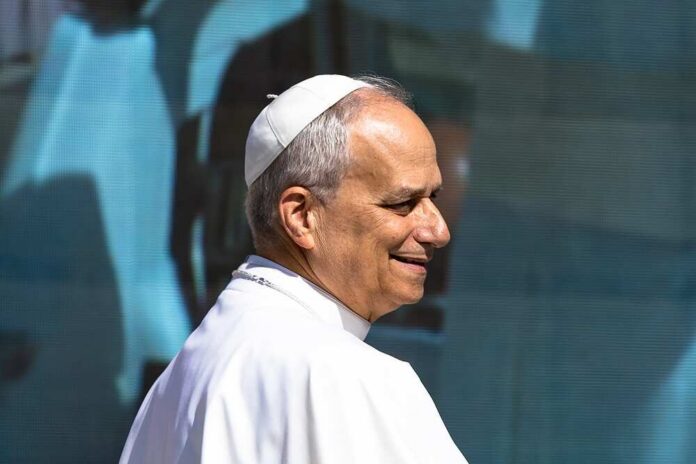
Pope Leo XIV, the first American-born pope, has moved from broad calls for peace into direct condemnation of President Donald Trump’s rhetoric and policies. That shift matters because popes typically avoid personalizing disputes with elected leaders, especially American presidents. The conflict intensified after the war in Iran began in late February 2026, and it spilled into public messaging as both sides framed the stakes in existential terms—nuclear security for Trump and moral restraint for the Vatican.
On April 8, 2026, a ceasefire was negotiated shortly after Trump threatened to destroy Iranian civilization, a line that drew sharp Vatican pushback. By April 13, Pope Leo launched a 10-day tour of Africa and told reporters he had “no fear of the Trump administration.” Trump responded the same day with pointed posts attacking the pope’s judgment and insisting the U.S. cannot allow Iran to possess nuclear weapons, keeping the dispute in the headlines.
Iran war arguments: nuclear deterrence vs. “just war” concerns
Trump’s argument, as described in reporting, is that military pressure is necessary to dismantle Iran’s nuclear and ballistic missile capabilities. Vatican-aligned critics are pressing a different framework: whether the conflict meets the moral threshold for a just war and whether rhetoric amplifies escalation risks. Cardinal Robert McElroy, the Archbishop of Washington, called the Iran conflict a “war of choice,” warning about the prospect of repeated wars as a pattern rather than a last resort.
Other senior church voices have focused less on battlefield tactics and more on the public culture surrounding war. Cardinal Blase Cupich, the Archbishop of Chicago, criticized what he described as the “gamification” of the Iran war on social media and argued that such framing dehumanizes victims and soldiers alike. Those statements do not settle strategic debates, but they help explain why Pope Leo has treated the conflict as a moral emergency rather than a conventional policy disagreement.
Immigration enforcement: strong borders vs. sweeping deportation fallout
Immigration is the second—and arguably more politically volatile—front in the feud. Reporting describes the Trump administration’s mass deportation policies as reaching across the country and affecting long-term residents, including people with citizen children. That “scale and indiscriminate nature,” as sources characterize it, has widened the gap between Republican governance priorities and Catholic institutional leadership, even among clergy who say they support secure borders as a principle.
Cardinal Joseph Tobin, the Archbishop of Newark, went further by calling ICE a “lawless organization,” citing concerns about agents hiding identities and allegedly violating constitutional guarantees. The reporting does not provide detailed data on how many removals involve parents of citizen children, and that lack of specific metrics limits outside verification. Still, the public charge from a prominent cardinal underscores how quickly immigration policy can become a legitimacy fight over due process, not just border security.
The political stakes: Catholics, credibility, and the 250th anniversary symbolism
The dispute lands in a politically awkward place for both sides. Trump reportedly won Catholic voters 55% to 43%, with many Catholics prioritizing border security and enforcement promises. Yet the Vatican and U.S. Catholic leadership are now publicly challenging the administration’s approach, creating pressure on Catholic voters who want enforcement without what they view as collateral family disruption. That tension could reshape Catholic political alignment, especially in swing-state dioceses with large immigrant communities.
Pope Leo has also used symbolism to telegraph priorities. He announced plans to spend July 4, 2026—America’s 250th anniversary—at a primary European entry point for migrants rather than in the United States. That choice reads as a message that national pride should not eclipse obligations to vulnerable people. At the same time, Trump’s decision to answer the pope with personal attacks, and controversy over a religiously themed image he posted and deleted, suggests the White House is treating the pope as another political combatant.
Sources:
https://www.cbsnews.com/news/pope-leo-america-policies-60-minutes/